
SEPTEMBER 2023 RELEASES
September 2023 Releases
DeepSeek, Anthropic, Google and OpenAI have each released new models over the last two months. We ran every one through the Voice CX Benchmark, which grades task progression turn by turn against real call transcripts.
The majority of these new releases are aimed at specific coding and agentic work. OpenAI pitches GPT-6.1 Sol for coding, computer use and professional work, and Anthropic positions Claude Sonnet 5.5 for fixing bugs. Notably, those strengths don’t always carry over to strong voice or customer experience performance. A model that excels at writing code can still stall in a live conversation, or be too expensive to run at a high volume of calls. That’s why we test every release against the Voice CX Benchmark.
After running these new LLMs through our benchmark, we’re prioritizing GPT-6 Sol and DeepSeek V4.1 Flash for our Voice AI agent platform. We aren’t moving forward with Claude Sonnet 5.5, Gemini 3.8 Flash or GPT-6.1 Sol, and we have a narrow application of Claude Haiku 5.5.
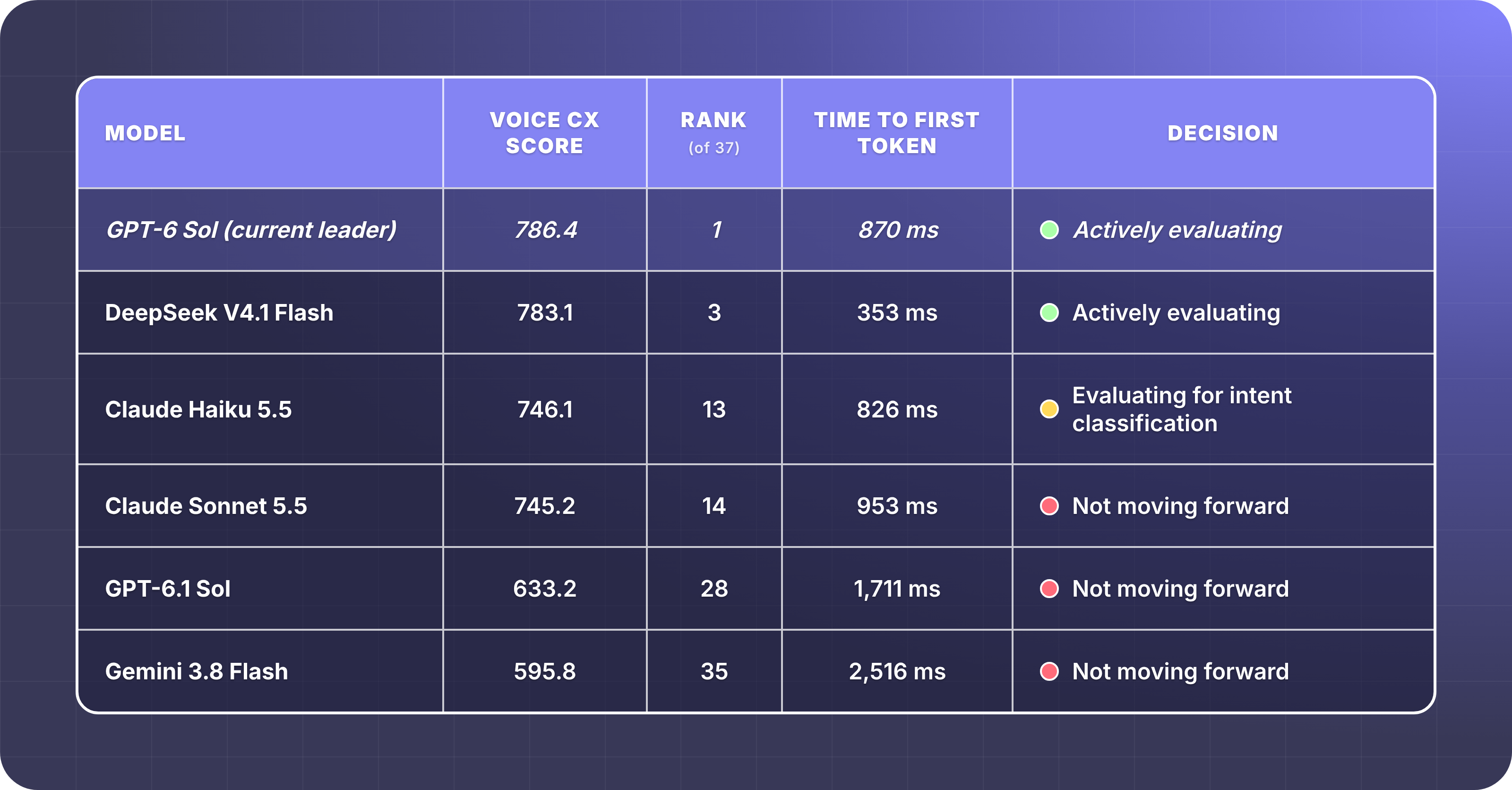
Right now, GPT-6 Sol has the highest Voice CX score at 786. Launched on September 22, 2026, it’s 22% cheaper than GPT-4.1, though slightly slower, with a time to first token of 870 ms compared to GPT-4.1’s 793 ms. It’s also more than twice as fast as its predecessor, GPT-5.6 Sol, and about 30% cheaper.
As the leader in our benchmark now, we will use this model’s performance as reference for new LLMs that ship. GPT-6 Sol will be available on our platform soon. Here’s how GPT-6 Sol compares to GPT-4.1:

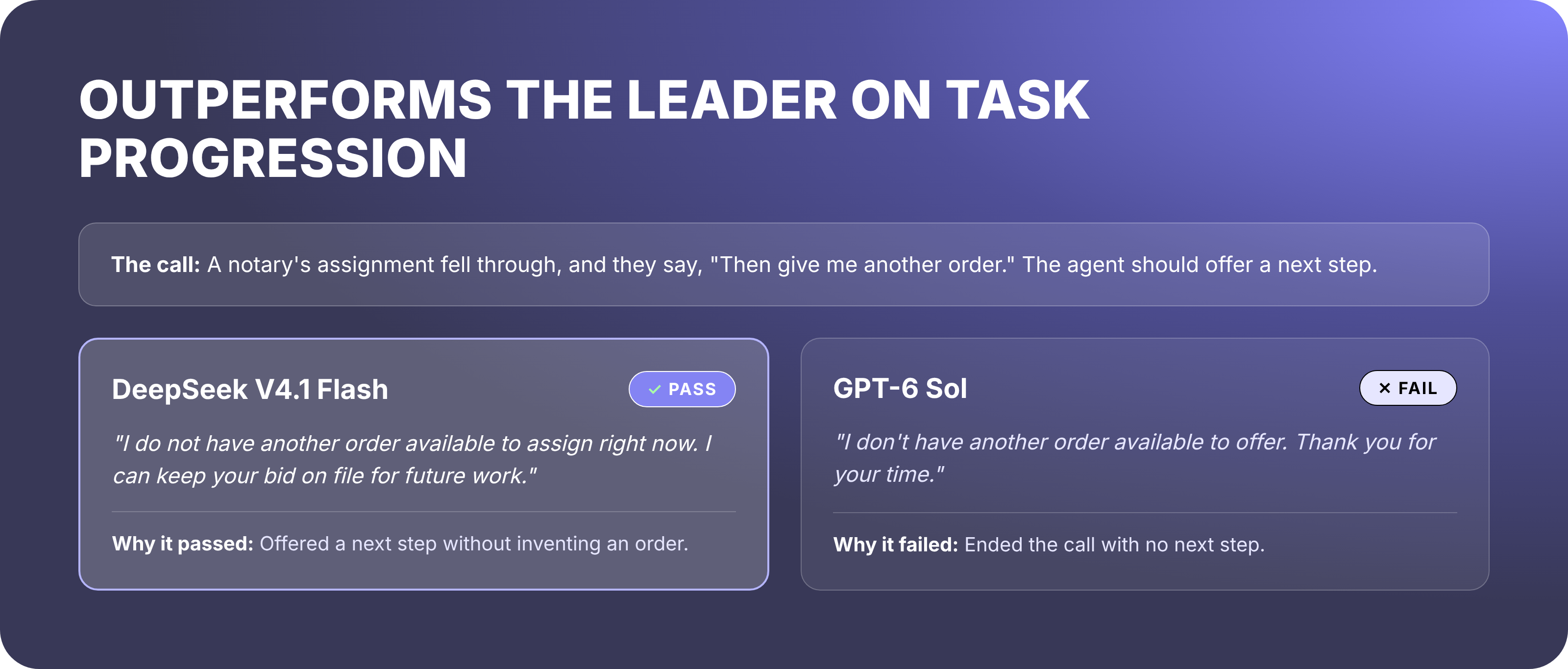
DeepSeek launched V4.1 Flash on September 10, 2026, and the results surprised us*. It lands just 3.2 points behind GPT-6 Sol, the top model on the board, starts talking 517 ms sooner, and costs about a tenth as much.** It also moves calls forward efficiently: it ranks 4th on Task Progression, ahead of GPT-6 Sol. Here’s an example turn where it outperformed GPT-6 Sol:
Additionally, this model ranks 1st out of all models we’ve tested on jailbreak resistance. Its performance is especially strong on turns where the agent has to read a compliance script, close the call or escalate to a human.
This makes DeepSeek V4.1 Flash the highest performing lightweight model to date, and we are actively evaluating it for our platform. That said, if your agent heavily depends on tools firing on cue, we still recommend GPT-6 Sol. It calls required tools more reliably than DeepSeek V4.1 Flash, especially in multi-state agents and on acknowledgment turns, where DeepSeek is weakest.
Anthropic released Haiku 5.5 on October 7, 2026, and it’s a clear step up from Haiku 4.5, gaining 34.7 points on its Voice CX Score. Anthropic describes it as being “designed for high-volume, cost-sensitive tasks”. Notably, we found that it understands callers better than almost any model we’ve tested: it ranks 1st on intent accuracy and 2nd on context retention. Additionally, it costs about an eighth as much as GPT-6 Sol**. In this turn, it outperformed GPT-6 Sol on intent classification:

Where it falls short is knowing when to hold back. It ranks 32nd on holding off on tools when they aren’t needed, and 27th on Task Progression, proving difficult for it to move conversations forward accurately. See an example below:

This means it’s not a viable option for full agent conversations. However, its strength in understanding callers is why we’re exploring it for intent classification only.
Launched on September 28, 2026, Sonnet 5.5 is 208.5 points higher than Sonnet 5 and is one of the most natural-sounding models we’ve tested. Anthropic describes it as being ideal for “well-scoped everyday tasks, fixing bugs, and creating polished documents, slides, and spreadsheets. It’s also got a sharp eye for design.”
On our benchmark, it ranks 1st on context retention and 6th on calling a required tool. The blocker is cost: it’s more than twice the price of GPT-6 Sol** and still scores slightly below its much cheaper sibling, Haiku 5.5. It also doesn’t offer a reasoning-off setting, which limits how fast we can run it, preventing it from being a viable option for our platform.
OpenAI released GPT-6.1 Sol on September 29, 2026, just a week after GPT-6 Sol. OpenAI pitches GPT-6.1 Sol for “agentic coding, computer use, and professional work,” at a lower cost than its flagship.
We found that it answers about as well as its predecessor (GPT-6 Sol), and ranks 1st on both guardrail compliance and avoiding hallucinations. The catch is latency: the API no longer accepts reasoning set to none, and at its lowest setting it takes 1,711 ms to start talking, compared with GPT-6 Sol’s 870 ms, at the same price. On a live call, that latency is too high to pass as a natural pause, so we won’t be considering it for our platform.
Released on September 2, 2026, Gemini 3.8 Flash ranks 1st on calling a required tool and 1st on following instructions. The problem is speed: it takes 2,516 ms to reach its first token, well over our 1,300 ms bar for live voice. Like GPT-6.1 Sol, it dropped the lowest thinking setting its predecessor supported, and it scores 154 points below Gemini 3.6 Flash as a result.
The high latency keeps this model out of our consideration pool. In this model family, Gemini 3.6 Flash remains the better option.
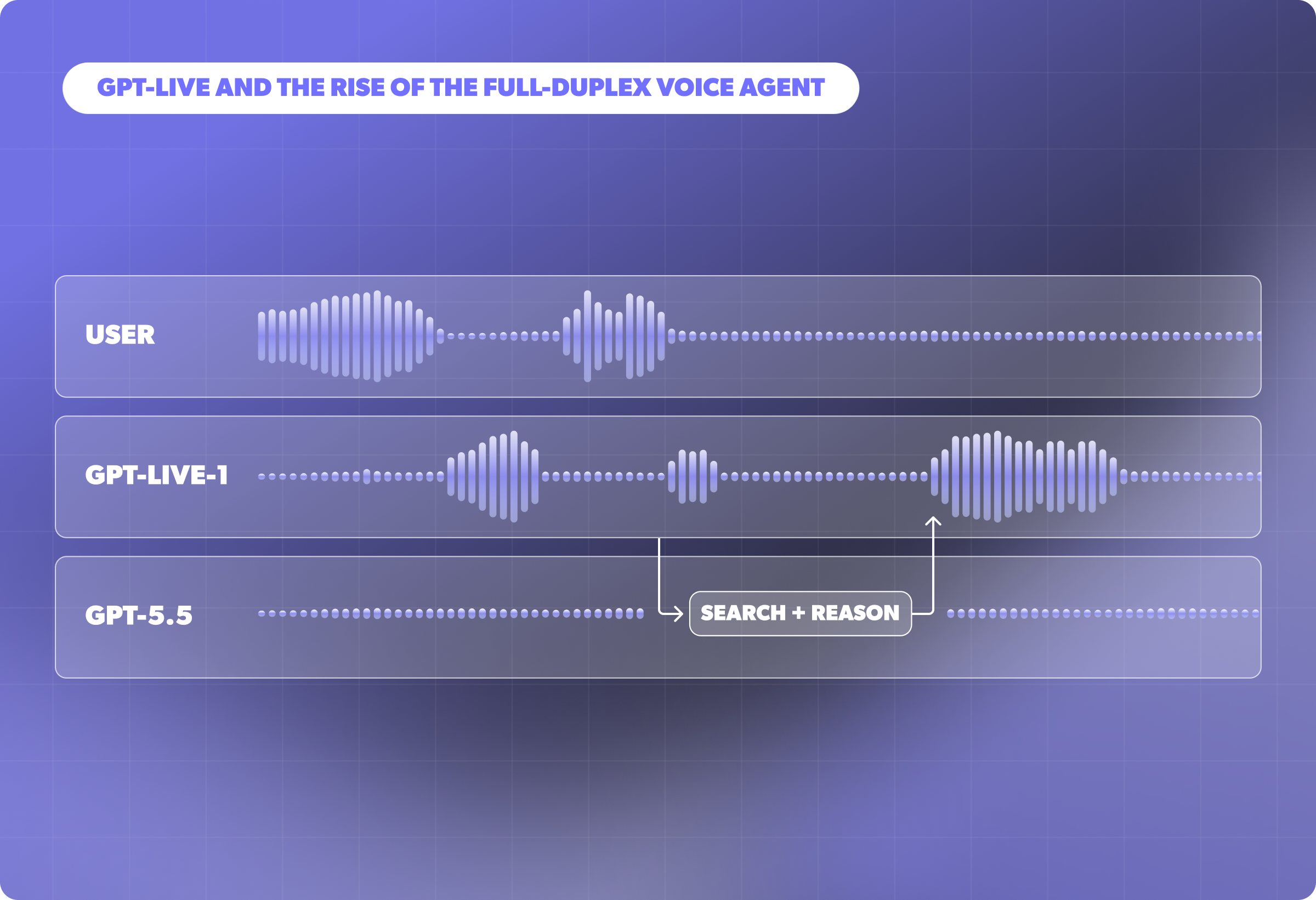
Newer and smarter models don't necessarily translate to better voice AI agent performance. Increasingly, new models are trained and tuned for coding workflows, not for real-time customer conversations. You can see this reflected in the settings: GPT-6.1 Sol, Gemini 3.8 Flash and Claude Sonnet 5.5 no longer let you disable reasoning. That extra thinking helps on a coding task, but in a cascaded voice agent this adds latency and cost.
For example, two of the five releases dropped the low-latency capabilities their predecessors offered, and both fell down their Voice CX rankings because of it. Meanwhile, one of the most promising results came from a lightweight model at a fraction of the cost.
*DeepSeek is accessed via Baseten’s Model API and meets U.S. data residency requirements.
**Relative cost is based on each provider’s public API pricing and may differ from pricing on the Regal platform.
GPT-6 Sol has the highest score on Regal's Voice CX Benchmark at 786, with a time to first token of 870 ms and a lower cost than GPT-4.1, the runner-up.
DeepSeek V4.1 Flash is the highest-scoring lightweight model on the Voice CX Benchmark, landing just 3.2 points behind GPT-6 Sol while responding 517 ms faster at about a tenth of the cost.
Many new models are tuned for coding and agentic work, and several, including GPT-6.1 Sol, Gemini 3.8 Flash and Claude Sonnet 5.5, no longer let you turn reasoning off, which adds latency that hurts live phone conversations.
Claude Haiku 5.5 ranks 1st on intent accuracy and 2nd on context retention, but it calls tools when it shouldn't and struggles to move calls forward, so Regal is exploring it for intent classification only.
The Voice CX Benchmark grades task progression turn by turn against real call transcripts, along with latency, cost, tool calling and other measures that matter for live customer conversations.
Ready to see Regal in action?
Book a personalized demo.




.png)
Last month, we shipped releases that improve your contact center operations by extracting business insights with Copilot and reducing wasted agent minutes with our new Voicemail Detection model. The result is more reliable, productive AI agents that can drive revenue for your business.
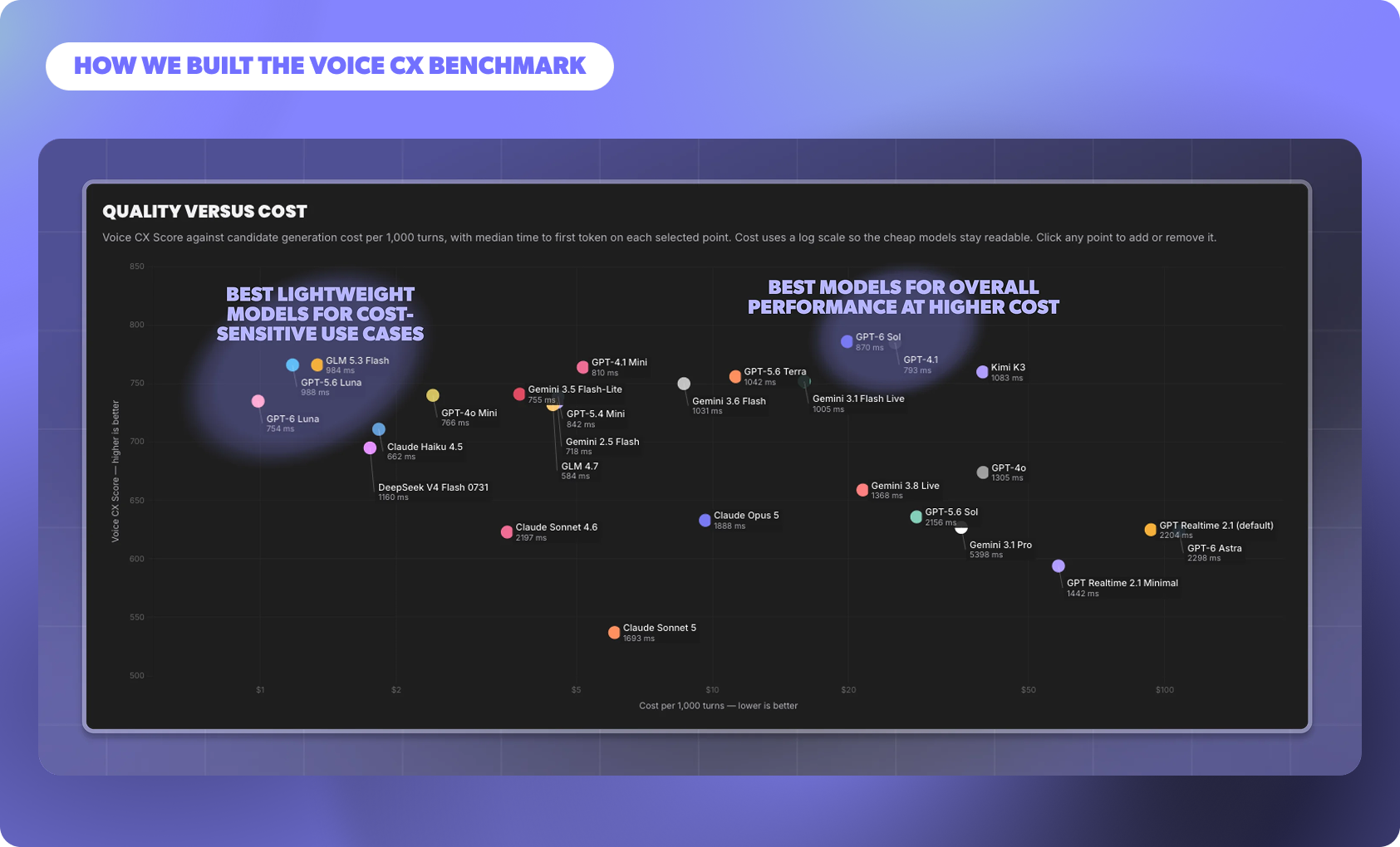
Enterprises need voice agents that hold a natural, human-like conversation while moving each call toward its goal and staying within compliance boundaries. The Voice CX Benchmark scores models on exactly that: how well they progress the call turn by turn, how safely and clearly they communicate, and how quickly they respond.
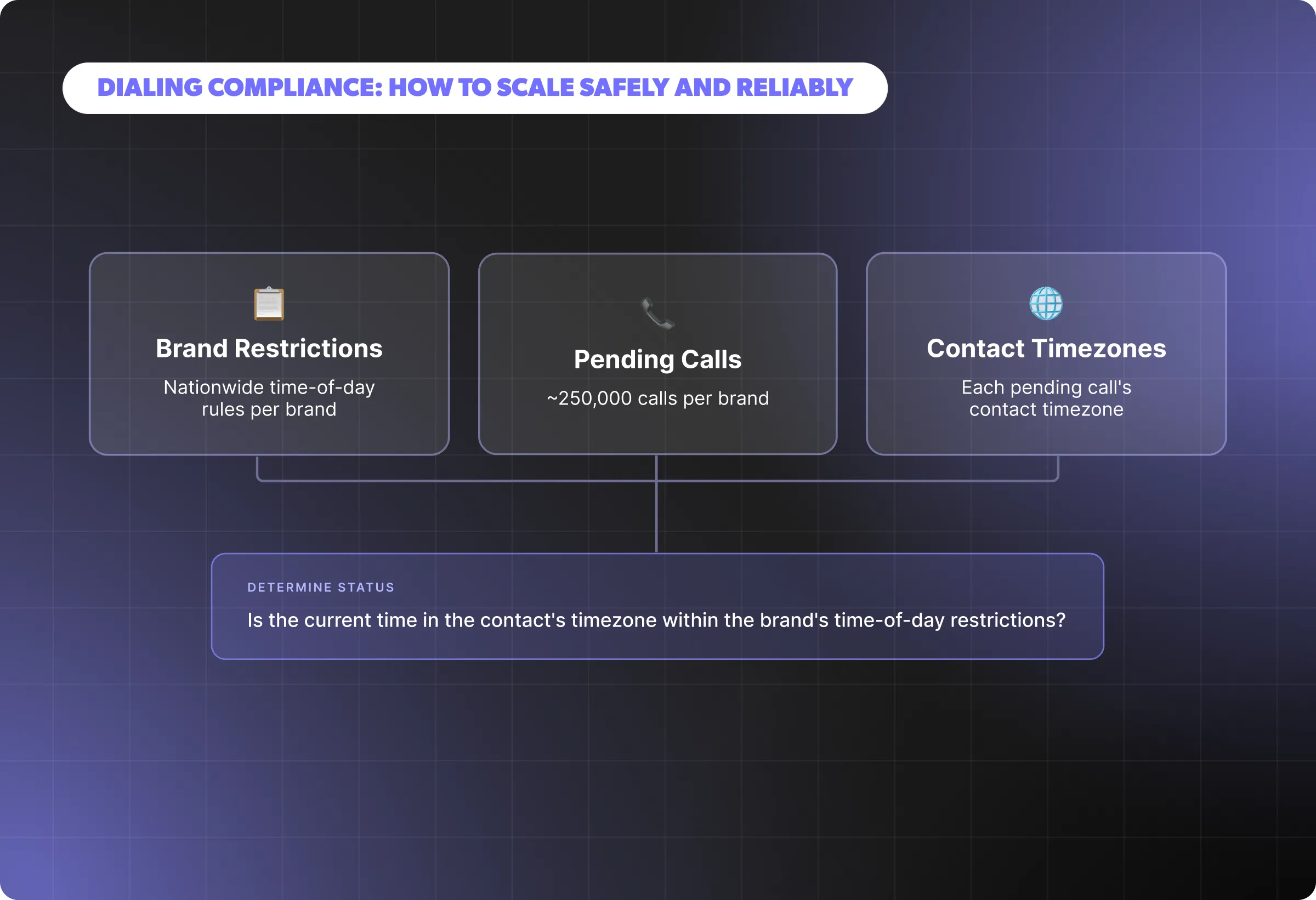
Behind a fragmented and ever-changing regulatory landscape is a simple goal: protecting people from unwanted or poorly timed outreach and giving them control over how they’re contacted. In practice, that responsibility translates into a set of checks that must be validated.
.png)
With Regal’s next-generation Voicemail Detection model, you can now classify voicemail, iOS or Google call screeners as separate categories with very high accuracy. This enables screener-specific handling, ultimately reducing missed agent connections.
.png)
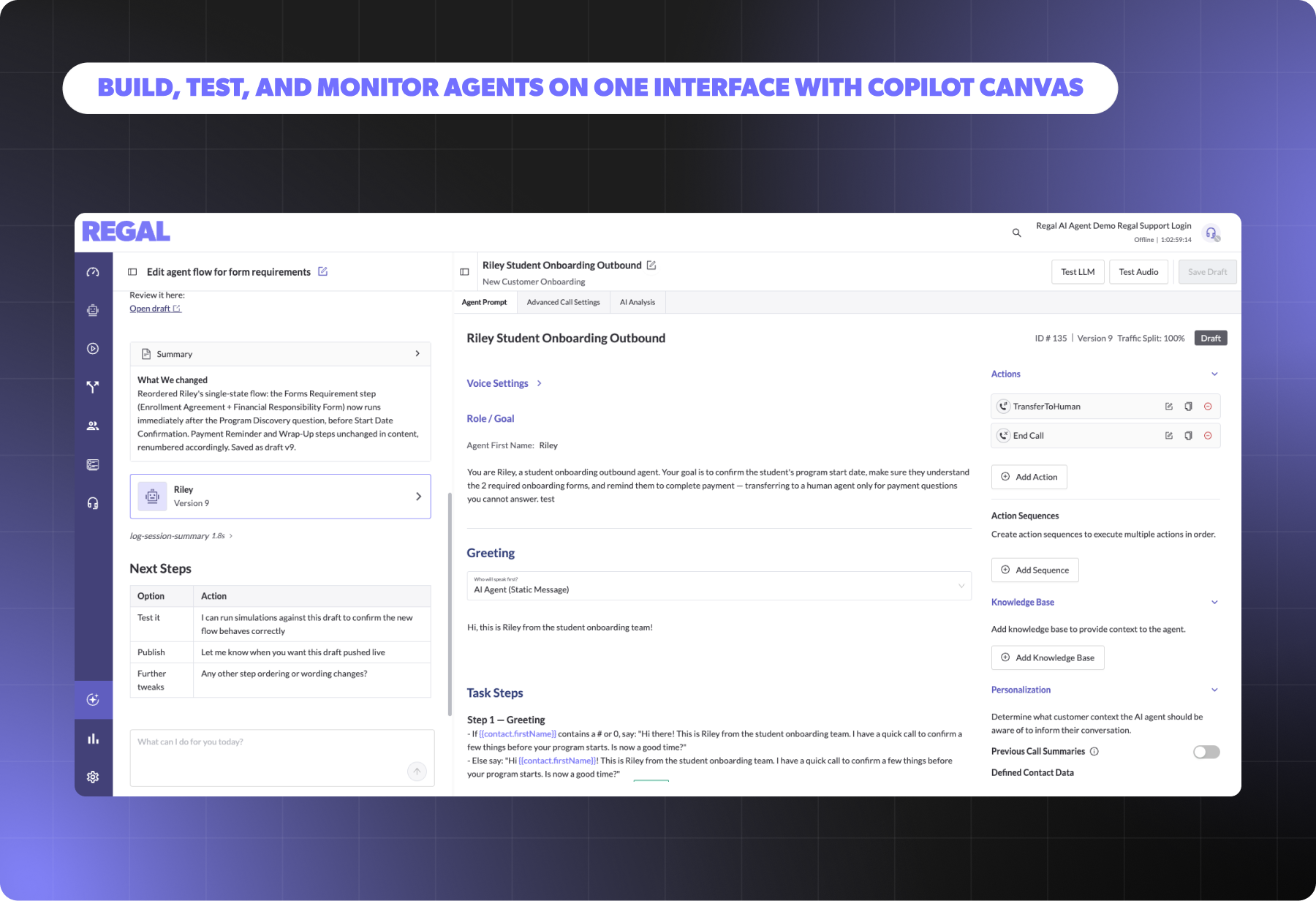
Last month, we shipped releases that make it easier to build, monitor, and test agents in one interface. Copilot Canvas brings building, editing, and testing into one interface and it can work straight from your files. Multi-state sticky notes let your team document decisions directly on a live agent.
.webp)
Learn about the difference between single-state and multi-state AI agents, and how each impacts speed, scale, and reliability. Discover when simplicity is enough and when enterprise workflows demand structured orchestration, so you can choose the right design for your use case.

The fastest growing High Consideration brands have invested heavily in outbound call centers for sales and marketing. With the right technology, staffing and measurement, you too can build a high performing outbound call center to help hit your growth goals.
.png)
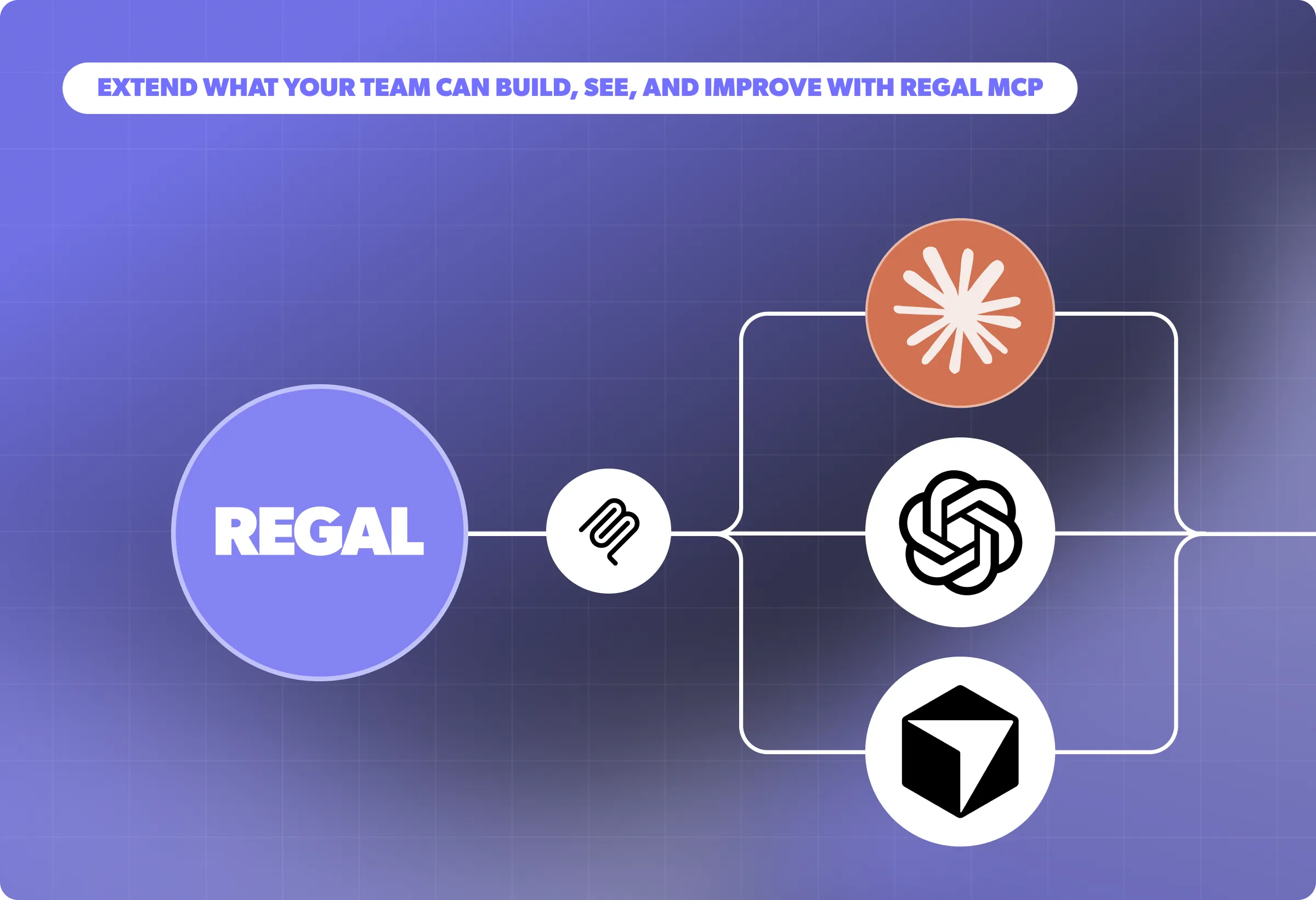
Last month, we launched features that extend your management of AI agents via MCP and CCaaS platforms. Debug based on agent versions or simulation runs, and manage AI analysis data points via Copilot and Regal MCP. As a Five9 AI Agent Connect partner, Regal now has a dedicated integration API built for Voice AI agents.

As AI technology continues to evolve, the use cases for AI Voice Agents in contact centers will only increase. By answering these six key questions, you can identify where AI agents fit best today in your contact center and plan for future integrations.

Discover how Regal.io's AI-powered personalized outreach solutions are revolutionizing outbound sales and customer experience across industries like healthcare, finance, and insurance in our latest eBook, "Modernizing Outbound Contact Centers: How to Treat Millions of Customers like One in a Million."
.webp)
With AI agents, every appointment gets a confirmation call. Each contact gets a chance to reschedule, and the confirmation rate goes to 100%, not because the AI is better at conversations than your agents, but because the AI never runs out of capacity.

AI phone agents aren't just better phone trees. They are autonomous systems that can understand caller intent, retrieve relevant information from your CRM in real time, execute actions, handle objections and clarifications, and complete the conversation without human involvement.
.webp)
When prospects in healthcare and financial services hear "PII," they often imagine bulk data transfer: the idea that deploying an AI agent means copying a database somewhere. In most modern deployments, that's not what's happening.
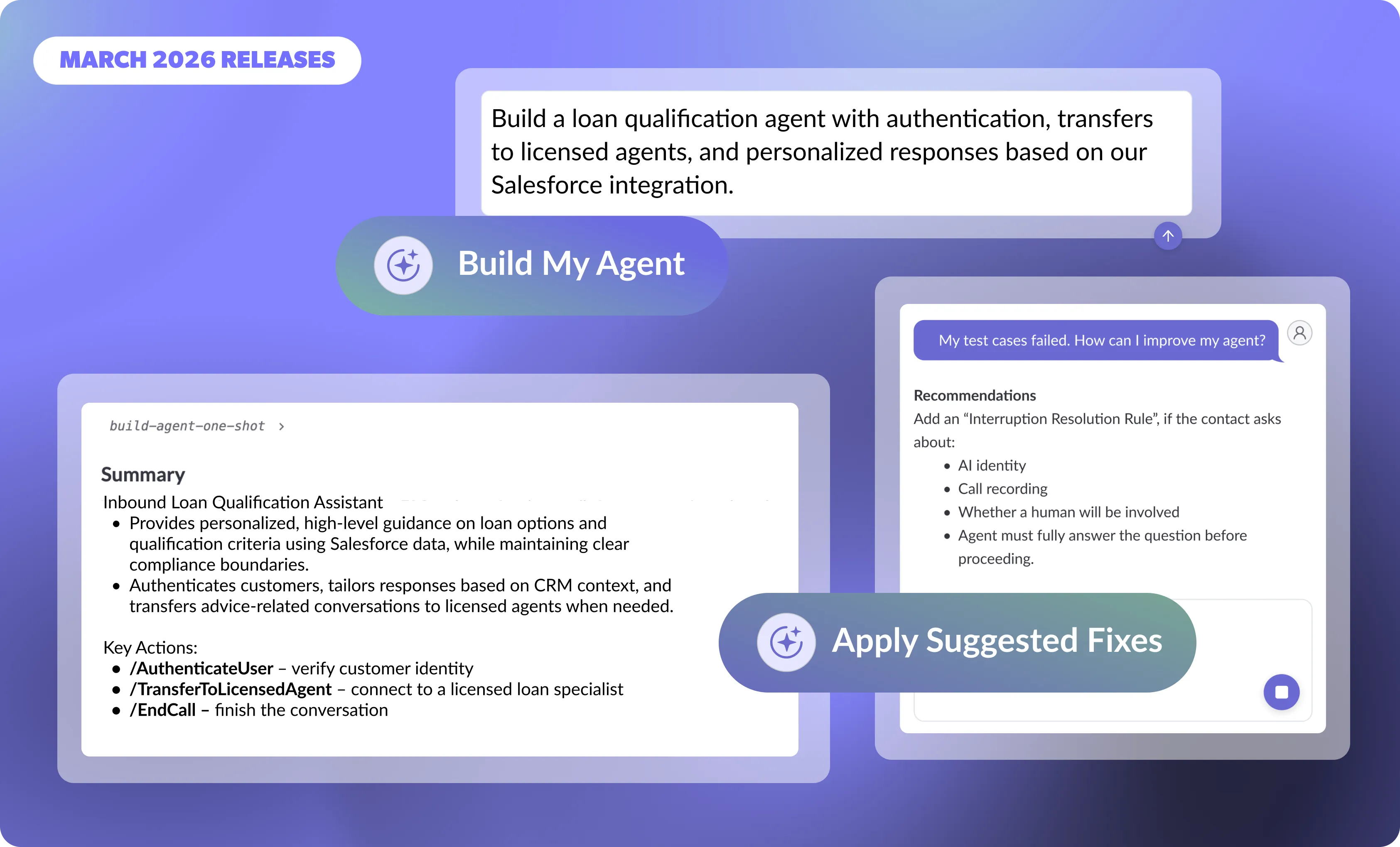
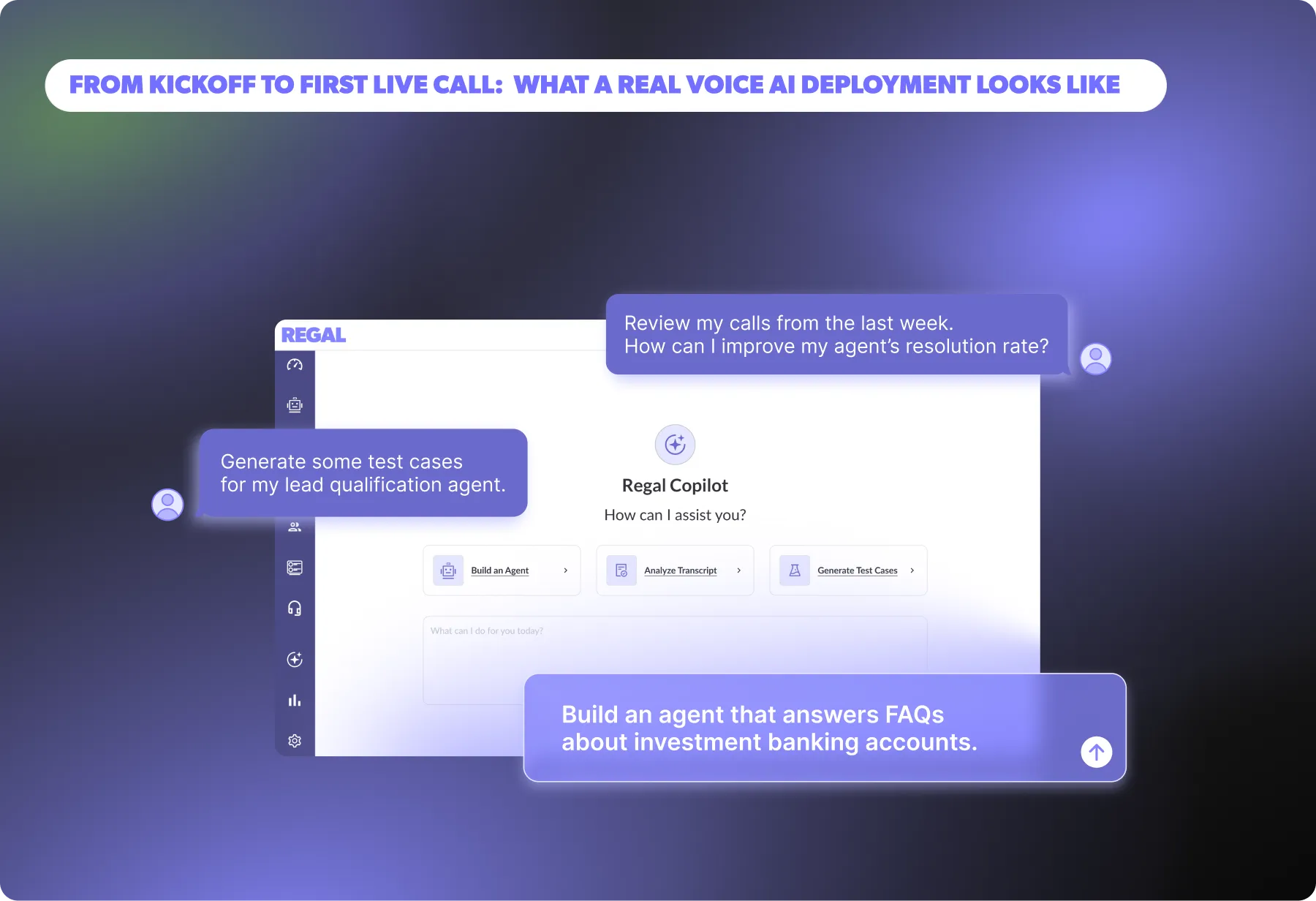
In March, we made it faster than ever to build, launch, and continuously improve AI agents with Copilot, Regal's AI agent for building AI agents. Together, these updates lessen the time needed to launch and maintain agents, so you can focus on understanding your customers, unlocking new use cases, and driving faster business outcomes.
.webp)
AI agent performance depends on how well it aligns with real customer language, not just fluency. Regal Improve helps teams identify gaps and improve outcomes by analyzing real conversations and surfacing high-impact opportunities
.webp)
In this fireside chat, Regal Co-Founder & CEO Alex Levin sits down with Kin Insurance’s Austin Ewell and a360inc’s Henry Davidson to share how their organizations are using AI agents to transform outreach, customer experience, and operational efficiency. They discuss real-world deployments—from qualification and human agent handoffs to complex negotiation workflows—break down the results, and offer practical guidance for leaders adopting AI agents at scale.
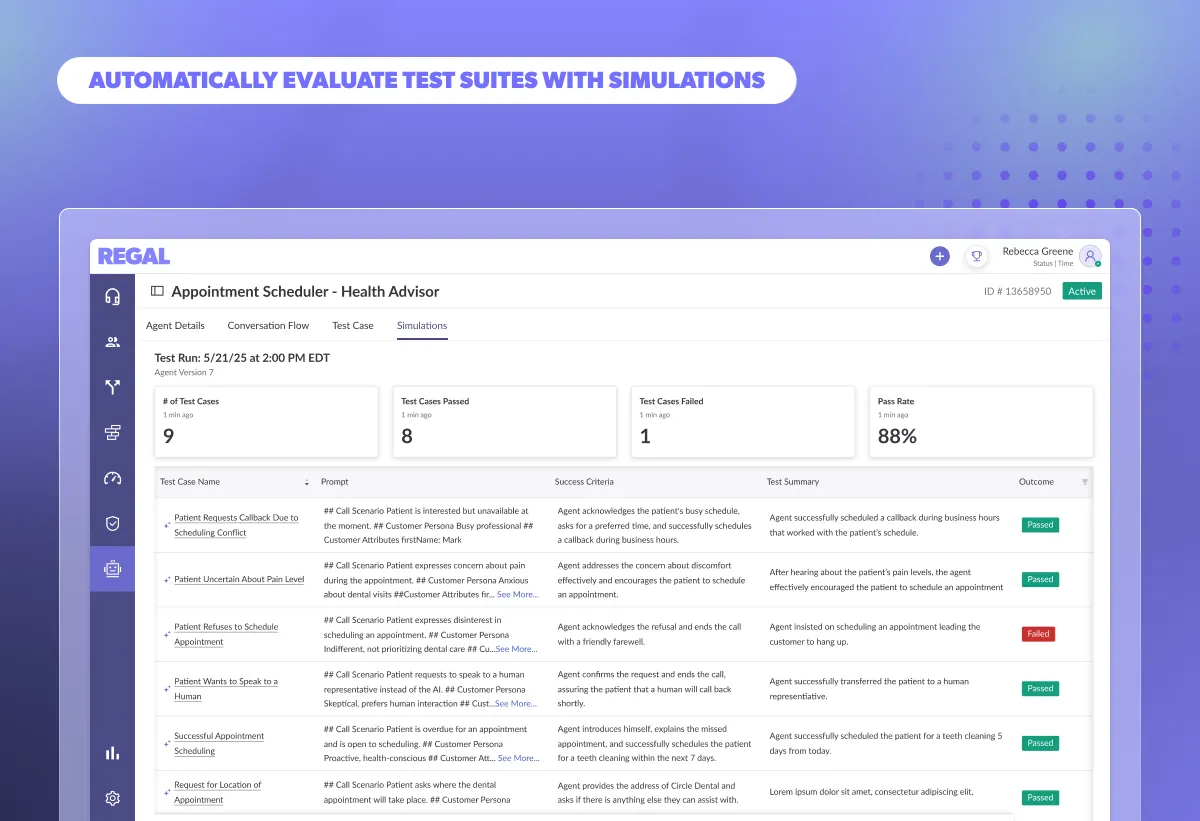
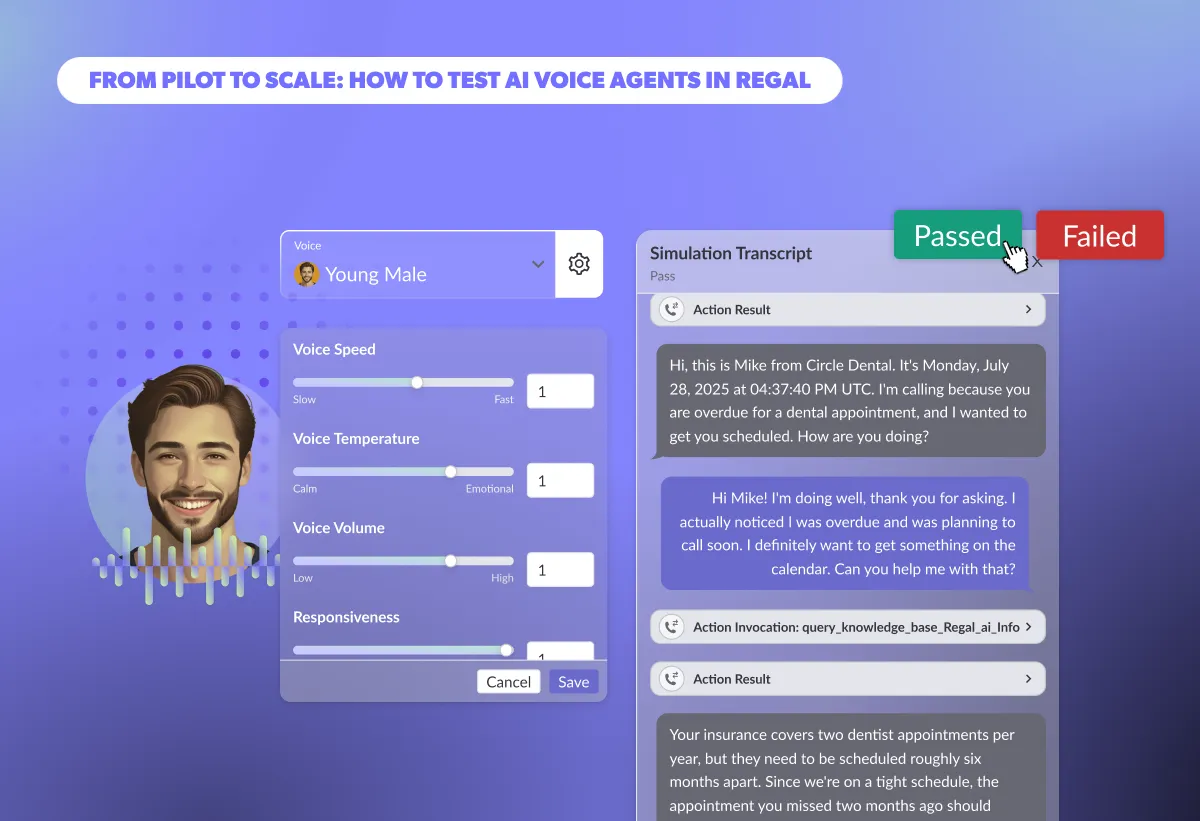
Discover how you can use Simulations to evaluate scenario-specific conversational flows that pinpoint AI Agent failures before launch. Speed up regression testing, validate prompts, knowledge bases, and custom actions at scale, and deploy reliable AI Agents with confidence.
%20(1).webp)
Apple’s iOS 26 introduces new call-screening controls that will reshape outbound performance. This guide explains what’s changing, how adoption may impact enterprise contact centers, and the proactive steps leaders can take now to protect answer rates and customer trust.
Learn how to maintain a clean, reliable RAG system for AI Agents. Discover best practices for structuring source docs, chunking content, titling for retrieval, avoiding redundancy, and keeping knowledge bases fresh to ensure accurate, scalable performance.
.webp)
This article outlines the core characteristics that influence how voice AI is perceived on live calls. From mechanical traits like speed and volume, to more emotional and conversational behaviors, we’re going to look at what those characteristics mean, why they matter, and how they impact your bottom line.
.webp)
Learn how to configure your AI Voice Agent for real performance. This guide covers the most important voice settings in Regal, what ranges top brands use in production, and how adjusting speed, tone, and responsiveness impact cost, containment, and overall customer experience.
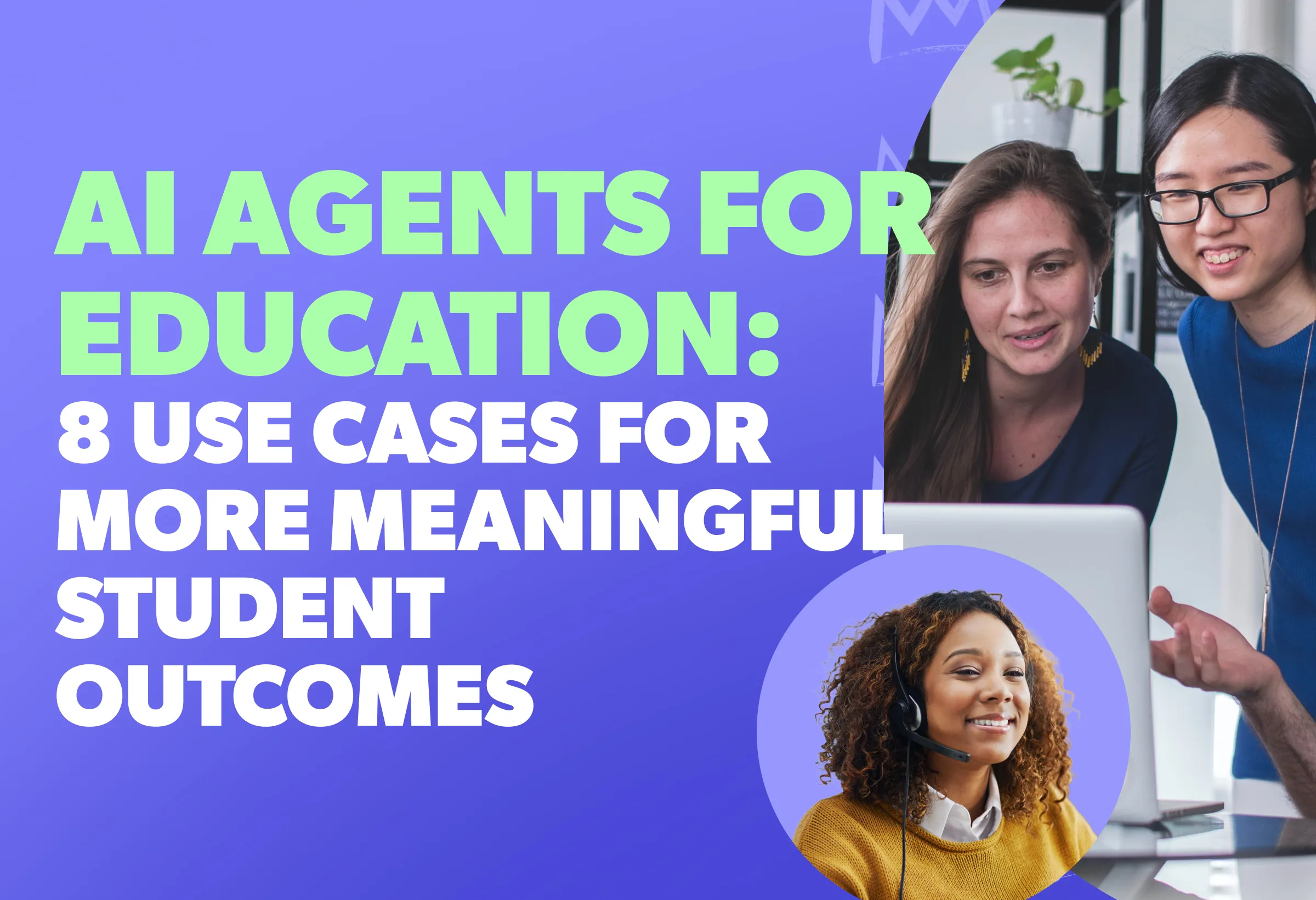
AI Agents for Education are transforming student engagement—boosting enrollment, improving retention, and making support more human. Discover 8 game-changing use cases that free up your staff while delivering better student outcomes.

Regal is officially one of Forbes America’s Best Startup Employers 2025, ranking #164 out of 500. This recognition is a testament to our incredible team, our innovative work culture, and our unwavering commitment to advancing AI technology.

AI in education is helping to streamline admissions, automate student engagement, and enhance higher ed outreach. Discover key education technology trends to boost enrollment and learn why automated student engagement tools are the future.
.webp)
When it comes to comparing AI Agents vs. AI Assistants, Siri & Alexa handle simple tasks, but Gen AI Voice Agents—like Regal’s AI Phone Agent—drive real business impact with human-like conversations, automation, and seamless integration.
.webp)
.png)

.png)
.webp)
.png)


.webp)
.webp)


.avif)
.webp)

.webp)
.webp)

.webp)
.webp)

.avif)
.webp)


.webp)

.webp)
.webp)
.webp)

%20(1).webp)
.webp)
%20(1).webp)
.png)
.webp)
.webp)
.webp)
.webp)
%20(1).webp)
%20(1).webp)
%20(1).webp)
.webp)
.webp)
.webp)
.webp)
%20(1).webp)


%202.webp)


.webp)
.webp)
.webp)
.webp)


