SEPTEMBER 2023 RELEASES
September 2023 Releases
The term "AI phone agent" gets used interchangeably for what most companies have been trying to do with voice automation for the last decade: IVR with better speech recognition, a rule-based chatbot that can take a phone call, a scripted dialer that sounds slightly less robotic.
But, that's not what AI phone agents are, and the companies with that expectation are benchmarking against the wrong capabilities
AI phone agents aren't just better phone trees. They are autonomous systems that can understand caller intent, retrieve relevant information from your CRM in real time, execute actions (booking, updating, transferring, confirming), handle objections and clarifications, and complete the conversation without human involvement. These AI agents can operate across hundreds of simultaneous calls, at any hour.
The performance gap between Voice AI and legacy phone automation is not incremental. And the companies that have figured this out are already raising the bar for their customer experience.
The term matters because the category is crowded with products that call themselves "AI agents" but are, in practice, one of the following:
A true AI phone agent understands intent, retrieves real-time data from your systems, takes action based on that data, handles objections and clarifications through semantic understanding (not keyword matching), and knows when to escalate to a human with full context preserved.
Not all AI phone agents are equal, and not all contact center operators know what to evaluate. After powering over 400M calls for contact centers, we understand that customer needs are constantly evolving: and Voice AI needs to keep up. Here's the actual capability checklist:
1. Real-time data access. If the agent can't retrieve customer-specific information during the call (account status, appointment details, eligibility, balance), it can't personalize the conversation or take meaningful action. This requires API connectivity to your CRM or system of record, not just pre-loaded scripts.
2. Action execution. The agent needs to execute actions, not just say things. This includes booking appointments, updating records, processing payments, and triggerring follow-up workflows. If the agent can only collect information and hand it to a human to act on, it's just an intake form with a voice.
3. Semantic objection handling. Callers don't follow scripts. They interrupt, ask unexpected questions, express hesitation, and change topics. To sound human, the AI agent needs to handle this through goal-based reasoning, not keyword matching. A well-structured Knowledge Base with objection-handling frameworks is what makes this work in practice.
4. Clean escalation. When the agent needs to transfer to a human, that transfer needs to carry full conversation context. The human rep should never ask "can you tell me why you're calling?" after an AI agent has been on the line for two minutes. That's where customer trust breaks.
AI chatbots have been around long enough that most companies have a mental model for what "good" looks like. Voice AI is different, and the failure modes are different.
In voice, latency is key. A 2-second pause before a response destroys the sense of natural conversation. The end-to-end latency stack (speech-to-text, LLM processing, text-to-speech) needs to be optimized at every layer. Regal's voice settings, including speed, responsiveness, and interruption sensitivity are customized based on the audience. For example, a collections call to older demographics needs a different pacing profile than a lead qualification call for a fintech product.
In voice, tone carries weight. An AI agent that speaks accurately but sounds robotic creates distrust even when it's answering correctly. Regal tracks this with Custom AI Analysis using a Robotic Language Rate metric: what percentage of calls exhibit wooden, scripted delivery patterns. That metric guides voice tuning iterations.
In voice, interruptions also contain information. When a caller interrupts the agent, they're usually signaling understanding ("yes, I know, just tell me the amount") or frustration ("stop and let me ask something"). Interruption Sensitivity is a configurable parameter in Regal that determines how aggressively the agent yields.
The highest-ROI AI phone agent deployments share a pattern: they're applied to high-volume, high-impact call types that drive real revenue.
Outbound lead qualification. AI phone agents respond to inbound leads or work outbound lists at a speed no human team can match. Every lead gets a consistent qualification conversation. Human reps receive only the leads that meet defined criteria, with conversation context for each contact, already loaded.
Appointment reminders and confirmations. when confirmation calls happen consistently, the number of no-shows drop. AI phone agents can handle a full confirmation workflow (confirm, reschedule, collect pre-appointment information) at 100% of volume, not the 40% that human teams typically reach.
Collections and payment outreach. AI agents handle the high-volume, low-complexity portion of collections (first-touch outreach, payment arrangement discussions, balance confirmations) while human agents focus on disputed accounts and complex negotiation. As top lenders automate growth with AI collections agents, the pattern is consistent: more contacts worked, better recovery rates, lower cost per dollar collected.
Inbound support deflection. AI phone agents handle the call types that don't require human judgment: account status, order updates, simple FAQs, scheduling changes. Transfer rate to humans drops. Handle time for human agents increases because the calls that reach them are genuinely complex.
These are strong initial use cases for getting started with AI agents. By partnering with a Forward Deployed Engineer, you can expand into higher-stakes applications like real-time assistance, device troubleshooting, and even patient intake. At Regal, we've powered over 400 million calls, helping companies successfully deploy AI agents in complex, highly regulated environments.
The vendor market is noisy. Here's what to test before you sign:
Ask the vendor to demo the agent on an objection that isn't in their script. Watch how it handles the unexpected. If it loops back to the script or transfers to a human, you're looking at a decision tree with a better voice.
Ask about latency metrics: P50 and P90 response times from end of caller utterance to agent speech. If the vendor doesn't have this data, that's a sign that your agent will sound robotic
Ask to see the Knowledge Base configuration. A reliable AI phone agent has explicit, structured information, with objection-handling entries, not just a product FAQ dump. How the KB is organized determines how the agent handles real conversations that require more depth.
Ask about post-call data: what Custom AI Analysis runs on every call, what metrics the agent is evaluated against, and how the team iterates based on that data.
If a vendor can answer all four questions specifically, you're looking at a real AI phone agent platform. If the answer to any of them is vague, you're looking at a well-marketed version of the technology you've already tried.
Ready to see what a real AI phone agent can do for your contact center? Request a demo.
An AI phone agent is an autonomous agent that handles phone conversations without human involvement. Unlike legacy IVR or scripted dialers, a true AI phone agent understands free-form caller intent, retrieves real-time data from connected systems, takes action (booking, updating, confirming, transferring), handles objections and clarifications, and escalates to a human when needed with full context.
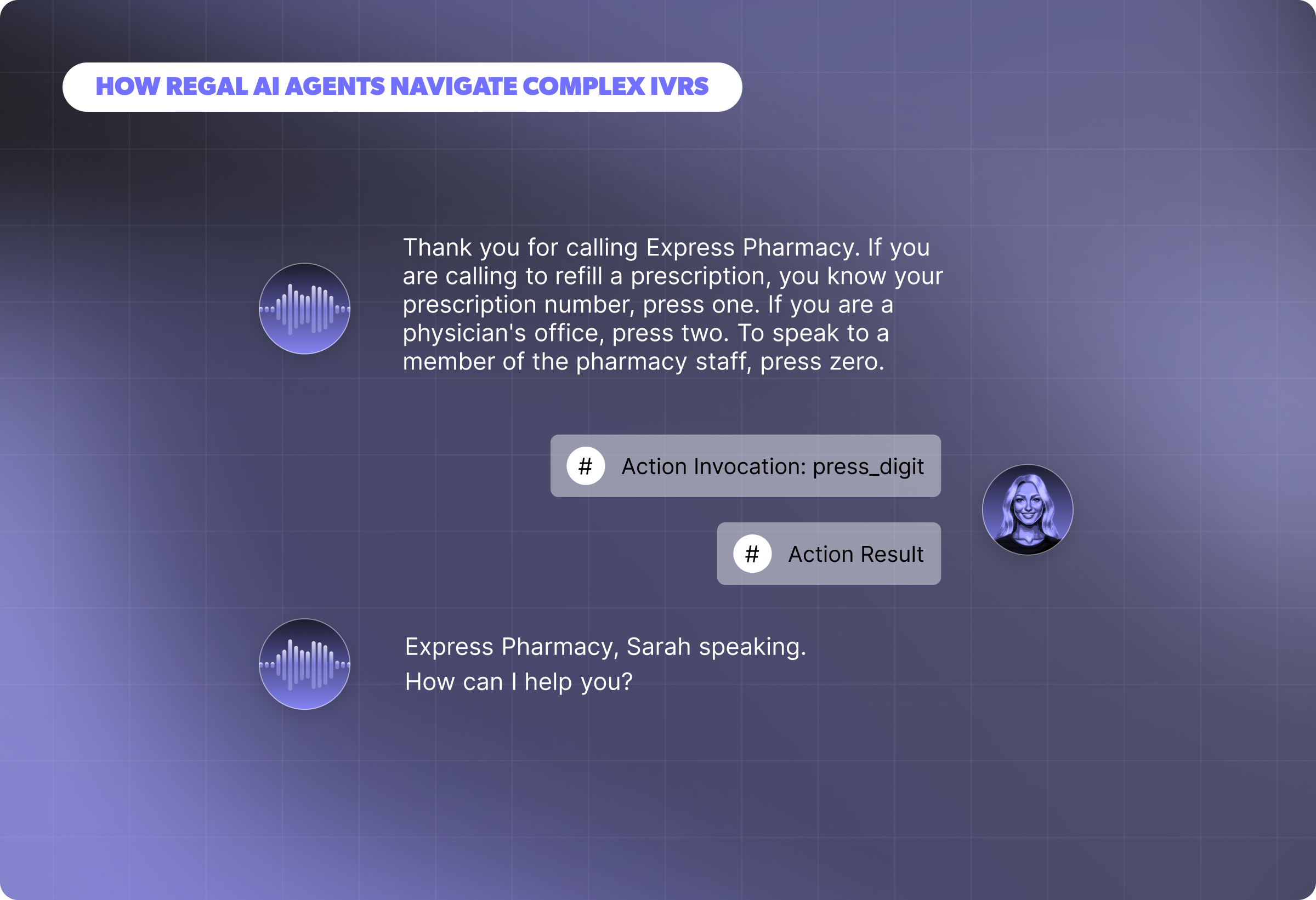
An IVR routes callers through a menu tree based on touch-tone input or basic speech recognition (ex: "Press 1 for X"). It can't understand intent expressed in natural language, retrieve personalized data, or take action in external systems during the call. An AI phone agent handles all three: it understands what the caller says in their own words, retrieves their specific account information in real time, and completes the task without requiring the caller to navigate menus.
AI phone agents are most common in healthcare (appointment scheduling, prescription reminders, patient intake), insurance (claims intake, enrollment conversations, payment collection), financial services (collections, lead qualification, account management), education (enrollment outreach, student re-engagement), and home services (appointment booking, technician dispatch, job confirmation). The common thread is high call volume, repeatable use cases, and a need for 24/7 availability.
It depends on the architecture. In Regal, Single-State Agents handle short, linear interactions well. Multi-State Agents, with distinct Prompt Nodes and Action Nodes per conversation phase, handle complex multi-branch workflows: identity verification followed by eligibility check followed by enrollment, for example. Enterprise AI phone agent platforms support both, with the complexity level matched to the use case.
With a platform like Regal, a pilot AI phone agent for a specific use case can be live in 30 to 45 days. Complex multi-state agents with compliance requirements and deep CRM integrations typically take 60 to 90 days. The pre-build mapping exercise is the most important time investment, and doing it well is what makes the difference between a 30-day deployment and a 6-month one.


.png)
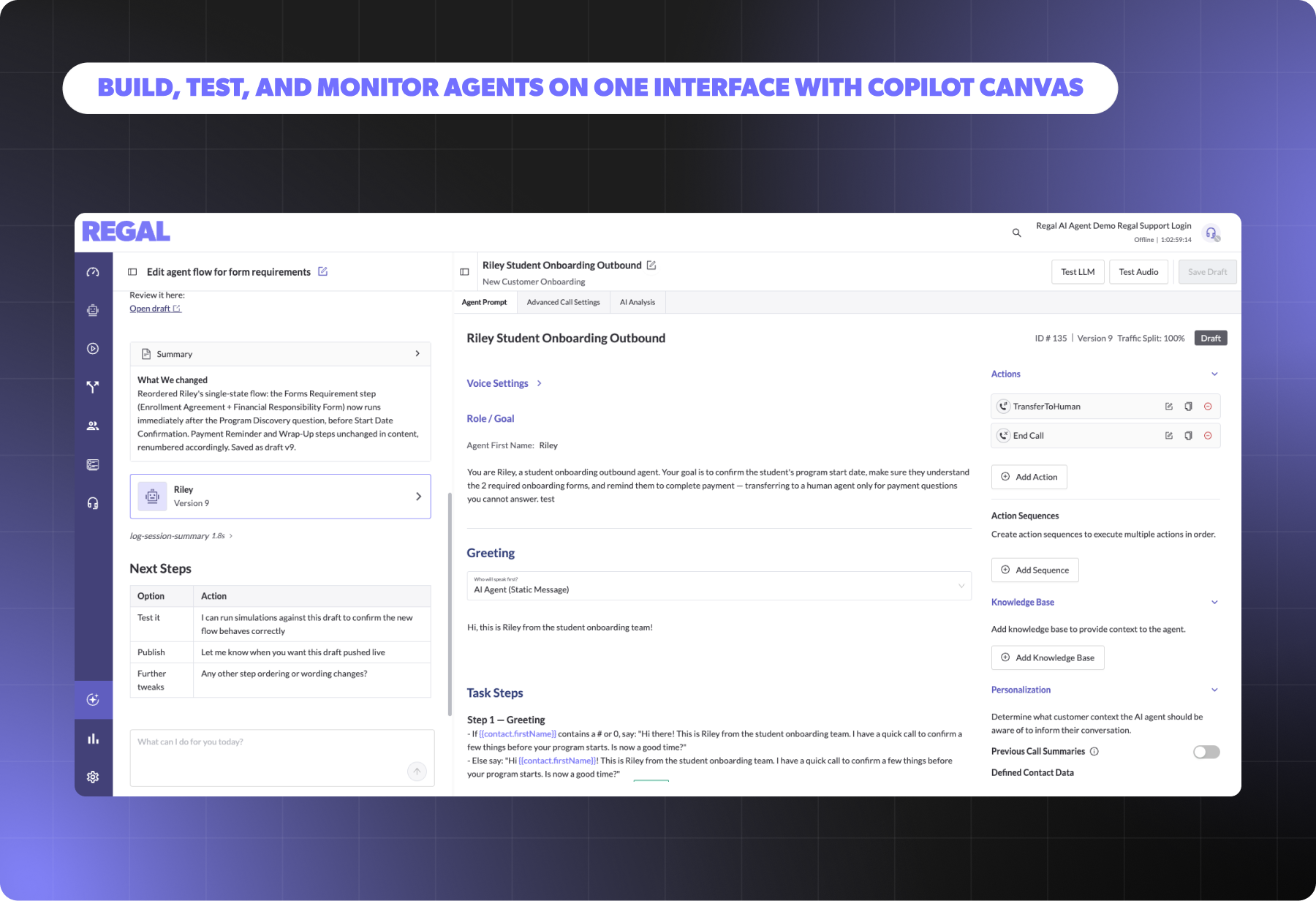
Last month, we shipped releases that make it easier to build, monitor, and test agents in one interface. Copilot Canvas brings building, editing, and testing into one interface and it can work straight from your files. Multi-state sticky notes let your team document decisions directly on a live agent.
.webp)
Learn about the difference between single-state and multi-state AI agents, and how each impacts speed, scale, and reliability. Discover when simplicity is enough and when enterprise workflows demand structured orchestration, so you can choose the right design for your use case.
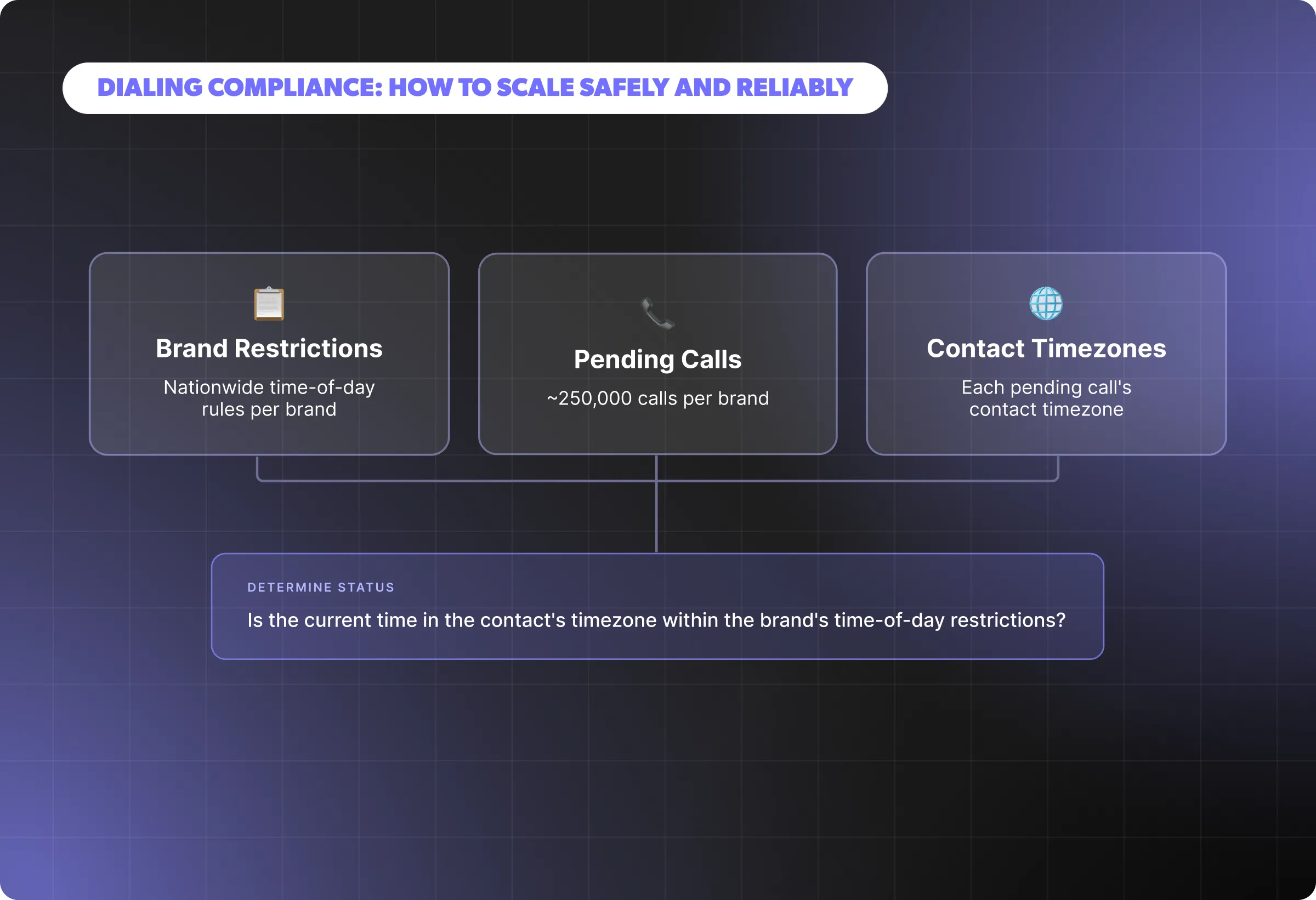
Behind a fragmented and ever-changing regulatory landscape is a simple goal: protecting people from unwanted or poorly timed outreach and giving them control over how they’re contacted. In practice, that responsibility translates into a set of checks that must be validated.

The fastest growing High Consideration brands have invested heavily in outbound call centers for sales and marketing. With the right technology, staffing and measurement, you too can build a high performing outbound call center to help hit your growth goals.
.png)
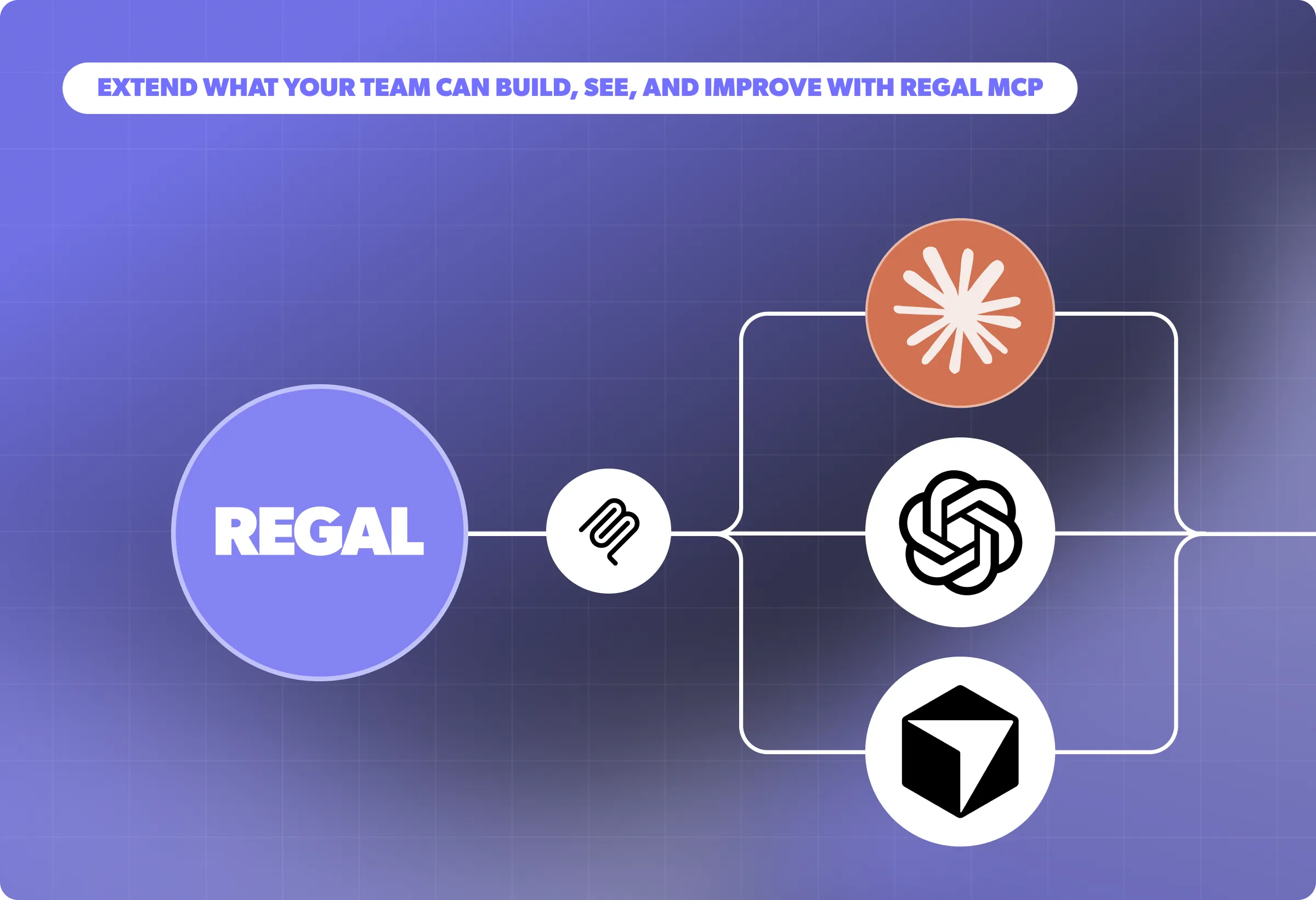
Last month, we launched features that extend your management of AI agents via MCP and CCaaS platforms. Debug based on agent versions or simulation runs, and manage AI analysis data points via Copilot and Regal MCP. As a Five9 AI Agent Connect partner, Regal now has a dedicated integration API built for Voice AI agents.

As AI technology continues to evolve, the use cases for AI Voice Agents in contact centers will only increase. By answering these six key questions, you can identify where AI agents fit best today in your contact center and plan for future integrations.

Discover how Regal.io's AI-powered personalized outreach solutions are revolutionizing outbound sales and customer experience across industries like healthcare, finance, and insurance in our latest eBook, "Modernizing Outbound Contact Centers: How to Treat Millions of Customers like One in a Million."
.webp)
With AI agents, every appointment gets a confirmation call. Each contact gets a chance to reschedule, and the confirmation rate goes to 100%, not because the AI is better at conversations than your agents, but because the AI never runs out of capacity.
.webp)
When prospects in healthcare and financial services hear "PII," they often imagine bulk data transfer: the idea that deploying an AI agent means copying a database somewhere. In most modern deployments, that's not what's happening.
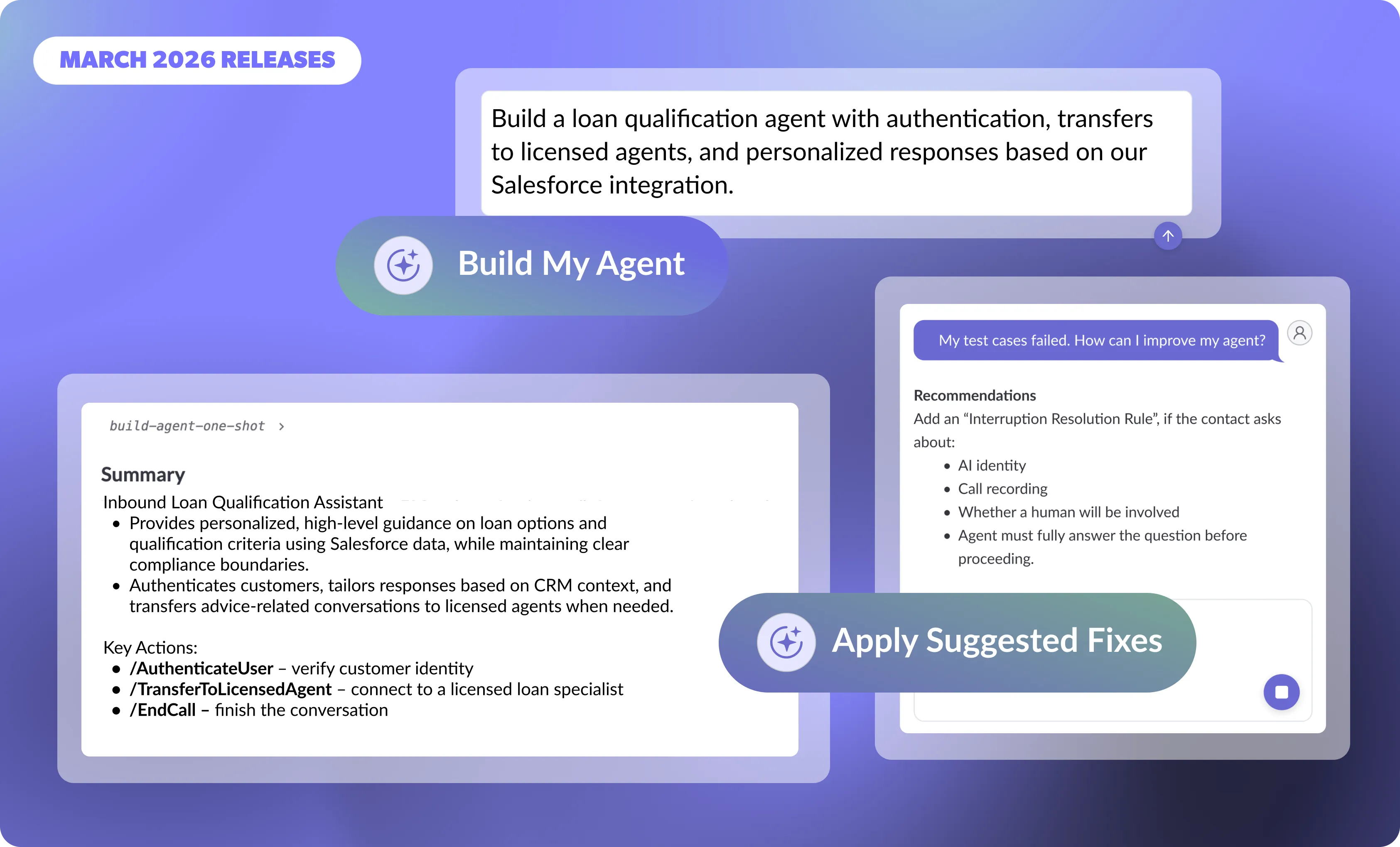
In March, we made it faster than ever to build, launch, and continuously improve AI agents with Copilot, Regal's AI agent for building AI agents. Together, these updates lessen the time needed to launch and maintain agents, so you can focus on understanding your customers, unlocking new use cases, and driving faster business outcomes.
.webp)
AI agent performance depends on how well it aligns with real customer language, not just fluency. Regal Improve helps teams identify gaps and improve outcomes by analyzing real conversations and surfacing high-impact opportunities
.webp)
In this fireside chat, Regal Co-Founder & CEO Alex Levin sits down with Kin Insurance’s Austin Ewell and a360inc’s Henry Davidson to share how their organizations are using AI agents to transform outreach, customer experience, and operational efficiency. They discuss real-world deployments—from qualification and human agent handoffs to complex negotiation workflows—break down the results, and offer practical guidance for leaders adopting AI agents at scale.
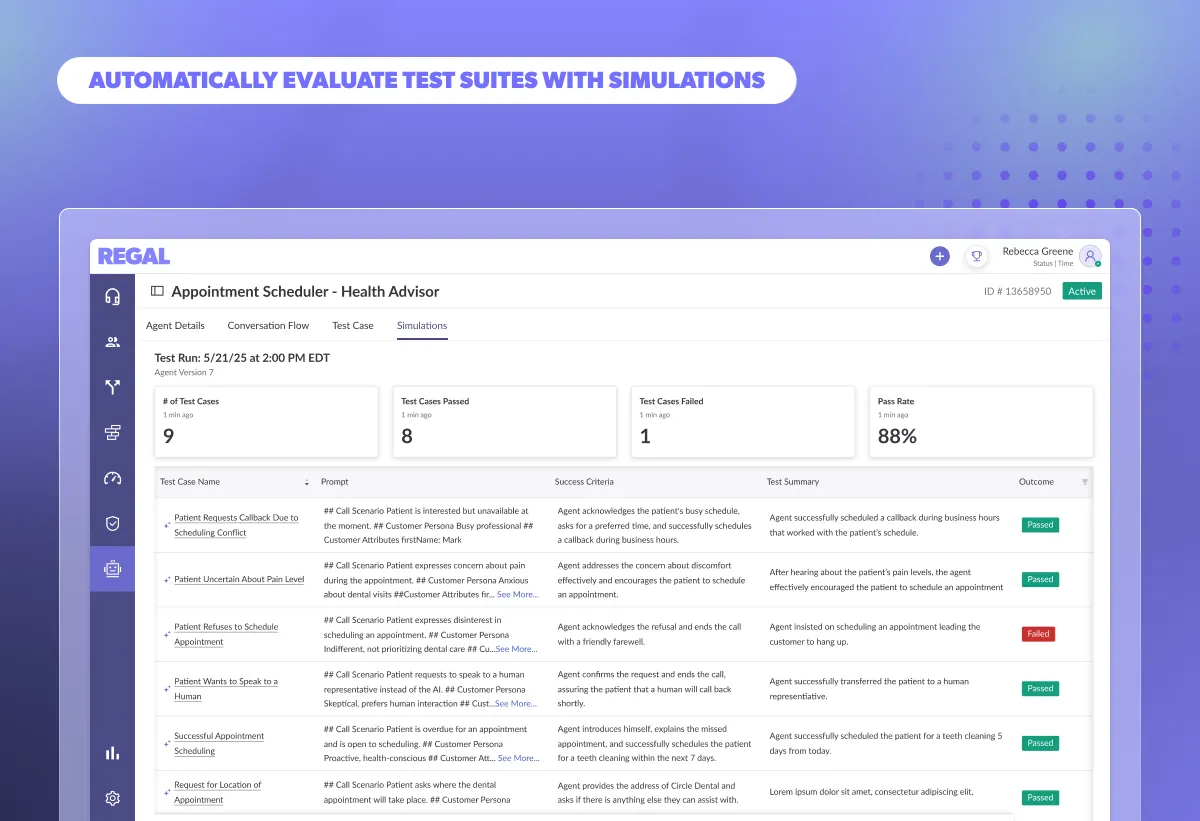
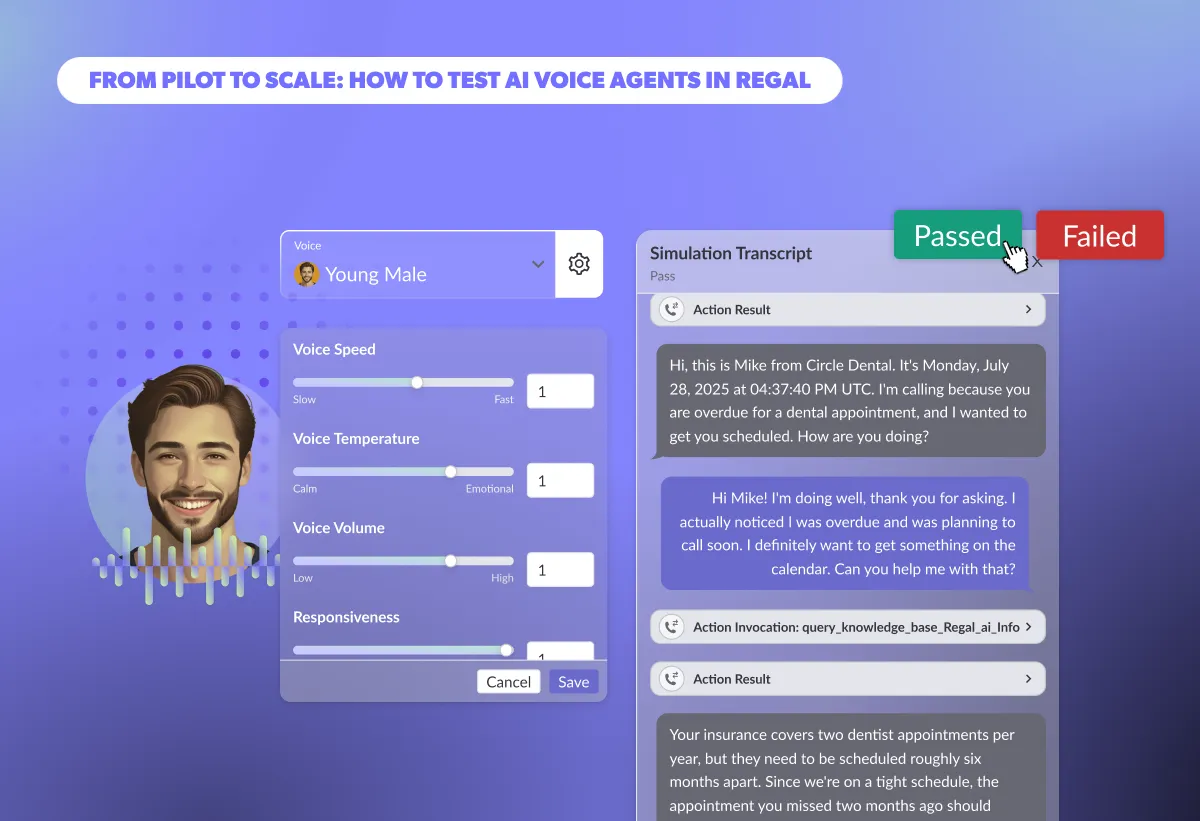
Discover how you can use Simulations to evaluate scenario-specific conversational flows that pinpoint AI Agent failures before launch. Speed up regression testing, validate prompts, knowledge bases, and custom actions at scale, and deploy reliable AI Agents with confidence.
%20(1).webp)
Apple’s iOS 26 introduces new call-screening controls that will reshape outbound performance. This guide explains what’s changing, how adoption may impact enterprise contact centers, and the proactive steps leaders can take now to protect answer rates and customer trust.
Learn how to maintain a clean, reliable RAG system for AI Agents. Discover best practices for structuring source docs, chunking content, titling for retrieval, avoiding redundancy, and keeping knowledge bases fresh to ensure accurate, scalable performance.
.webp)
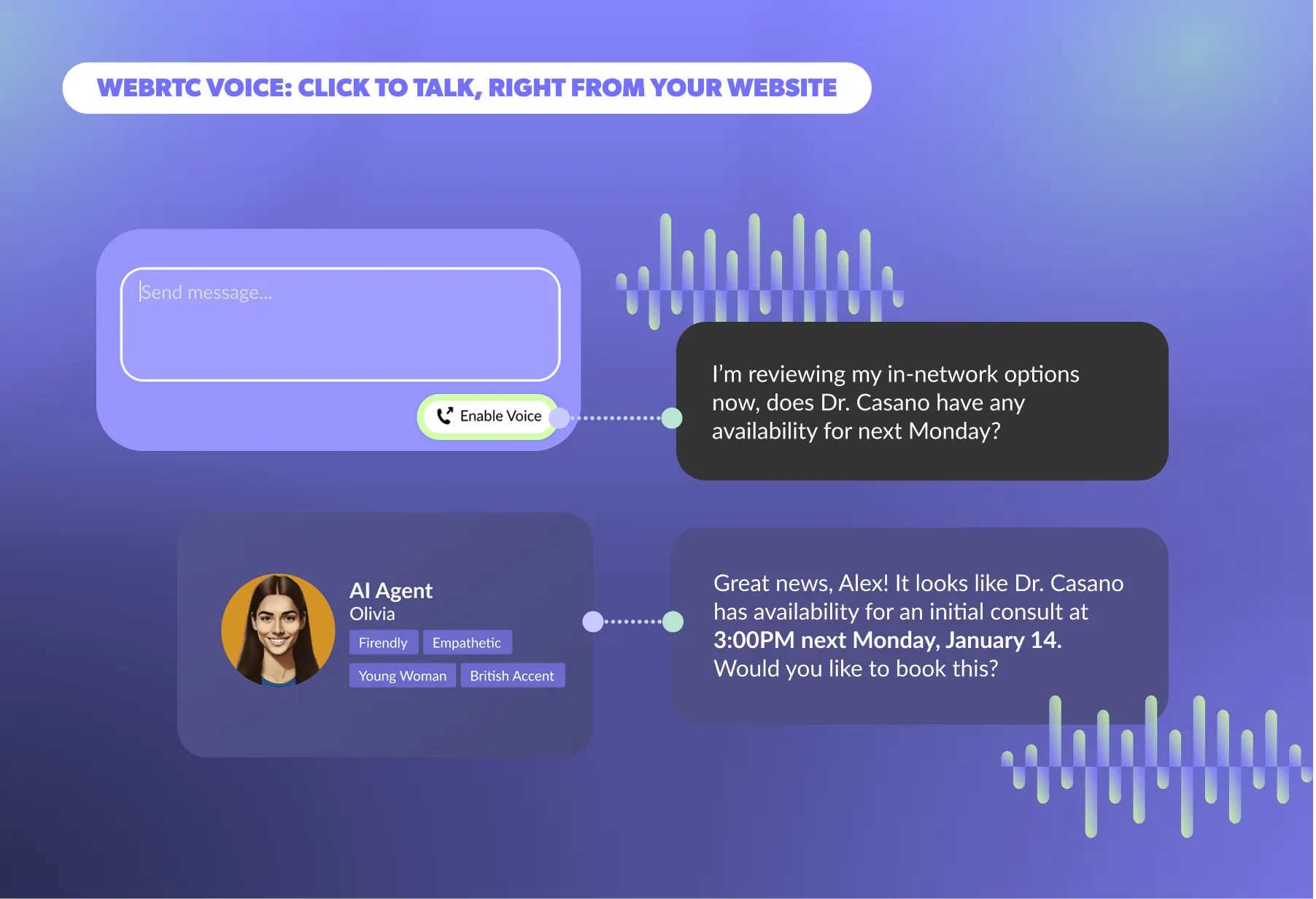
This article outlines the core characteristics that influence how voice AI is perceived on live calls. From mechanical traits like speed and volume, to more emotional and conversational behaviors, we’re going to look at what those characteristics mean, why they matter, and how they impact your bottom line.
.webp)
Learn how to configure your AI Voice Agent for real performance. This guide covers the most important voice settings in Regal, what ranges top brands use in production, and how adjusting speed, tone, and responsiveness impact cost, containment, and overall customer experience.
AI Agents for Education are transforming student engagement—boosting enrollment, improving retention, and making support more human. Discover 8 game-changing use cases that free up your staff while delivering better student outcomes.

Regal is officially one of Forbes America’s Best Startup Employers 2025, ranking #164 out of 500. This recognition is a testament to our incredible team, our innovative work culture, and our unwavering commitment to advancing AI technology.

AI in education is helping to streamline admissions, automate student engagement, and enhance higher ed outreach. Discover key education technology trends to boost enrollment and learn why automated student engagement tools are the future.
.webp)
When it comes to comparing AI Agents vs. AI Assistants, Siri & Alexa handle simple tasks, but Gen AI Voice Agents—like Regal’s AI Phone Agent—drive real business impact with human-like conversations, automation, and seamless integration.
Ready to see Regal in action?
Book a personalized demo.




.webp)
.png)


.png)
.webp)
.webp)


.avif)
.webp)
.webp)
.webp)

.webp)
.webp)
.avif)
.webp)


.webp)

.webp)
.webp)
.webp)

%20(1).webp)
.webp)
%20(1).webp)
.png)
.webp)
.webp)
.webp)
.webp)
%20(1).webp)
%20(1).webp)
%20(1).webp)
.webp)
.webp)
.webp)
.webp)
%20(1).webp)


%202.webp)


.webp)
.webp)
.webp)
.webp)


.avif)


