SEPTEMBER 2023 RELEASES
September 2023 Releases
A contact center leader at a home services company didn't want a generic AI voice. He wanted "Janelle": a specific name, a specific feel, a specific human quality his team had spent years earning with customers. His main concern? Deploying an AI agent that sounds cold, blunt, or robotic; impacting the way customers see his brand.
Customers choose whether to engage based on how natural that first conversation feels. An AI voice that sounds mechanical isn't just a quality issue. It signals the technology wasn't built with them in mind.
Voice quality concerns are one of the most consistent objections in AI deployment conversations right now. And for good reason: most contact center leaders have heard or run an AI pilot where the agent sounded wooden, mechanical, or just wrong. The experience left an impression.
Here's the thing most teams get wrong: they treat robotic voice as a subjective quality problem. Something you adjust through instinct, A/B test your way around, or just accept as the cost of AI. But robotic voice has measurable causes, measurable effects, and measurable fixes. Once you see it that way, it stops being a character flaw and starts being an engineering problem.
When a contact center leader says an AI agent sounds robotic, they're usually pointing at the symptom. The root causes are almost always in the design.
Over-scripted prompts produce wooden delivery. When a prompt tries to control every word the agent says, the output starts sounding like someone reading from a manual. The LLM follows the script, but the natural variation in phrasing (the small adaptations a human agent makes in real time) disappears. The result is delivery that's technically correct and obviously artificial.
The wrong LLM for the use case amplifies this. Not every model handles conversational tone the same way. A model optimized for structured function calling will approach an empathy moment differently than one built for expressive dialogue. Mismatching model capabilities to conversation requirements is one of the most common sources of that "off" feeling customers notice.
Voice settings left at defaults compound the issue. Speed, temperature, responsiveness, and interruption sensitivity all shape how natural a voice agent feels in real-time conversation. The most common production profile in Regal deployments runs speed at 1.08 to 1.11 and temperature at 1.10 to 1.20 for a reason. Default settings optimize for predictability, not naturalness.
Latency creates its own kind of robotic. A pause that's 200 milliseconds too long before a response, a slightly mismatched STT transcription, a TTS handoff with a small gap: none of these are dramatic failures. Together, they signal to customers that something is off, even if they can't say exactly what.
The point is that "robotic" isn't a vibe. It's the aggregate output of a stack of technical decisions. And that means it's fixable.
One of the most important developments in AI agent observability is that robotic language rate is now something you can actually measure, monitor, and improve. Not through customer surveys that arrive three days after a call. During the call itself, against the full transcript, automatically.
In Regal, teams use Custom AI Analysis to define "robotic language rate" as a structured data point evaluated against every post-call transcript. The platform runs an LLM over the full transcript and returns a score. That score feeds into the Conversation Intelligence dashboards, into aggregate trend analysis, and into the alert triggers that tell your team when a specific agent's delivery is degrading.
This matters for a few reasons. First, it gives you a baseline. Before you change anything, you know where you are. Second, it gives you a signal when something shifts. A new prompt version, a different LLM, an updated voice configuration: the impact shows up in the metric, not in a subjective "does this sound better to you?" review. Third, it connects quality to outcomes. When you can correlate robotic language rate with transfer rate or containment rate, you stop optimizing for "sounds better" and start optimizing for results.
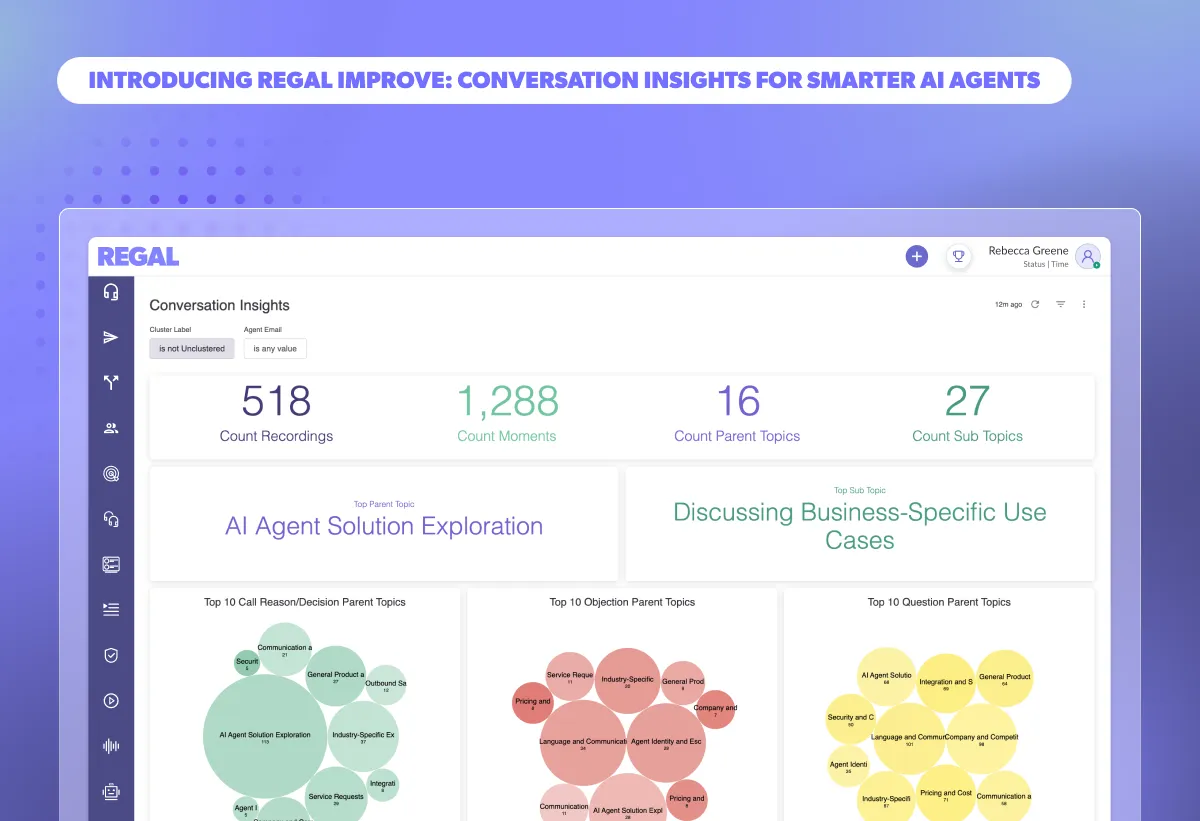
The robotic voice problem doesn't just affect perception. It shows up in the data as lower engagement, higher transfer rates, and shorter call durations. The Conversation Topics Dashboard in Regal Improve surfaces what customers are actually saying across all calls, including the moments where conversations derail, where customers ask to speak to a human, or where engagement drops.
Once you have measurement in place, improvement becomes systematic. There are four places to intervene.
.webp)
1. Prompt structure. Give the agent goals, not scripts. Instead of "say exactly: 'I completely understand your concern and want to make sure we get this resolved for you today,'" try "acknowledge the concern and express that resolution is the priority." The agent will generate natural variation. That variation is what makes delivery sound human.
2. LLM selection. For conversations where tone and rapport matter more than structured logic, GPT-4o and Claude 3.5 Haiku both produce more naturally expressive delivery than models optimized for function calling precision. Test on representative call samples before committing at scale. A/B testing in Regal lets you run variants against real traffic and measure the difference quantitatively.
3. Voice settings. The big three to adjust: speed (start at 1.08 and test), temperature (higher values introduce more natural variation, lower values increase consistency for compliance moments), and responsiveness (reduce slightly for older audiences or slower-paced dialogue). ElevenLabs voices in Regal adapt pacing and tone contextually throughout the conversation, which moves the naturalness needle significantly compared to static TTS.
4. Latency optimization. Most teams underestimate how much STT-LLM-TTS pipeline latency contributes to robotic perception. Track P50, P90, and P99 latency across the stack. Long-tail latency spikes, even rare ones, drive disproportionate customer frustration. Regal's Voice Fallback routing automatically routes across ElevenLabs, OpenAI, and Cartesia for reliability, which helps with consistency at scale.
The point of tracking robotic language rate isn't to generate a number. It's to build a feedback loop that actually closes.
The teams that improve fastest treat their AI agents like a product with a roadmap. They deploy, monitor, identify the top degradation point, make a targeted change, and measure again. Bi-weekly prompt reviews for the first 60 days. Monthly voice and LLM reviews after that. Regal Improve surfaces the curated call sets to review, the coverage gaps to address, and the prompt patterns that correlate with poor outcomes, so the team knows where to spend time.
Voice AI is architectural, not cosmetic. Warm words on a broken flow make things worse. But warm words on a well-structured, well-measured system compound over time. The contact centers that treat robotic language rate as a first-class quality metric, right alongside containment rate and transfer rate, are the ones building AI agents that customers stop noticing as AI at all.
At Regal, that's the goal. Treat millions of customers like one in a million.
Ready to see how Regal's observability tools work in practice? Request a demo.
Voice provider quality is only one layer of the problem. Robotic delivery usually stems from over-scripted prompts that eliminate natural phrasing variation, mismatched LLM selection for the conversation type, default voice settings that aren't calibrated for the specific use case, or latency in the STT-LLM-TTS pipeline. Fixing the voice provider without addressing these other variables rarely produces meaningful improvement.
Robotic language rate can be tracked using post-call transcript analysis. In Regal, teams configure Custom AI Analysis to evaluate every call transcript for robotic phrasing patterns. The metric feeds into the Performance Dashboard and can be correlated with other outcomes like transfer rate and Receptiveness to AI to understand the business impact of delivery quality.
Speed and temperature have the most impact on perceived naturalness. The most common production range in Regal deployments is 1.08 to 1.11 for speed and 1.10 to 1.20 for temperature. Responsiveness also matters for conversations with older audiences or slower-paced dialogue. These settings interact with prompt structure and LLM choice, so changes should be tested in combination rather than isolation.
A scripted prompt specifies exact phrases for the agent to say. A goals-based prompt gives the agent an outcome to achieve and guidelines for how to approach it. Goals-based prompting produces more natural variation in delivery, which sounds more human. Scripted prompts are appropriate for compliance-required exact language, but over-applying them to conversational moments is one of the most common causes of robotic-sounding agents.
With measurement in place from the start, most teams see directional signal within 200 to 300 calls after a prompt or settings change. Regal Improve surfaces call sets correlated with poor quality scores, which lets teams validate changes against representative samples rather than waiting for statistical significance across all volume.
Ready to see Regal in action?
Book a personalized demo.




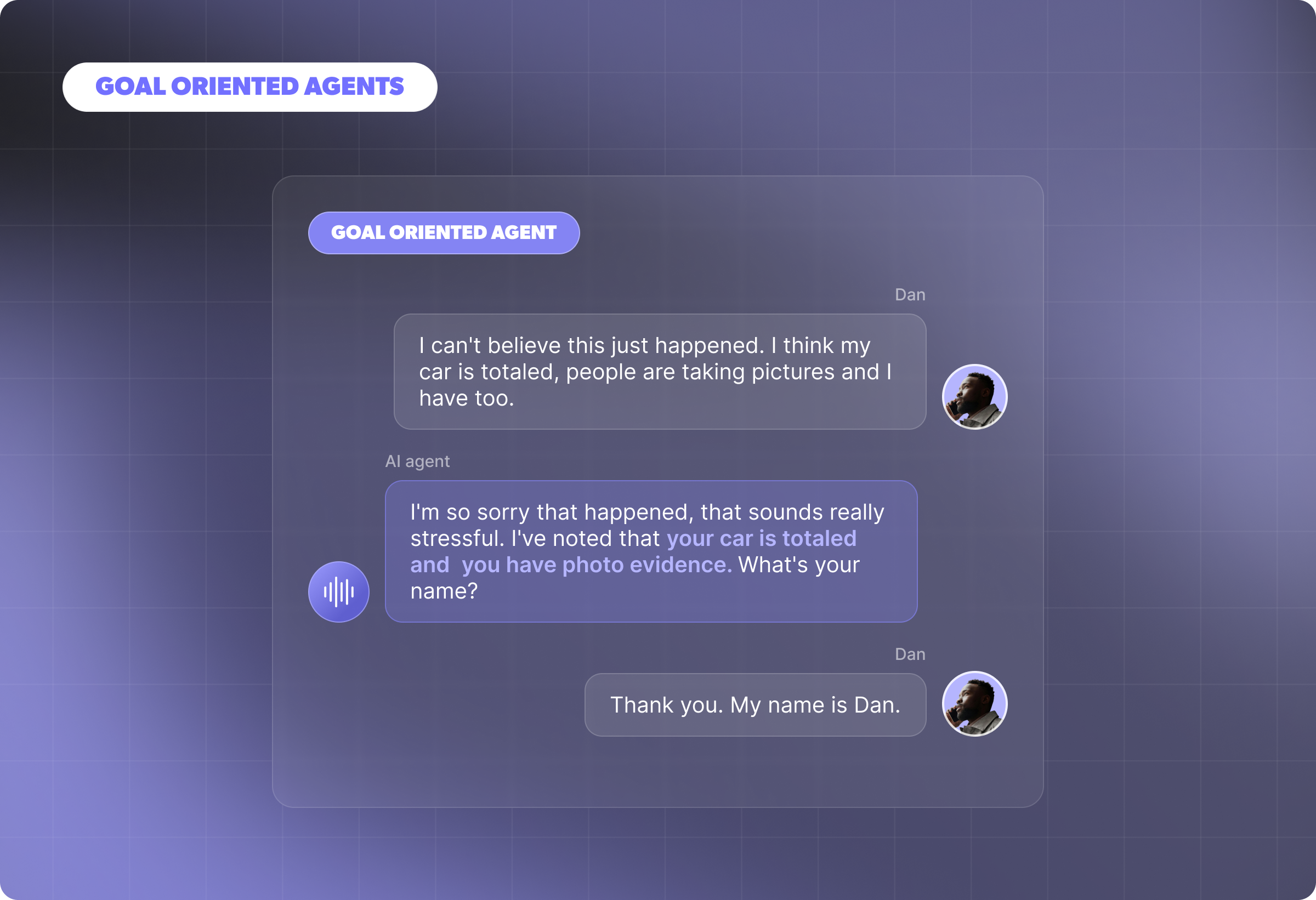
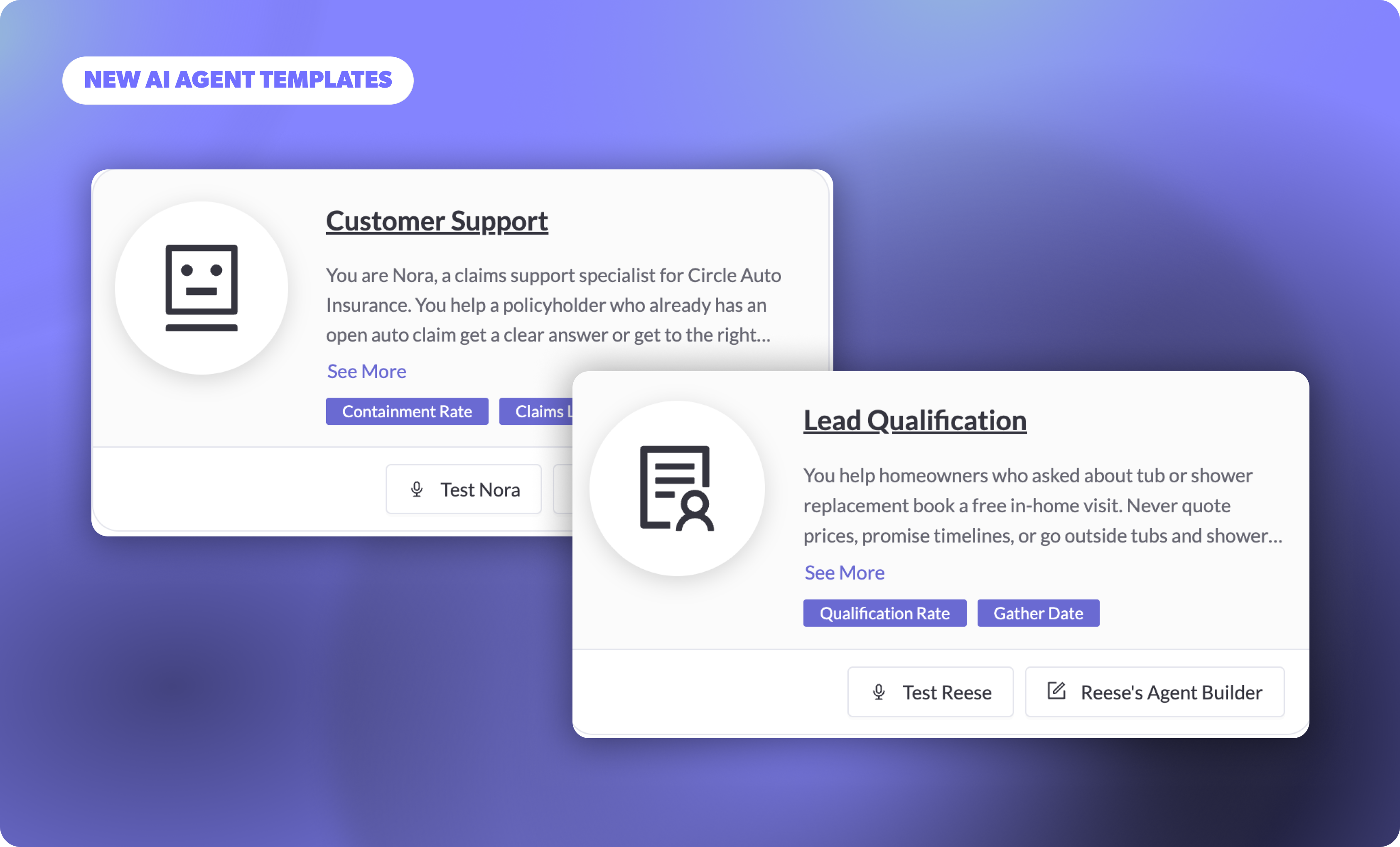
With Goal Oriented Agents, you can define goal nodes with the information the agent must collect and the prerequisites to get there. A dual-model design keeps the call natural and on track. This makes the agents well suited to complex intake and qualification.
.webp)
Customer conversations are inherently dynamic, and Regal Improve’s Knowledge Base Coverage tracks changes in retrieval performance over time and at scale. This makes it easy to verify that KB updates increase coverage and if your documentation is keeping up with evolving customer requests.
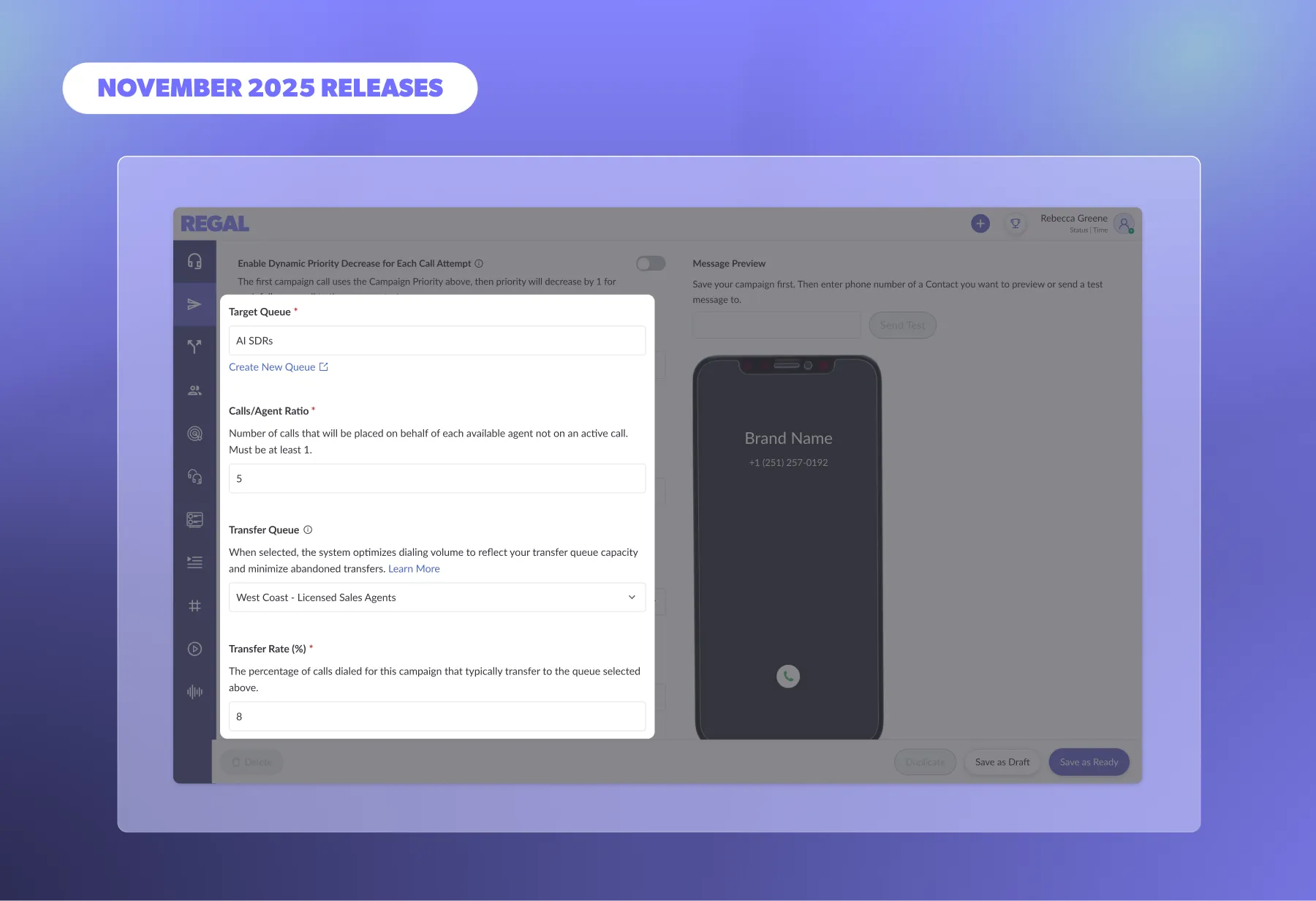
November's releases make it easier to scale your transfer-heavy call flows, with new tools that align dialer pacing to downstream agent capacity and streamline complex handoffs. You’ll also see improved post-call workflow accuracy, with reliable data extraction and disposition outcomes driven by LLM configurability and earlier validation.
.webp)
Building a great AI voice agent isn’t so different from parenting a five-year-old: clarity, examples, and structure make all the difference. This post breaks down proven prompting principles—from positive framing and persona design to conversational guardrails—that help AI agents sound natural, stay on task, and follow directions every time.
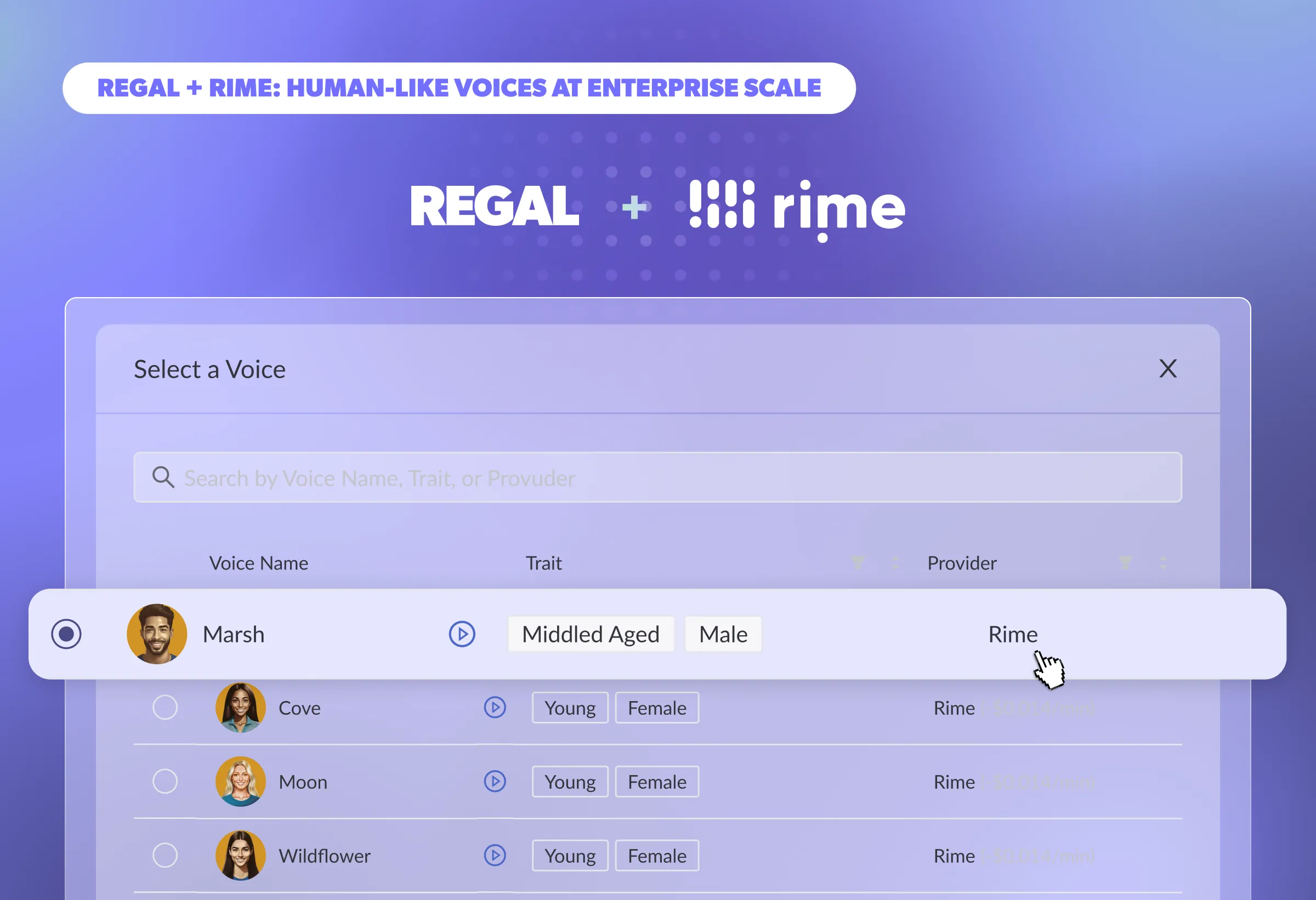
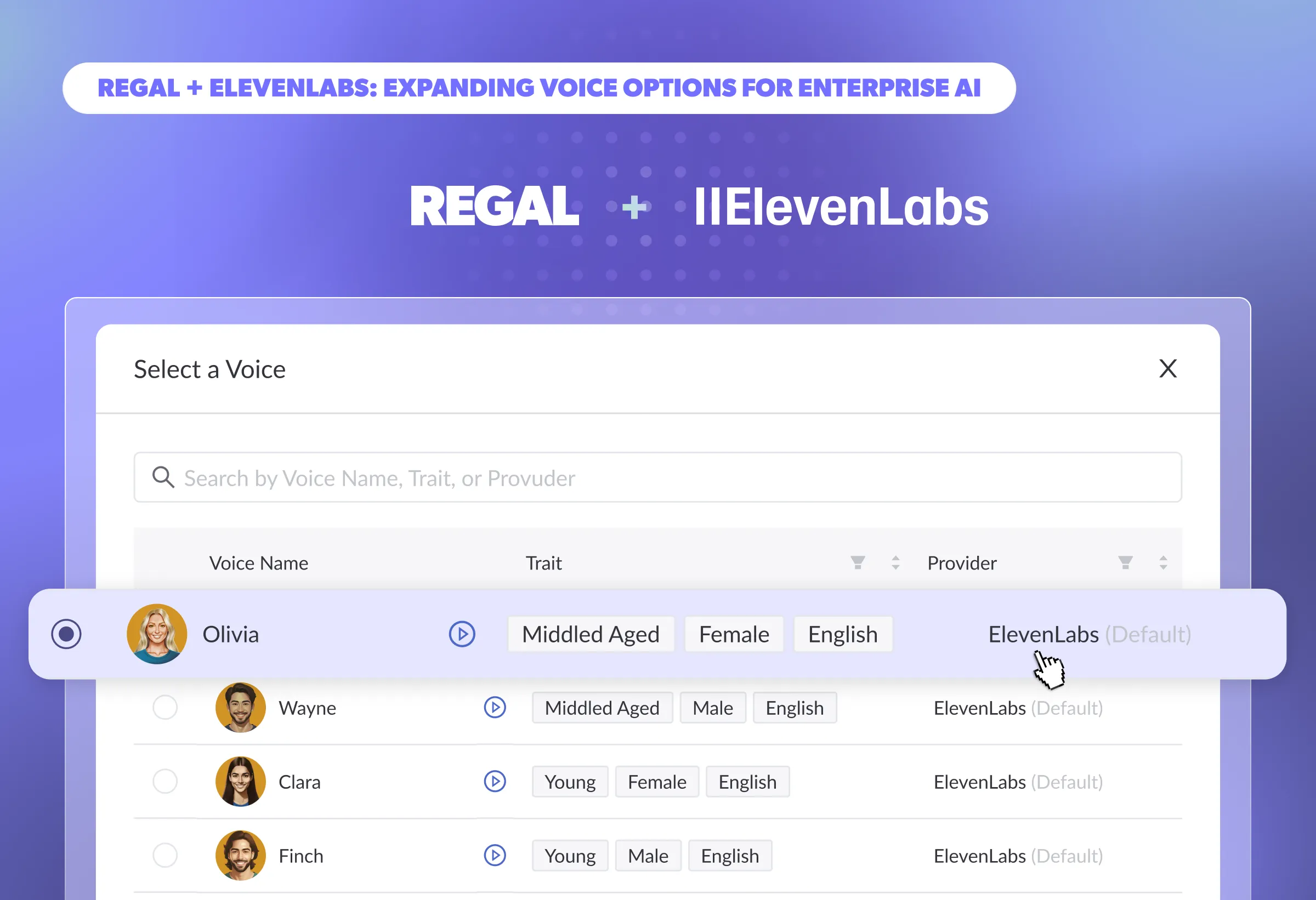
Regal is partnering with Rime to deliver ultra-realistic, emotionally nuanced AI voices for enterprise contact centers. Discover new voice options that capture human qualities like pacing, resonance, and subtle expression, and learn how Rime’s technology powers conversations that build trust at scale.
%20(1).webp)
Regal is partnering with Cartesia to deliver ultra-low latency, high-fidelity AI voices for enterprise contact centers. Explore new voice options, hear them in action, and learn about Cartesia's industry-leading voice AI offerings.

Why are so many contact centers stuck being cost centers? Why do they keep looking for cost reductions instead of revenue increases? Bad data and technology decisions are at the core of this issue. We need "marketing automation" (aka unified customer profiles, event-driven systems and a/b testing) like Regal.io in the contact center to empower teams to start looking for incremental revenue instead.

Consumer businesses are implementing AI-enabled customer experiences without any change in behavior on the part of consumers, which is leading AI to become common with more speed than past transitions like the internet and the smartphone. And it means that the next step in AI will not come from the LLM providers. The next big step forward in AI rests in the hands of consumer businesses.

Explore Eric Hauser's remarkable career journey from GovTech to healthcare disruption at Cadence, highlighting the transformative power of innovation, collaboration, with a special focus on the pivotal role of Regal in driving patient engagement and outcomes.

Discover how Regal.io's AI-powered personalized outreach solutions are revolutionizing outbound sales and customer experience across industries like healthcare, finance, and insurance in our latest eBook, "Modernizing Outbound Contact Centers: How to Treat Millions of Customers like One in a Million."
.jpeg)
Combining collaboration functionality into CCaaS workflow tools invites more cross-functional users from a company to participate in designing the end-customer experience, leading to better omni-channel orchestration and customer outcomes. Learn more about Regal's collaboration features.

Jon Heaps, former VP, Channel at Observe.ai, Talkdesk, and inContact interviews Alex Levin, Co-Founder & CEO of Regal.io, about the history of the contact center industry and some of the key challenges teams making outbound calls face as customers demand more online experiences.

Are you using Branded Caller ID for outbound calls or SMS? New SMS and Branded Caller ID regulations rolled out in Q2 2023 that you MUST KNOW ABOUT. The new regulations require that every company register their SMS campaigns and Branded Caller ID campaigns before being allowed to send texts or brand calls.

Regal’s Conversation Intelligence drives higher conversion rates for B2C sales teams. We use both the traditional QA/coaching tools, and brand new conversational triggers that allow you to update customer profiles and send automated follow up messages based on what is said in a conversation.

Caller ID, CNAM, and Branded Caller ID all help identify an incoming call and, therefore, increase call answer rates. Find out how they differ and how outbound phone sales teams can utilize each to reach prospects and customers effectively.

Our Co-Founder & CTO, Rebecca Greene, spoke with journalist Tony Zerucha at the recent Fintech Nexus USA 2023 event about how consumer lenders are using personalized phone and SMS sales outreach to obtain growth despite high inflation and rising interest rates.

The fastest growing High Consideration brands have invested heavily in outbound call centers for sales and marketing. With the right technology, staffing and measurement, you too can build a high performing outbound call center to help hit your growth goals.

We are excited to announce Regal Call Branding™ including Branded Caller ID. Available on all 400M wireless devices in the US (as well as most of Canada and the UK), Regal Call Branding™ puts you in control of what people see when you call their cell phone – including showing your brand and/or logo.

Get behind-the-scenes insights about Perry Health’s 23% revenue increase with Regal.io. Perry Health’s Scott Chesrown sat down with Regal.io and discussed how they implemented outbound sales technology, integrated new capabilities into their process, and built on their early success.

It’s the holiday season and you’d like to hit your December revenue goals. Outbound B2C sales during the holidays can be a major performance driver – if you're prepared and you have the right tools in place. Use these seven tips to get your outbound B2C sales in shape for holiday success.
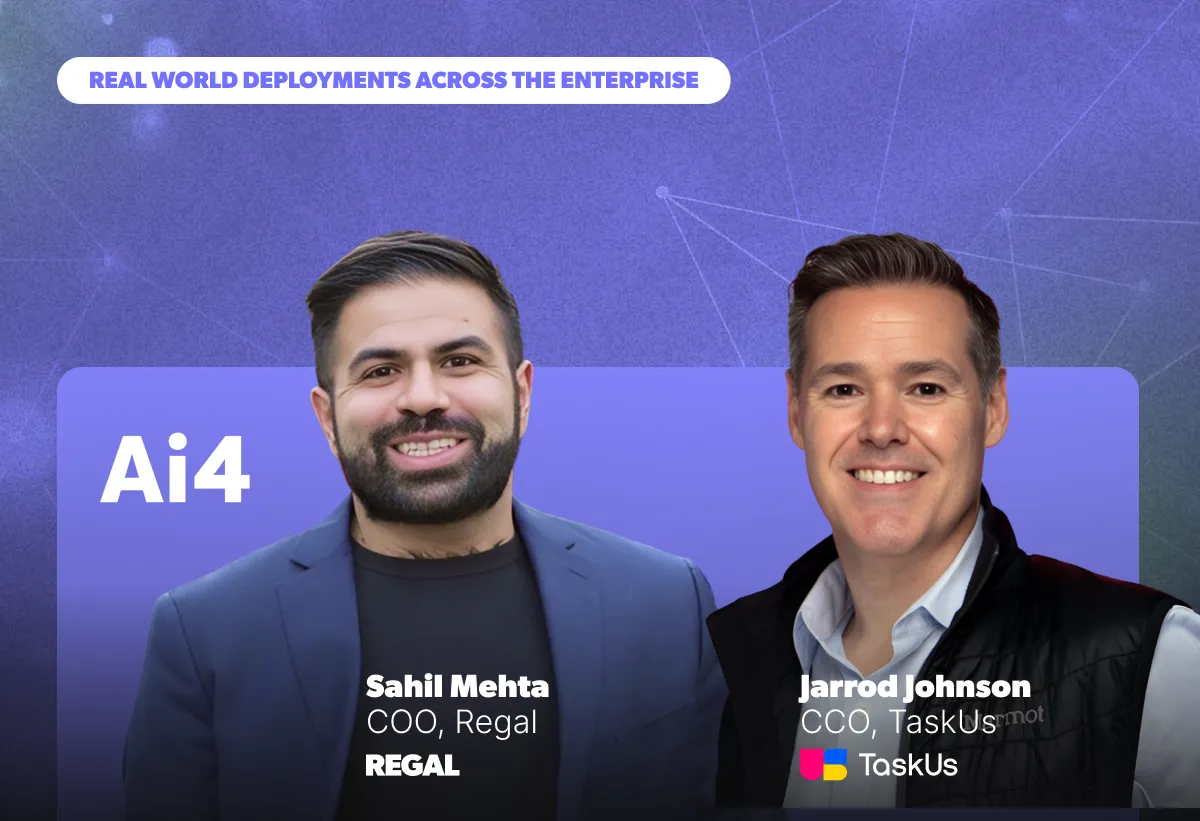
In this AI4 fireside chat, Regal.ai COO Sahil Mehta and TaskUs CCO Jarrod Johnson explore how enterprise organizations are deploying voice AI agents across customer experience, support, and sales. They share real-world deployments, discuss quality and ROI trade-offs, and outline best practices for aligning operations and product teams when adopting AI agents at scale.
.png)
Last month, we shipped releases that improve your contact center operations by extracting business insights with Copilot and reducing wasted agent minutes with our new Voicemail Detection model. The result is more reliable, productive AI agents that can drive revenue for your business.
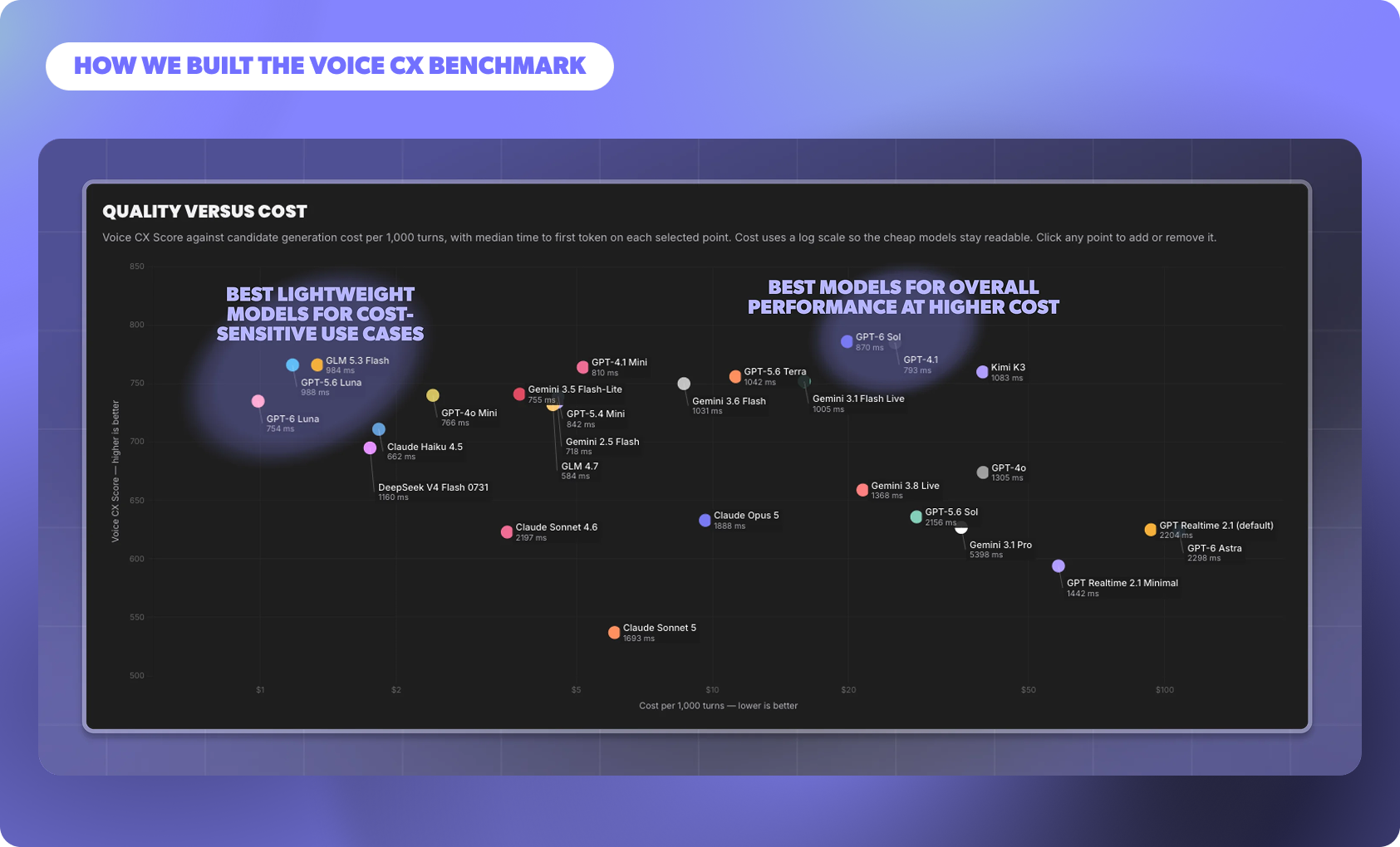
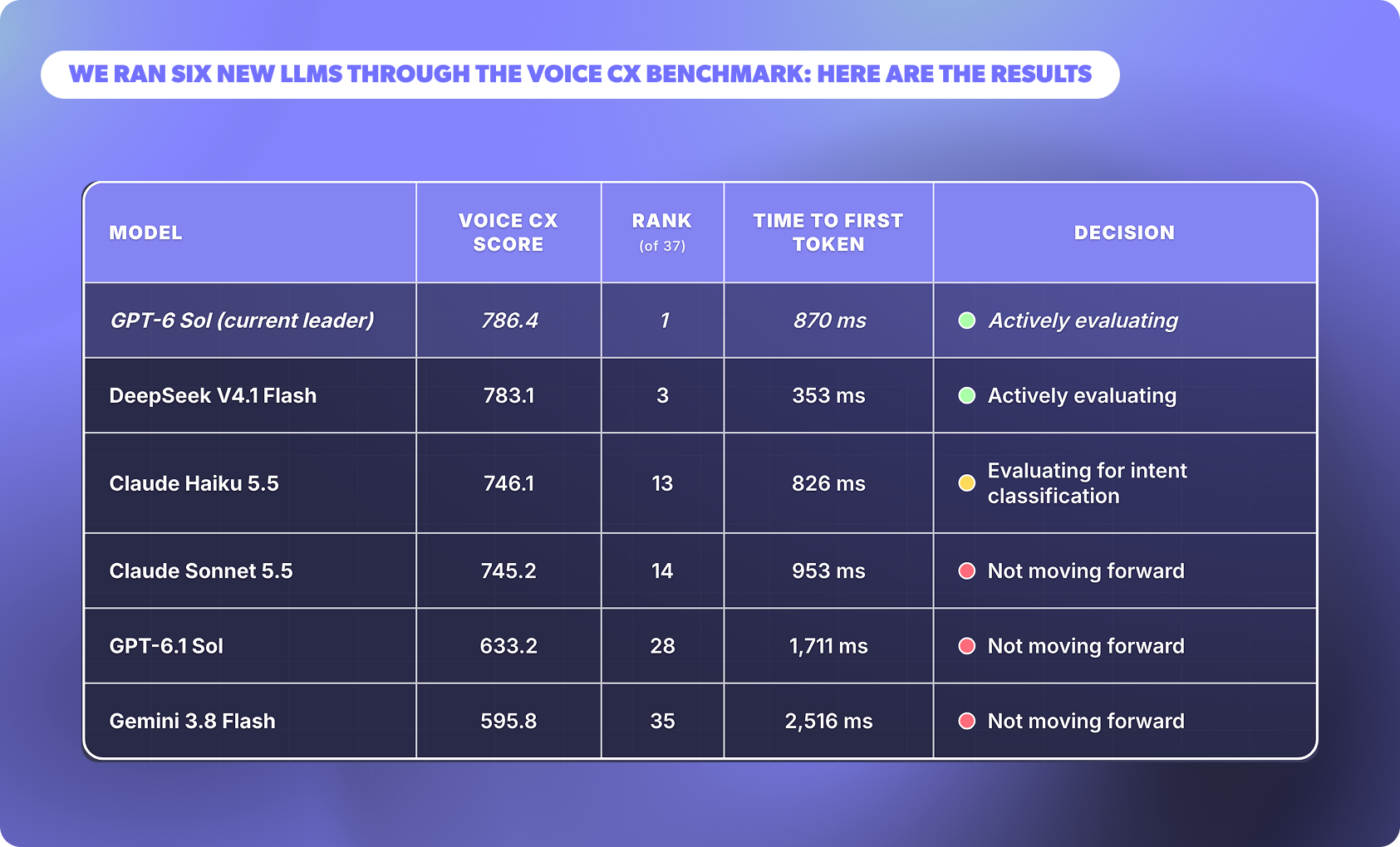
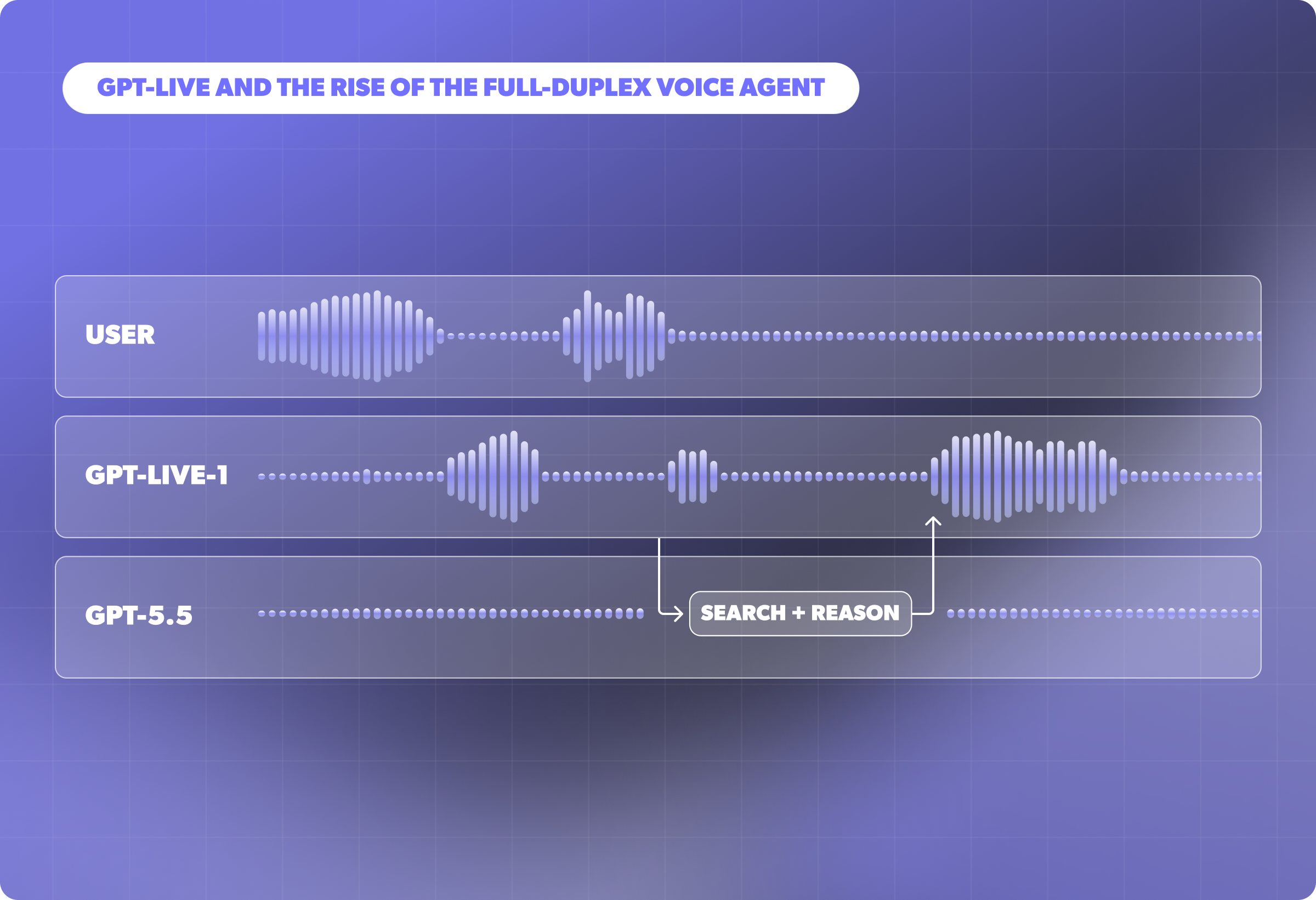
Enterprises need voice agents that hold a natural, human-like conversation while moving each call toward its goal and staying within compliance boundaries. The Voice CX Benchmark scores models on exactly that: how well they progress the call turn by turn, how safely and clearly they communicate, and how quickly they respond.
.png)
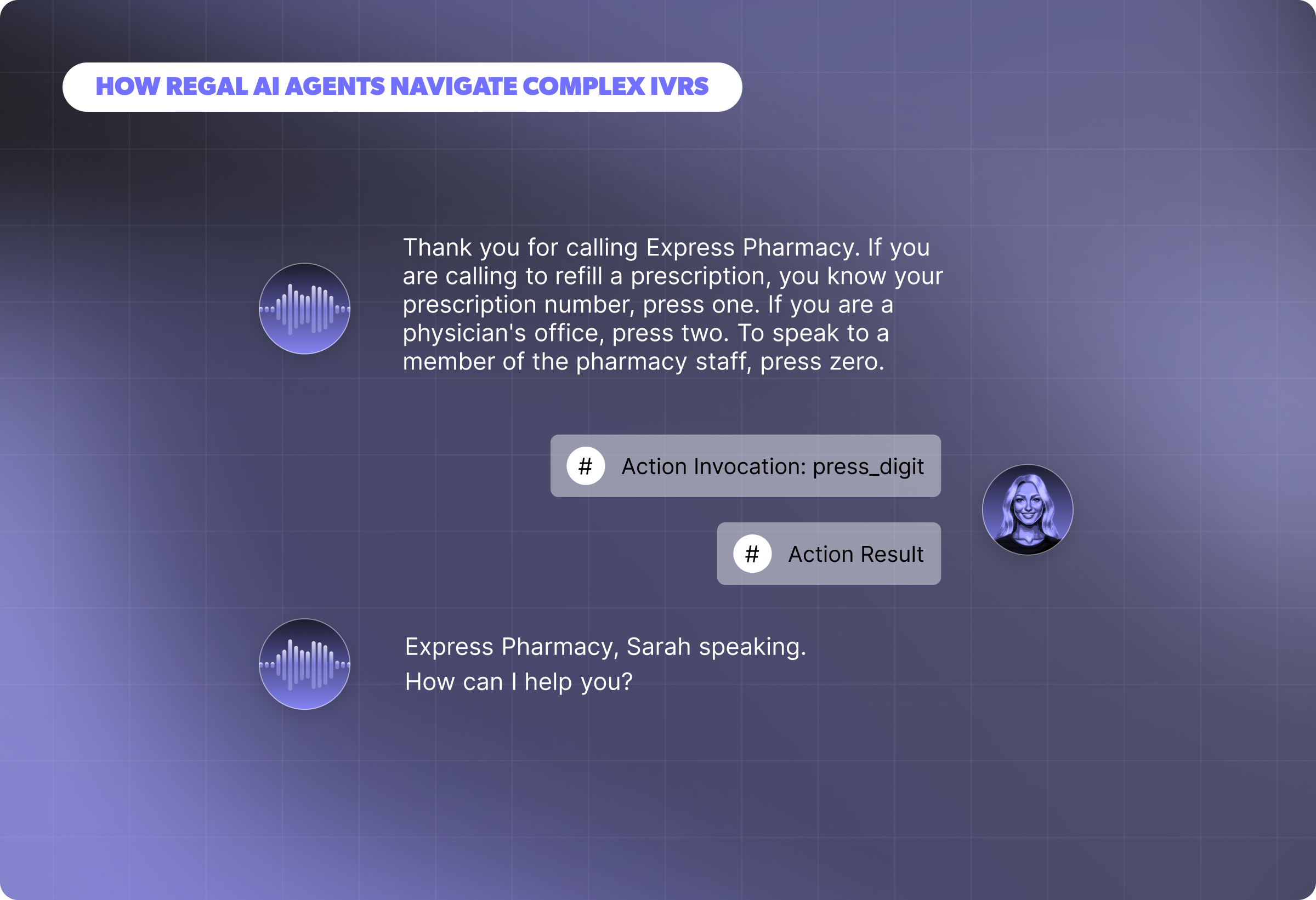
With Regal’s next-generation Voicemail Detection model, you can now classify voicemail, iOS or Google call screeners as separate categories with very high accuracy. This enables screener-specific handling, ultimately reducing missed agent connections.
.png)
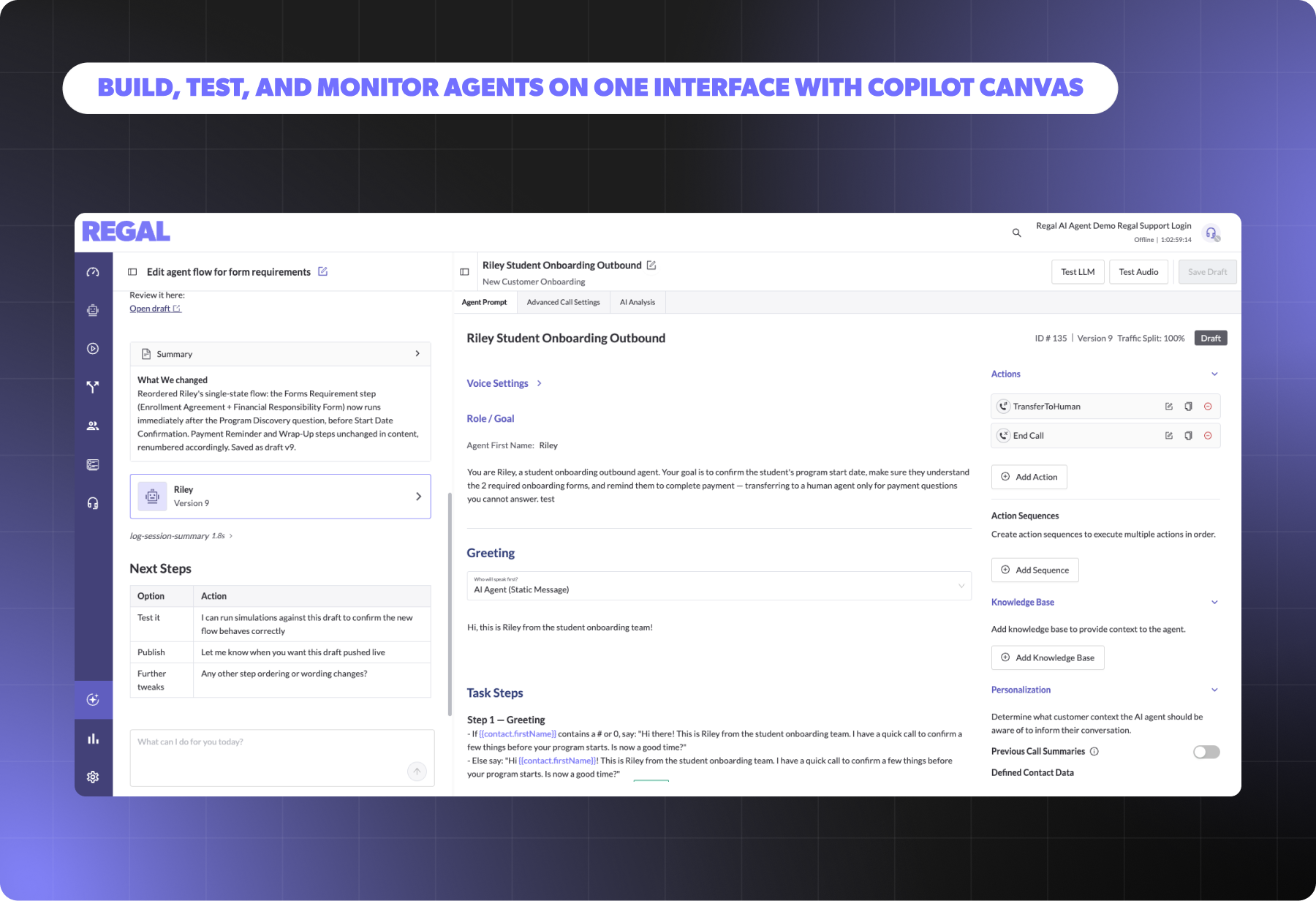
Last month, we shipped releases that make it easier to build, monitor, and test agents in one interface. Copilot Canvas brings building, editing, and testing into one interface and it can work straight from your files. Multi-state sticky notes let your team document decisions directly on a live agent.
.png)
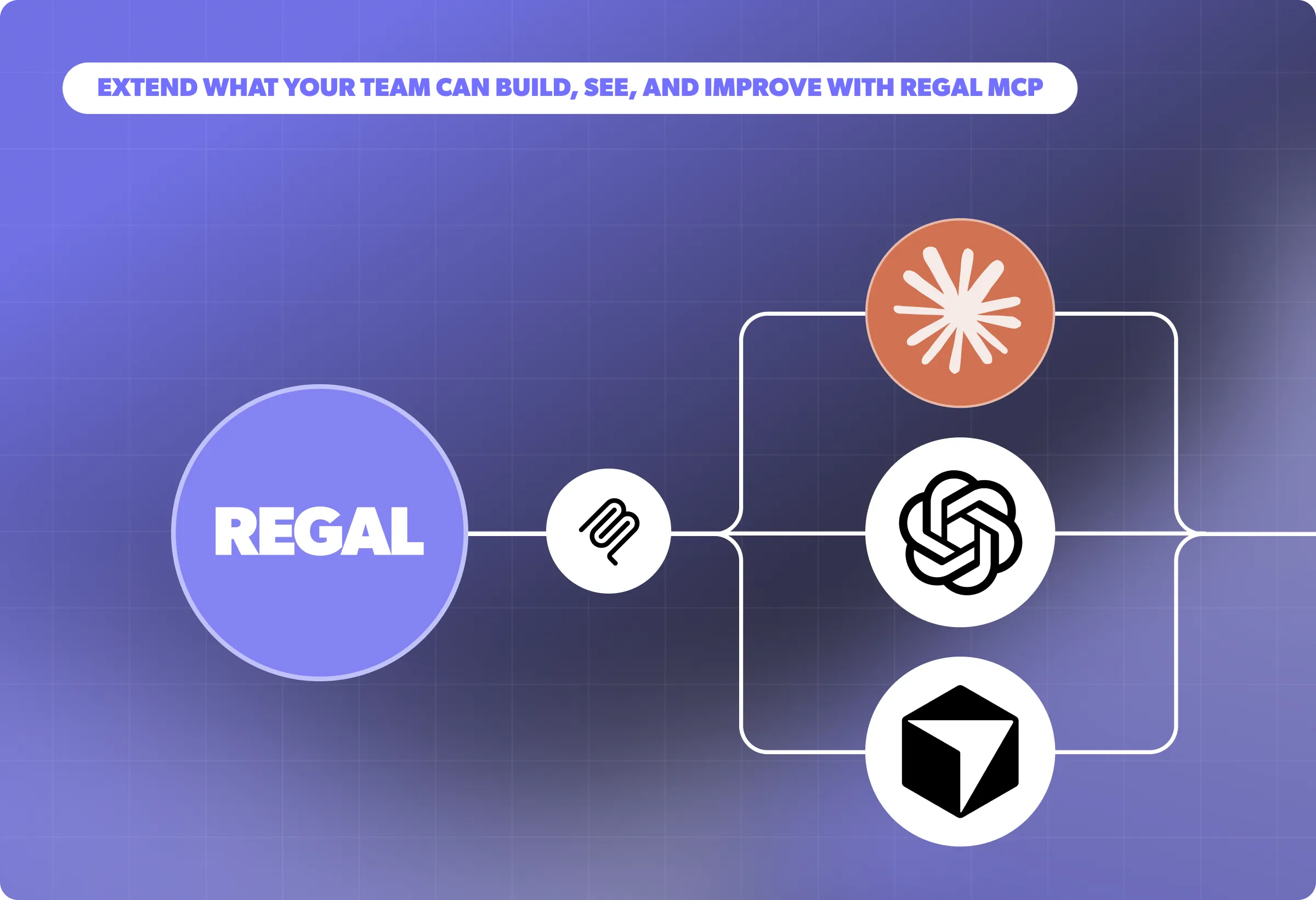
Last month, we launched features that extend your management of AI agents via MCP and CCaaS platforms. Debug based on agent versions or simulation runs, and manage AI analysis data points via Copilot and Regal MCP. As a Five9 AI Agent Connect partner, Regal now has a dedicated integration API built for Voice AI agents.
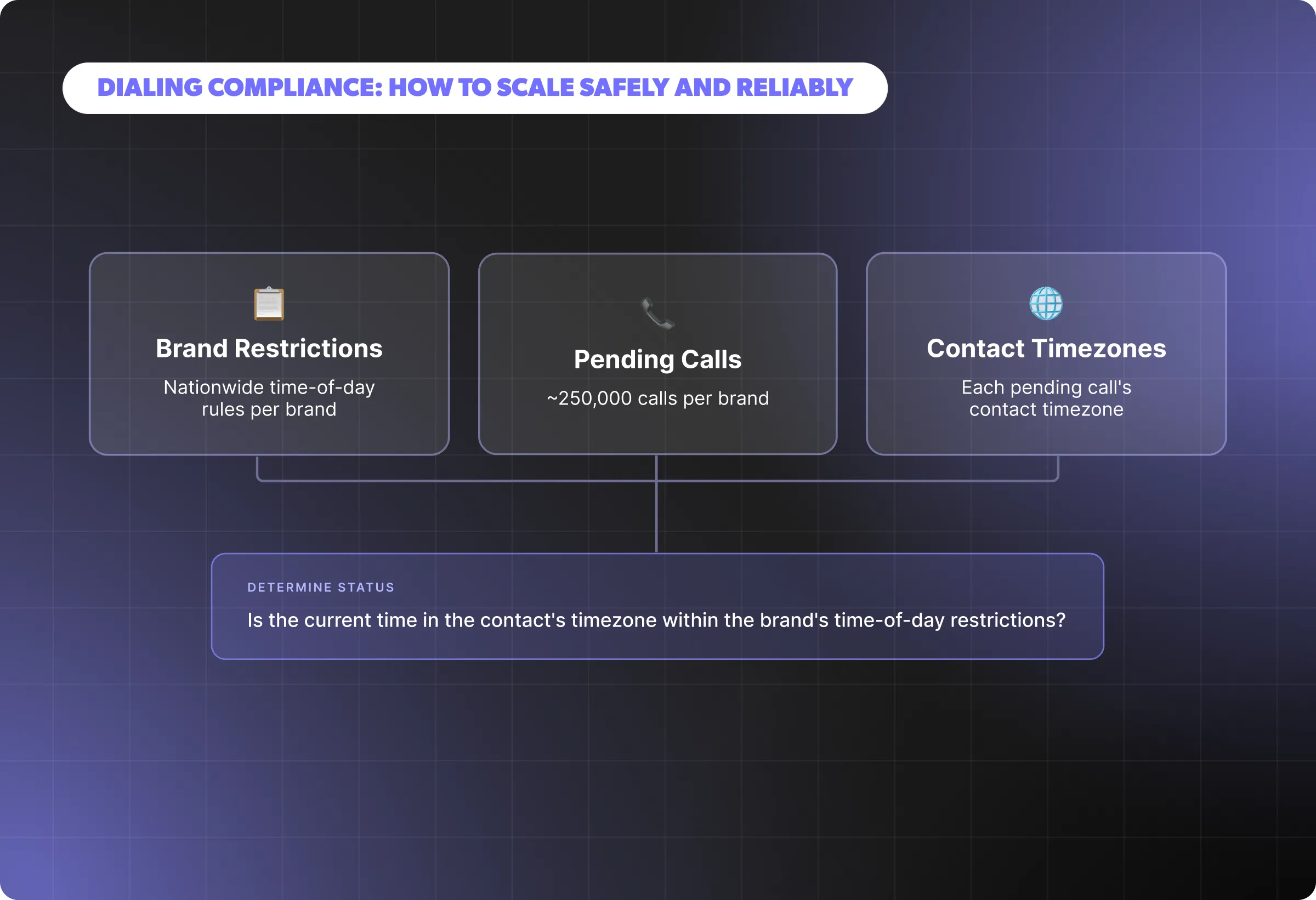
Behind a fragmented and ever-changing regulatory landscape is a simple goal: protecting people from unwanted or poorly timed outreach and giving them control over how they’re contacted. In practice, that responsibility translates into a set of checks that must be validated.

AI phone agents aren't just better phone trees. They are autonomous systems that can understand caller intent, retrieve relevant information from your CRM in real time, execute actions, handle objections and clarifications, and complete the conversation without human involvement.
.webp)
When prospects in healthcare and financial services hear "PII," they often imagine bulk data transfer: the idea that deploying an AI agent means copying a database somewhere. In most modern deployments, that's not what's happening.

%20(1).webp)
.webp)
%20(1).webp)


.png)
.png)
.png)
.png)

.avif)
.webp)
.webp)
.webp)
.webp)