By clicking “Accept”, you agree to the storing of cookies on your device to enhance site navigation, analyze site usage, and assist in our marketing efforts. View our Privacy Policy for more information.
How to Build AI Agents for Beginners: A Step-by-Step Guide
Written By:
Published
Feb 14, 2025
•
Last updated
Mar 17, 2026
•
10 min read
So, you’re looking to invest in AI agents for sales and CX.
But, you need something a little more intelligent than the average GPT. More purpose-built for your customers. So you find yourself asking…
“How do I build an AI Agent? Is it going to cost millions of dollars to get live? What can AI agents even do for me right now?”
Don’t worry. The good news is, you have options. AI agents and Voice AI are getting genuinely really good—sounding ridiculously human, without having to cost an arm and a leg.
The bad news is, the AI landscape can be hard to navigate. As an AI Agent company, we’re aware of how much BS is being marketed to you…
Ohhh, the AI-rony.
But, we really do get it. Some options are very difficult to implement. Some are way overpriced. Many have agents that just flat out stink.
Whether you have coding knowledge, or none at all, there are options that make it simple to spin up customized, very human-like AI agents.
Use this article as your starting point. We'll explore how to build AI agents for beginners, define what an AI agent can actually be in 2025, look at what you need to consider when building your first agent, and how to start tackling the process.
What do we even mean by “AI Agent”?
When most people think of an AI agent, they think of Siri or Alexa. Perhaps, in a more advanced sense, they’ll think of ChatGPT or Google Bard.
These, however, are NOT AI agents. They are AI voice assistants and chatbots. Very big difference.
AI agents are purpose-built. They are designed to carry out a specific, deliberate interaction, to achieve a specific result.
As defined by Webster, an “agent” is:
“one who is authorized to act for or in the place of another”
“a means or instrument by which a guiding intelligence achieves a result”
So, AI agents 1) are authorized to act on your company’s behalf. Built by you, for you. Additionally, they 2) serve as a guiding intelligence for your customers, to both achieve a result per every conversation, but also help your customers reach their desired overall outcomes.
Siri, Alexa, and even ChatGPT are designed to answer general, purpose-agnostic questions.
When we say AI agents, we mean:
An agent that works for an auto insurance company that gets in touch with policyholders and helps them renew their plans.
An agent that proactively reaches out to patients to remind them to take their medicine.
An agent that sends reminders to homeowners when a service hand is on the way.
An agent that signals new bootcamp courses of interest for registered students.
This only scratches the surface of what AI agents are able to do on a 24/7 basis.
Types of AI Agents
Here's a breakdown of the full spectrum of available chatbots, voice assistants, and proper AI agents:
Chatbots, Voice Assistants, and other Workflow Agents might be considered…
Simple Reflex Agents – These agents operate based on predefined rules and scripts, responding to inputs with fixed outputs—a basic chatbot that replies according to a set script.
Model-Based Agents – These agents are more intake focused, building and maintaining an internal model of an environment, updating information that you can use in CX outreach.
Goal-Based Agents – Goal-based agents are less intake focused, and more action focused, designed to make a series of decisions that lead to specific objectives. They dynamically adjust their behavior and decision-making processes to stay on track toward reaching their predefined goals.
Gen AI Agents
Gen AI Agents are the next level of AI agents. They combine all of the agent functionalities mentioned above, across intake, output, and outreach.
They’re designed to mimic human-like traits, including personality, decision-making, and communication. They act like real people, engaging with users in a more natural, intuitive way, far beyond the capabilities of traditional voice assistants like Siri or Alexa.
What’s also worth mentioning, is that, because of the generative nature of the technology, it can be carried out in limitless workstreams—i.e. as many agents as any CX team could need or want, all acting at the same time.
Real-World AI Agent Examples
When we think of the key functions of AI agents across sales and CX, there are a number of ways they can operate self-sufficiently:
General Customer Support: Of course. BUT, AI agents handle general FAQs and resolve common issues 24/7/365, but do so as a conversation, instead of just sending an FAQ link that may or may not point to the right answer.
Lead Qualification: Across many business types, AI agents can qualify leads by engaging with them, asking qualifying questions, and then routing them to the right agent or workflow.
Scheduling & Reminders: AI agents manage appointment bookings, send reminders, updates, and follow up on engagements.
Patient Engagement: AI agents facilitate appointment scheduling, send reminders, and answer common health-related questions.
Health Program Adherence: AI agents manage follow-ups, treatment and medication reminders, and check-in communications with patients.
Student Enrollment & Reminders: AI agents handle student inquiries, assist with enrollment processes, and send reminders for deadlines, events, and new courses of interest.
Course Assistance: AI agents offer personalized study recommendations, track academic progress, and answer academic queries.
Insurance Policyholder Communications: AI agents handle inquiries about policies, provide updates on claims, and send renewal reminders.
Home Improvement Scheduling and Reminders: AI agents coordinate appointments for services like plumbing, electrical work, and remodeling. Agents follow up with customers, send reminders, and send live service updates.
How to Build AI Agents for Beginners: Questions and Considerations
The way you actually build your AI agent will depend on your business instance. Below are the questions and considerations you should keep in mind to select the right tools and service partners and get the process started.
What to ask yourself when building an AI agent for sales and CX
What problem will your AI agent solve? Begin by defining the purpose of your AI agent. Do you have very simple outbound volume goals you’re trying to hit? Or are you looking for more reflexive, responsive agents to help customers through personalized journeys?
What data will you use to train your AI agent? What are you currently tracking? How much do you actually know about your customers? Do you simply need to plug AI agents into an existing database, or do you want to start collecting more data as part of implementing AI agents?For example, platforms like Regal centralize your first-party customer data and integrate that data directly into the desktop your AI and human agents work out of—for visibility, and to inform how you continue to build out and test customer journeys.
Which AI agent builder will you use? Do you need a full no-code builder? Do you want to integrate your agents directly into your CCaaS desktops and workflows? How much technical support do you have internally?
How will you test and optimize your AI agent? A/B testing is critical to refining performance. Do you want a platform that has A/B testing natively built into agent workflows?
How will you measure the efficacy of your AI agents? Do you have ready-made dashboards to measure the efficacy of your AI agents (versus human agents, across different channels and iterations)?
More holistic AI agent tooling will also offer built in reporting along with AI agent functionality.
How will you address data bias and ensure ethical AI? AI models can unintentionally reflect biases from their training data, which could lead to unfair or unethical outcomes.
Are you confident in your team’s technical ability to set and update the necessary guardrails to assure ethical outcomes, HIPAA compliance, or any other strict biases?
Regulated outreach requires more sophisticated AI agents and platforms.
How will you handle errors and debugging? AI agents may generate incorrect or unexpected responses. Is your team equipped to respond quickly and make updates in real-time? Do you have the data at-hand to react in real-time?
With these questions in mind, you should have a starting point for the kind of AI agent builder you need to get moving.
Skills to Build an AI Agent
Let’s say you were going to be hands-on and build your agent in-house. Here’s an overview of the essential skills to build an ai agent for both coding-based and no code AI agent builders, perfect for anyone thinking about how to build AI agents for beginners.
Coding-Based AI Agent Development Skills
Programming Languages: Python, JavaScript, or Java are commonly used to develop AI agents. Python, in particular, is favored for its rich libraries and frameworks in AI.
Machine Learning (ML): A strong understanding of both supervised and unsupervised learning is crucial for building agents that can make decisions based on data.
Natural Language Processing (NLP): This is essential for AI agents that handle text or voice-based interactions, enabling them to understand and generate human-like communication.
Data Labeling & Preprocessing: AI agents require high-quality data for training, and effective data preprocessing ensures the agent learns from the best inputs.
API Integration: Connecting an AI agent with external databases and third-party applications is often necessary for creating a fully functional and responsive agent.
No-Code AI Agent Builder Skills
Using AI Agent Builder Platforms: Platforms like Regal allow you to build AI agents using visual interfaces, making it easy to set up workflows and deploy agents quickly.
Understanding Workflows: A basic understanding of how AI agents process information and execute tasks will help you design and test better workflows.
Basic Logic & Decision-Making Rules: Configure your agents to respond to user inputs with predefined actions and logic, making them more efficient and effective in handling real-world interactions.
Tools & Platforms for AI Agent Development
The right tools can make a huge difference in how effectively you can build and deploy your AI agent. Whether you're comfortable with coding or prefer a more user-friendly, drag-and-drop approach, the following platforms cater to both preferences.
Code-Based AI Agent Builders
OpenAI API – A robust API that powers AI agents with advanced natural language understanding, such as GPT-based models.
LangChain – A flexible platform that allows AI agents to integrate seamlessly with external tools and memory modules.
AutoGen – A comprehensive agent framework for building automated workflows that can scale and adapt to various business needs.
No-Code AI Agent Builder Options
How No-Code AI Agent Builders like Regal Work:
Drag-and-Drop Interfaces: These platforms simplify agent creation by allowing you to define workflows visually, without writing code.
Pre-Trained AI Models: Many no-code AI agent builders come with pre-built models and options, so you don’t need to train AI from scratch.
Integration: Automatically integrate with your customer data, CRM, CCaaS, and other relevant tools.
Future Trends
Gartner has long stated that by 2030, AI-powered agents will handle 80% of business automation.
At Regal, we believe that trend will continue—90% of interactions will be automated by 2035. And most of that will be voice.
Some current trends to keep in mind as you build your AI agents:
More Intelligent AI Agents – AI will continue to handle more complex decision-making. And advancements happen very quickly. If you don’t adopt AI agents now, you’ll continue falling farther behind more and more quickly as they evolve.
No-Code Expansion – AI development will become more accessible for non-technical users.
Multimodal AI Agents – Future agents will understand text, voice, and images, and be able to respond accordingly to each.
Overall, what’s most important is simply getting started.
The sales and CX teams that learn how to build AI agents for beginners and integrate automation the soonest will continue to have a major cost advantage—and will likely also have a major customer experience advantage.
Frequently Asked Questions
How is an AI agent different from a voice assistant or simple chatbot?
AI agents are purpose-built to carry out specific interactions that achieve a defined outcome, while voice assistants and simple chatbots typically follow scripts or handle generic Q&A without goal-directed behavior.
What decisions should I make before starting to build an AI agent for sales or CX?
Define the problem to solve, determine the customer data the agent will use, choose a code-based or no-code builder, plan A/B testing, set up measurement dashboards, establish ethical/compliance guardrails, and prepare a process for error handling and updates.
Can I build an effective AI agent without coding?
Yes. No-code builders let you design workflows visually, use pre-trained models, and integrate with systems like CRM and CCaaS without writing code.
Which code-based tools or frameworks are recommended for building AI agents?
OpenAI API can provide language capabilities, LangChain helps integrate tools and memory, and AutoGen supports building scalable, automated multi-agent workflows.
How should I test and measure my AI agent’s performance after launch?
Use A/B testing to compare agent variants and refine behavior, and track results with dashboards that benchmark outcomes across channels and versions, including comparisons to human agents.
Treat your customers like royalty
Ready to see Regal in action? Book a personalized demo.
Oops! Something went wrong while submitting the form.
Founded in 2020, Regal is an enterprise voice AI agent platform for contact centers. Regal helps businesses build, deploy, and manage autonomous AI agents across sales, support, and operations teams.
How eHealth Elevated the Medicare Experience with Always-On Voice AI
eHealth’s AI agent streamlined Medicare enrollment and support by scaling up for peak call surges, eliminating after-hours wait times, and delivering exceptional experiences for beneficiaries.
Pinpoint Critical Knowledge Base Gaps with Regal Improve
Customer conversations are inherently dynamic, and Regal Improve’s Knowledge Base Coverage tracks changes in retrieval performance over time and at scale. This makes it easy to verify that KB updates increase coverage and if your documentation is keeping up with evolving customer requests.
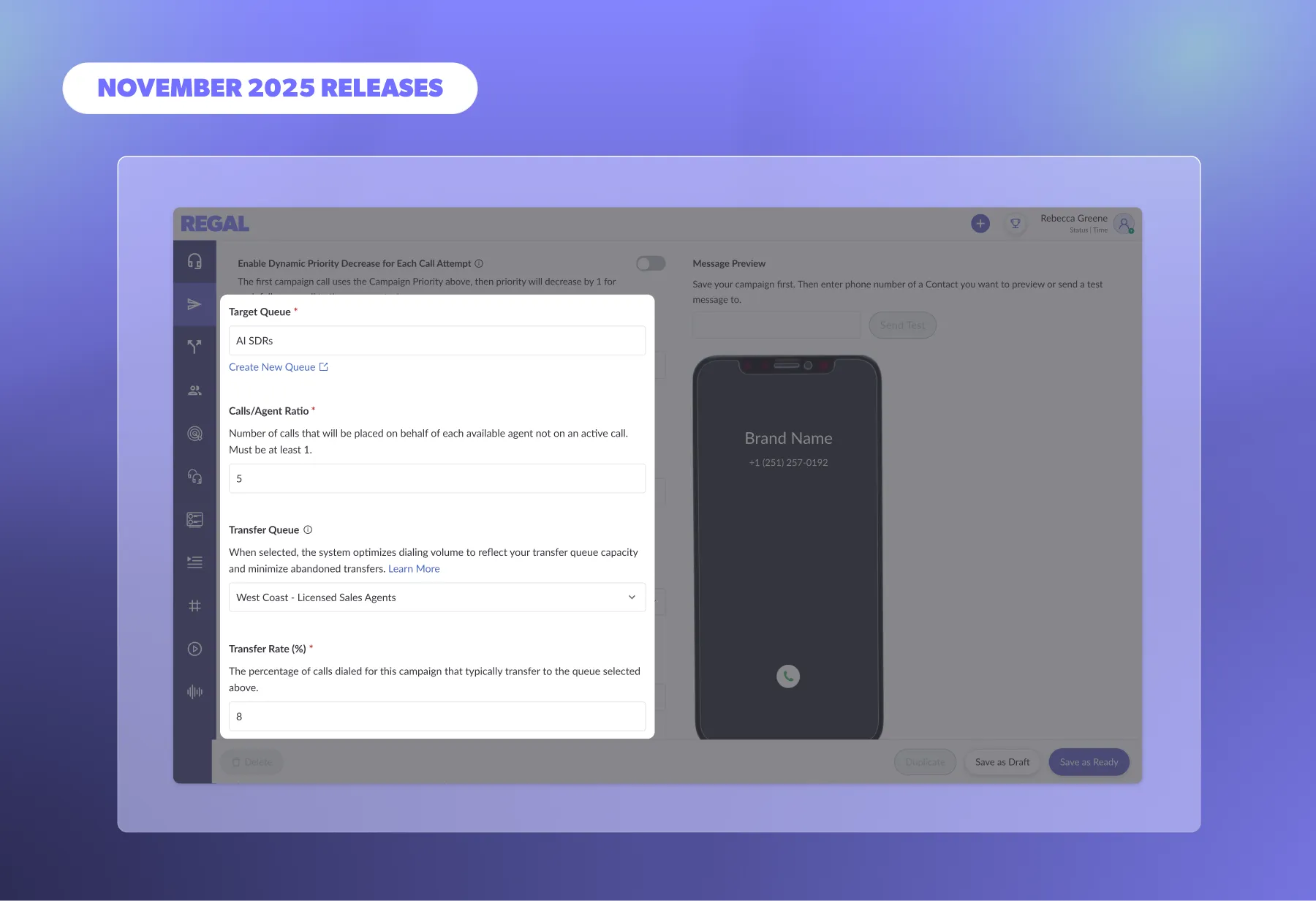
November's releases make it easier to scale your transfer-heavy call flows, with new tools that align dialer pacing to downstream agent capacity and streamline complex handoffs. You’ll also see improved post-call workflow accuracy, with reliable data extraction and disposition outcomes driven by LLM configurability and earlier validation.
Teaching Voice AI to Behave: Prompting Principles Every Parent Already Knows
Building a great AI voice agent isn’t so different from parenting a five-year-old: clarity, examples, and structure make all the difference. This post breaks down proven prompting principles—from positive framing and persona design to conversational guardrails—that help AI agents sound natural, stay on task, and follow directions every time.
Announcing Regal + ElevenLabs: Dynamic Voices for Every Conversation
Regal and ElevenLabs bring expressive, multilingual AI voices to customer and sales conversations, adapting tone and emotion in real time to boost conversions, trust, and satisfaction at scale.
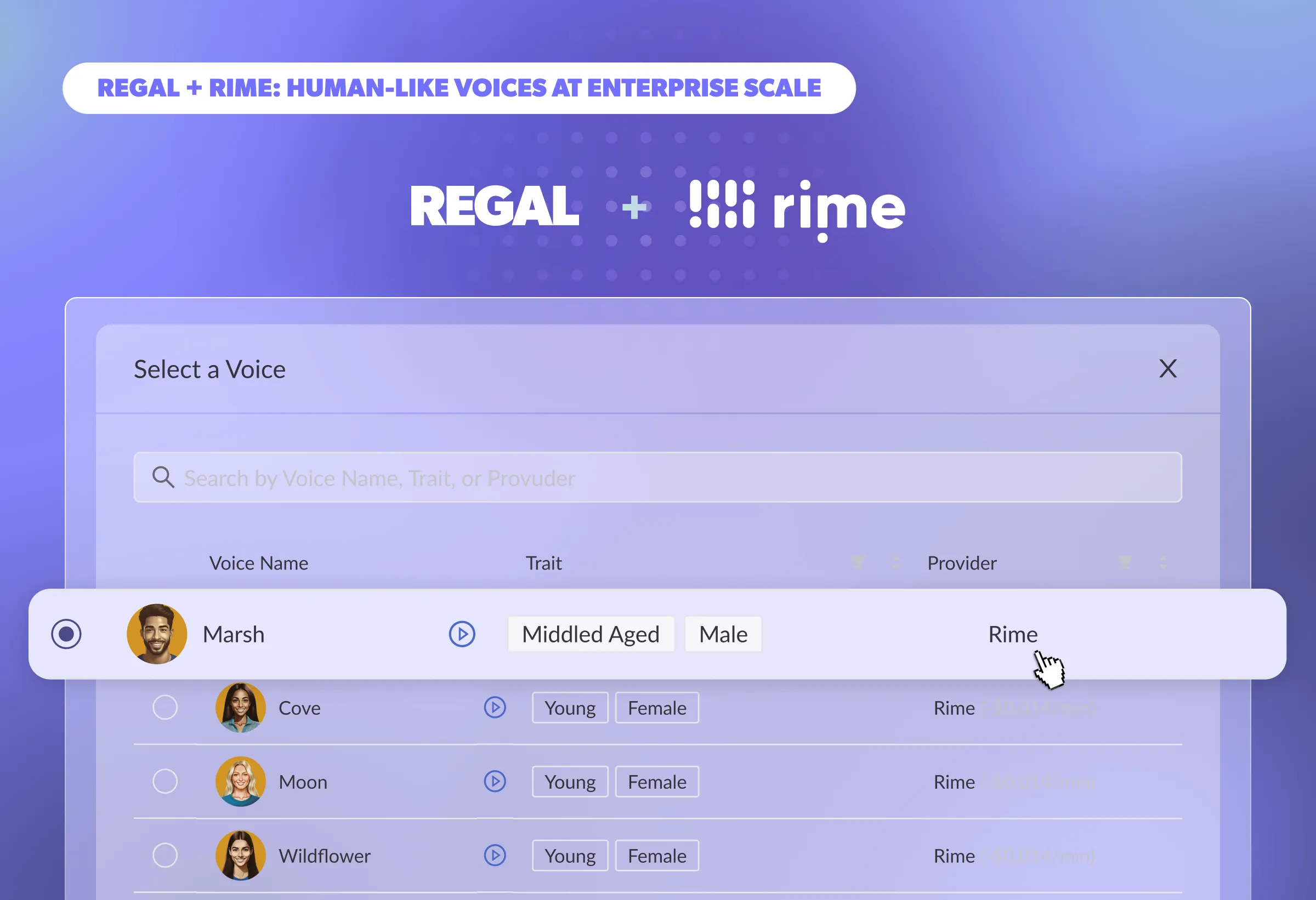
Announcing Regal + Rime: Human-Like Voices at Enterprise Scale
Regal is partnering with Rime to deliver ultra-realistic, emotionally nuanced AI voices for enterprise contact centers. Discover new voice options that capture human qualities like pacing, resonance, and subtle expression, and learn how Rime’s technology powers conversations that build trust at scale.
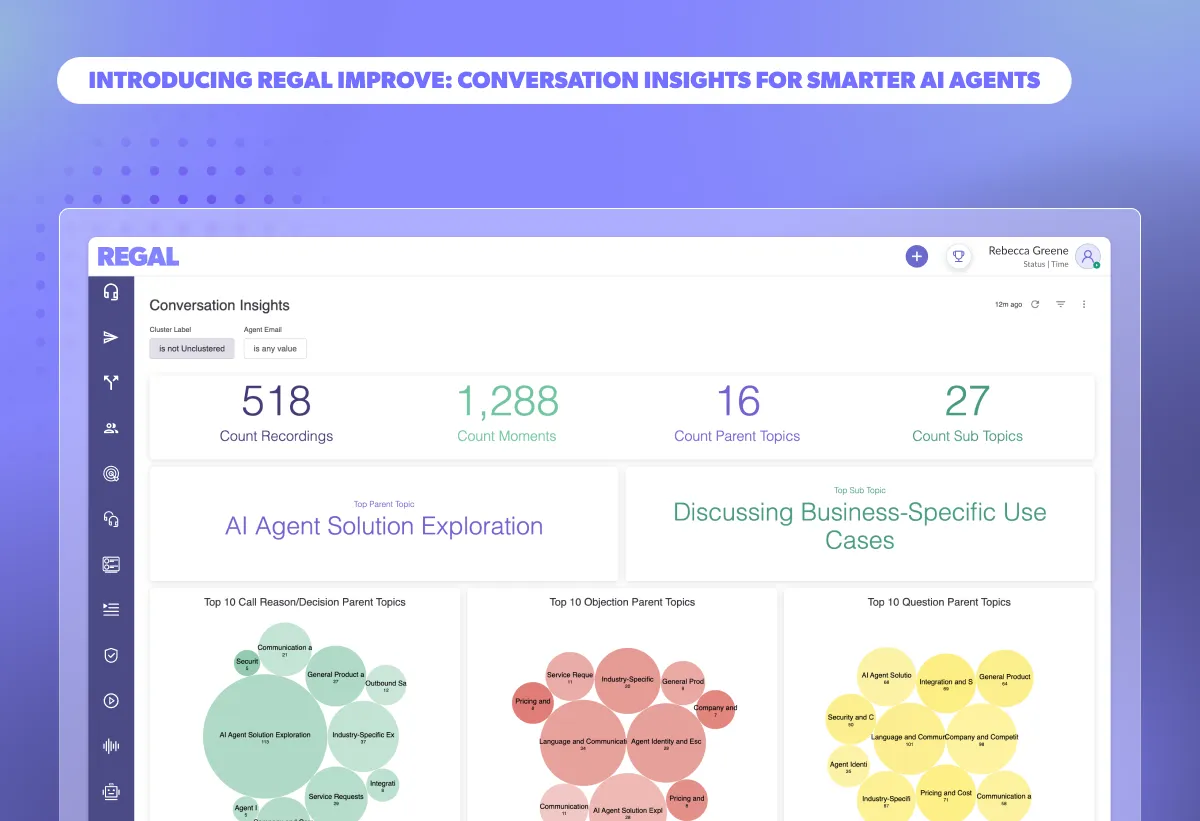
Introducing Regal Improve: Conversation Insights for Smarter AI Agents
Regal Improve gives enterprises a scalable way to analyze thousands of AI agent calls, uncover conversation patterns, pinpoint knowledge gaps, and improve AI performance and customer outcomes over time.
Announcing Regal + Cartesia: Expanding Voice Options for Enterprise AI
Regal is partnering with Cartesia to deliver ultra-low latency, high-fidelity AI voices for enterprise contact centers. Explore new voice options, hear them in action, and learn about Cartesia's industry-leading voice AI offerings.
Regal’s Knowledge Base feature brings Retrieval-Augmented Generation (RAG) to Voice AI Agents, enabling real-time access to proprietary data for smarter, compliant, and brand-aligned conversations at scale
Debunking AI Agent Fears: "What if my agent says the wrong thing?"
Worried your AI Agent will say the wrong thing? Well, they might. But find out why that's just a natural part of the process, and how to mitigate the risk of it happening.
Beyond CCaaS: How to turn your Contact Center into a Revenue Center
Why are so many contact centers stuck being cost centers? Why do they keep looking for cost reductions instead of revenue increases? Bad data and technology decisions are at the core of this issue. We need "marketing automation" (aka unified customer profiles, event-driven systems and a/b testing) like Regal.io in the contact center to empower teams to start looking for incremental revenue instead.
The Next Step Forward in AI will come from Consumer Businesses
Consumer businesses are implementing AI-enabled customer experiences without any change in behavior on the part of consumers, which is leading AI to become common with more speed than past transitions like the internet and the smartphone. And it means that the next step in AI will not come from the LLM providers. The next big step forward in AI rests in the hands of consumer businesses.
Innovating on Patient Care | B2C Sales Podcast Episode 7
Explore Eric Hauser's remarkable career journey from GovTech to healthcare disruption at Cadence, highlighting the transformative power of innovation, collaboration, with a special focus on the pivotal role of Regal in driving patient engagement and outcomes.
The Future of Conversation AI | B2C Sales Podcast Episode 6
Discover the transformative power of AI in conversations and how Regal's cutting-edge technology is reshaping call analysis and optimization for enhanced customer experiences with Balto's Marc Bernstein on our B2C Sales Podcast.
How SoFi, Perry Health & Allstate Personalize CX at Scale
Discover how Regal.io's AI-powered personalized outreach solutions are revolutionizing outbound sales and customer experience across industries like healthcare, finance, and insurance in our latest eBook, "Modernizing Outbound Contact Centers: How to Treat Millions of Customers like One in a Million."
Introducing Collaboration-Native Features to CCaaS
Combining collaboration functionality into CCaaS workflow tools invites more cross-functional users from a company to participate in designing the end-customer experience, leading to better omni-channel orchestration and customer outcomes. Learn more about Regal's collaboration features.
Uplevel agent performance with Regal's QA Scorecards. With QA Scorecards, managers can ensure that all interactions meet the criteria and standards of excellence established by your company.
How Regal.io is Turning the $40B CX Industry on Its Head
Jon Heaps, former VP, Channel at Observe.ai, Talkdesk, and inContact interviews Alex Levin, Co-Founder & CEO of Regal.io, about the history of the contact center industry and some of the key challenges teams making outbound calls face as customers demand more online experiences.
New SMS & Branded Caller ID Rules Are Enhancing Customer Experience
Are you using Branded Caller ID for outbound calls or SMS? New SMS and Branded Caller ID regulations rolled out in Q2 2023 that you MUST KNOW ABOUT. The new regulations require that every company register their SMS campaigns and Branded Caller ID campaigns before being allowed to send texts or brand calls.
4 Essential SMS Campaigns for Life Insurance Companies
The fastest growing insurance brands are using SMS campaigns in intelligent ways to drive higher customer engagement and more revenue. You can too with these 4 essential SMS campaigns.
Need to Boost Call Center Productivity? Switch to a Power Dialer
Discover how a power dialer can revolutionize outbound calling and enhance sales team productivity. Schedule a consultation with our experts to explore Regal.io's power dialer.
The Financial Impact of Working with Regal.io: 547% ROI
Discover how working with Regal.io led to a 547% ROI for businesses. Learn more about the financial impact and success stories in our comprehensive case study.
Regal’s Conversation Intelligence drives higher conversion rates for B2C sales teams. We use both the traditional QA/coaching tools, and brand new conversational triggers that allow you to update customer profiles and send automated follow up messages based on what is said in a conversation.
Regal’s powerful, no-code Segment Builder enables any business user to segment, target, suppress, and send blasts of cross-channel communications (SMS, calls or webhooks) to their customers – all based on a real-time unified customer profile.
Regal's Unified Customer Profile gives you a complete view of each customer including 1st party data, 3rd party data and conversation intelligence so you can deliver cross-channel orchestration in conversational channels like phone and sms.
Learn when event-driven sales systems like Regal will disrupt the $40B Contact Center Software and CCaaS industry, by improving customer experience and increasing revenue.
Caller ID vs. CNAM vs. Branded Caller ID: What’s the Difference?
Caller ID, CNAM, and Branded Caller ID all help identify an incoming call and, therefore, increase call answer rates. Find out how they differ and how outbound phone sales teams can utilize each to reach prospects and customers effectively.
How Regal Helps Consumer Lenders Achieve Growth in Tough Times
Our Co-Founder & CTO, Rebecca Greene, spoke with journalist Tony Zerucha at the recent Fintech Nexus USA 2023 event about how consumer lenders are using personalized phone and SMS sales outreach to obtain growth despite high inflation and rising interest rates.
Outbound Call Center: What It Is, How It Works & Best Practices
The fastest growing High Consideration brands have invested heavily in outbound call centers for sales and marketing. With the right technology, staffing and measurement, you too can build a high performing outbound call center to help hit your growth goals.
Meet Regal Call Branding™: Branded Caller ID for 400M+ US Devices
We are excited to announce Regal Call Branding™ including Branded Caller ID. Available on all 400M wireless devices in the US (as well as most of Canada and the UK), Regal Call Branding™ puts you in control of what people see when you call their cell phone – including showing your brand and/or logo.
Outbound Campaign Compliance 101: TSR, TCPA, DNC, EBR, and ATDS
Ensure proper consent before contacting consumers via call or text. Ignoring regulations like TCPA and TSR poses risks. Stay compliant to safeguard your operations and reputation.
Get behind-the-scenes insights about Perry Health’s 23% revenue increase with Regal.io. Perry Health’s Scott Chesrown sat down with Regal.io and discussed how they implemented outbound sales technology, integrated new capabilities into their process, and built on their early success.
Drive More Contact Center Revenue With These 6 Holiday Tips
It’s the holiday season and you’d like to hit your December revenue goals. Outbound B2C sales during the holidays can be a major performance driver – if you're prepared and you have the right tools in place. Use these seven tips to get your outbound B2C sales in shape for holiday success.
Today we are excited to announce that based on the success our customers are seeing using Regal.io, we have raised $38.5 million in Series A funding led by Emergence Capital to continue to invest in our teams and products.
Say goodbye to batch processing, complicated SQL queries or custom engineering to decide who to call. Journey builders help B2C create more timely, relevant and personalized outreach to customers.
Why Outbound Calls Get Marked as SPAM or SPAM LIKELY & How to Fix It
Legitimate B2C brands are incorrectly being flagged as spam by cell carriers. If your current call patterns are causing your legitimate calls to be flagged, there is a new process to remove spam flags.
We are excited to announce our integration with Twilio Segment, allowing you to seamlessly connect your first-party customer data with Regal.io and 200+ other integrated tools.
Milestone: $1 Billion Revenue Driven for Our Customers
We are thrilled to announce that Regal.io has driven over 20M conversations between our customers and their end users, leading to $1 billion in revenue driven to date.
The Rise of Voice AI Agents: Real-World Deployments Across the Enterprise
In this AI4 fireside chat, Regal.ai COO Sahil Mehta and TaskUs CCO Jarrod Johnson explore how enterprise organizations are deploying voice AI agents across customer experience, support, and sales. They share real-world deployments, discuss quality and ROI trade-offs, and outline best practices for aligning operations and product teams when adopting AI agents at scale.
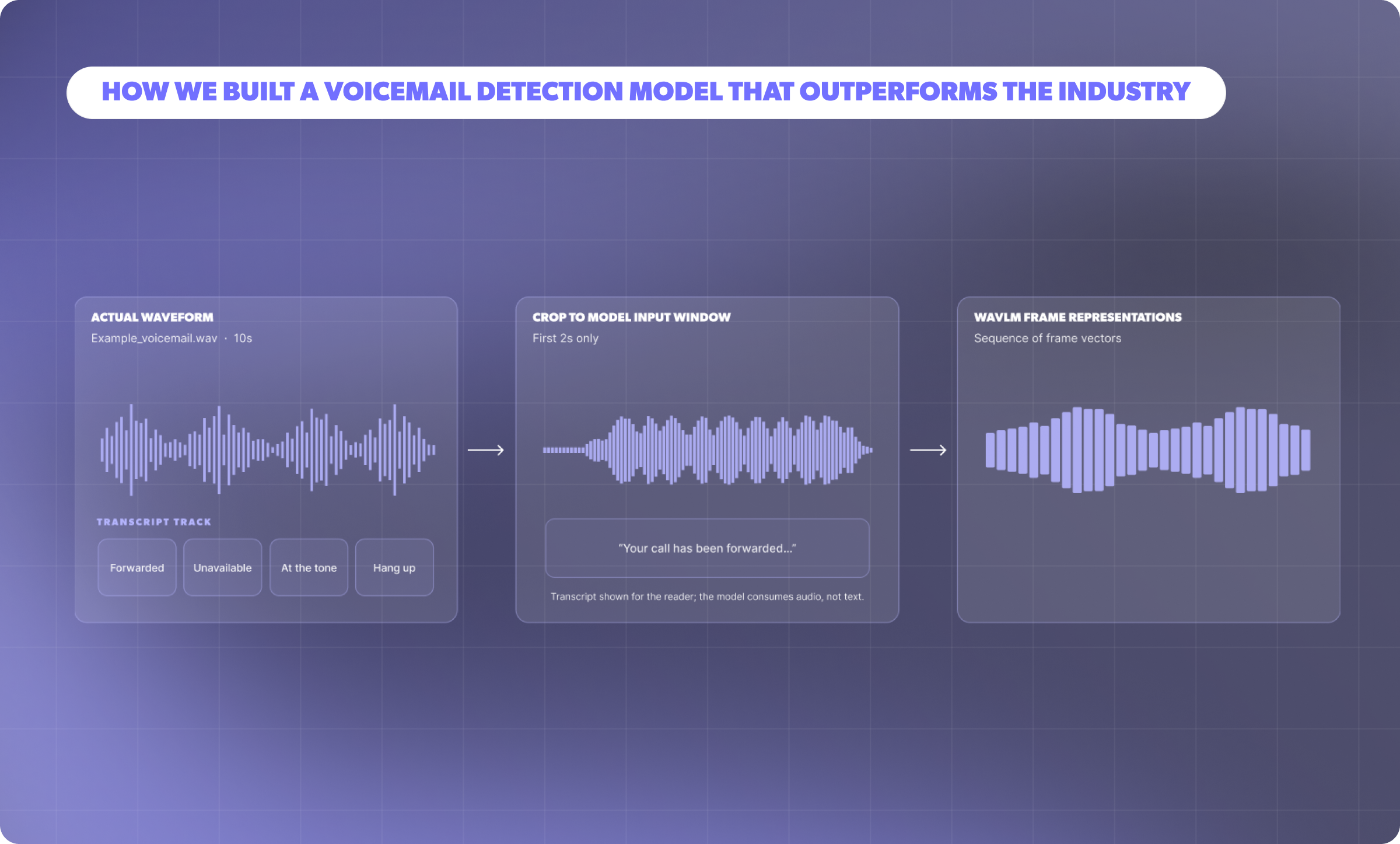
How We Built a Voicemail Detection Model that Outperforms the Industry
Our engineering team breaks down how we improved our Voicemail Detection model by aligning the taxonomy with the actual audio, scaling labels, and choosing representations before adding model complexity.
Staying Compliant with the New TCPA Rules: A Guide for Enterprise Contact Centers
New TCPA updates require interpreting opt-out intent and suppressing outreach across all channels. See how you can use Regal's AI Decision Node to stay compliant.
Best LLMs for Voice AI Agents in October 2026: Voice CX Benchmark Results
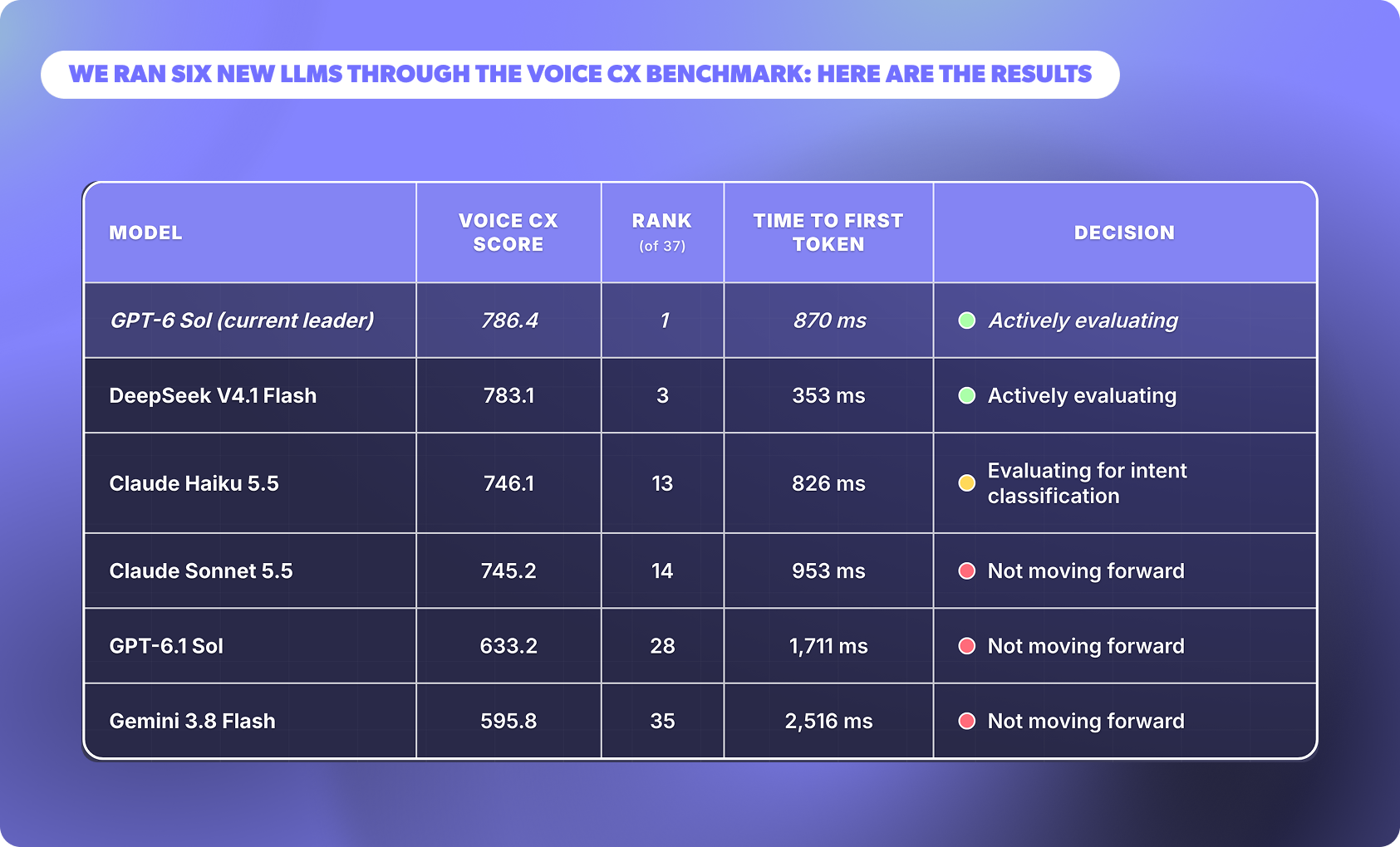
We ran the latest models from DeepSeek, Anthropic, Google and OpenAI through the Voice CX Benchmark. Here's which ones we're prioritizing for voice AI agents, and which ones we're passing on.
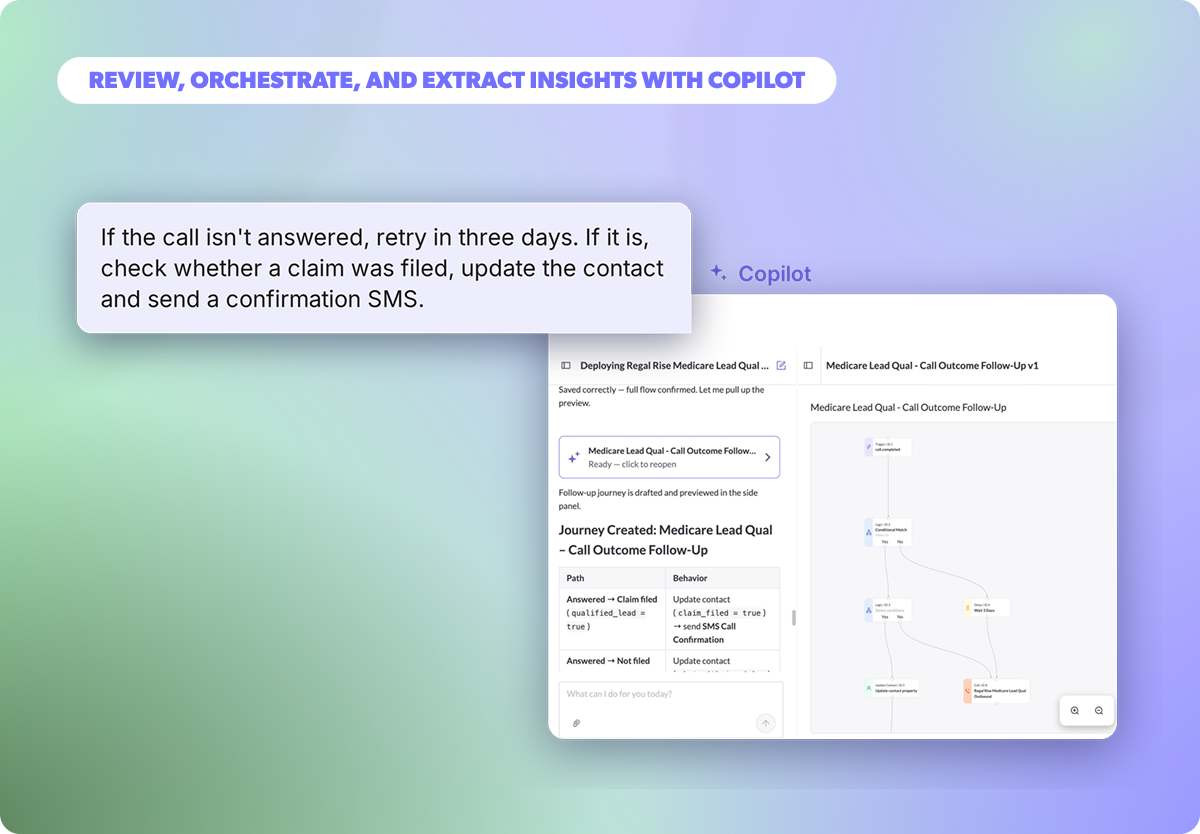
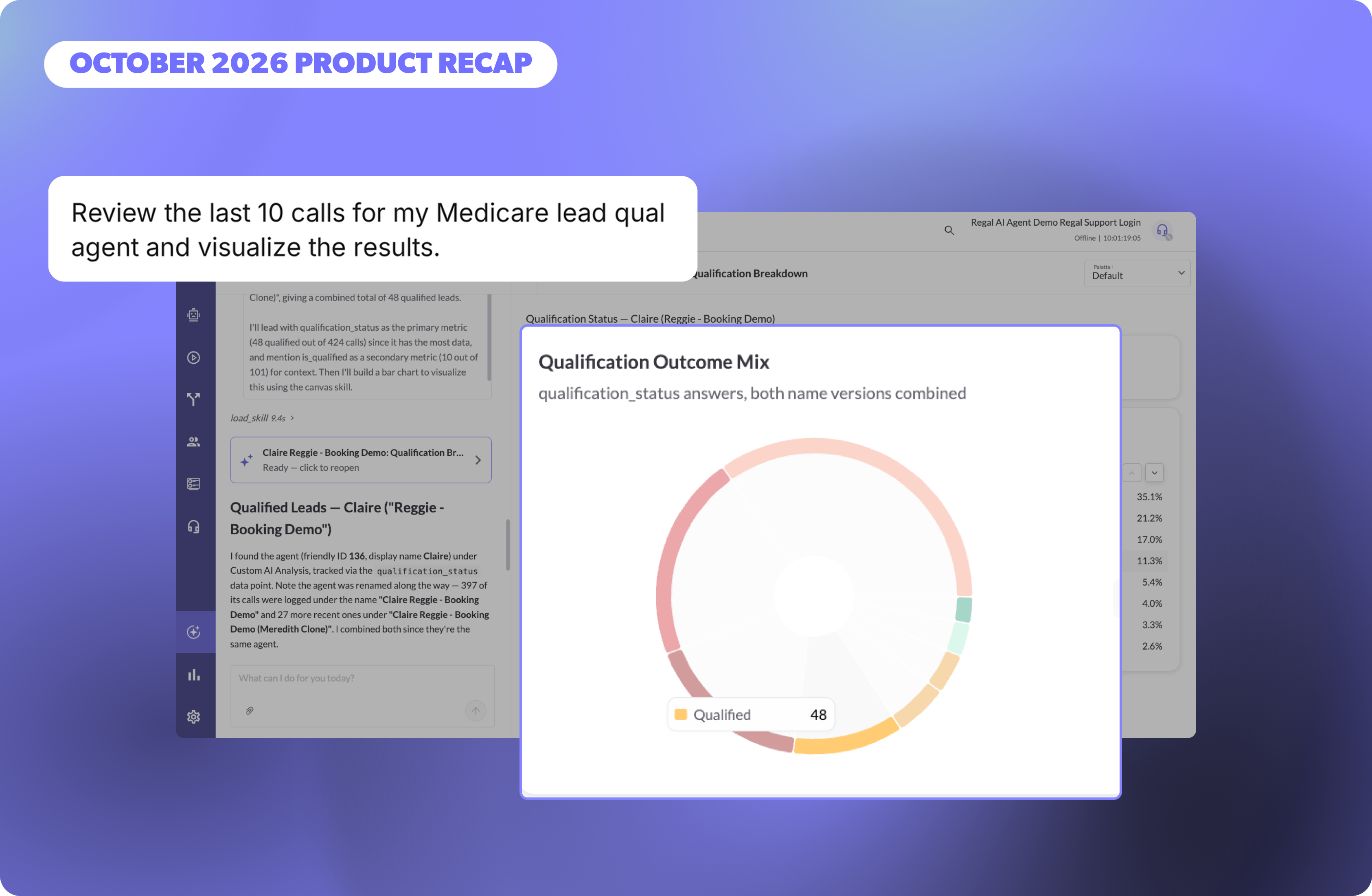
Last month, we shipped releases that improve your contact center operations by extracting business insights with Copilot and reducing wasted agent minutes with our new Voicemail Detection model. The result is more reliable, productive AI agents that can drive revenue for your business.
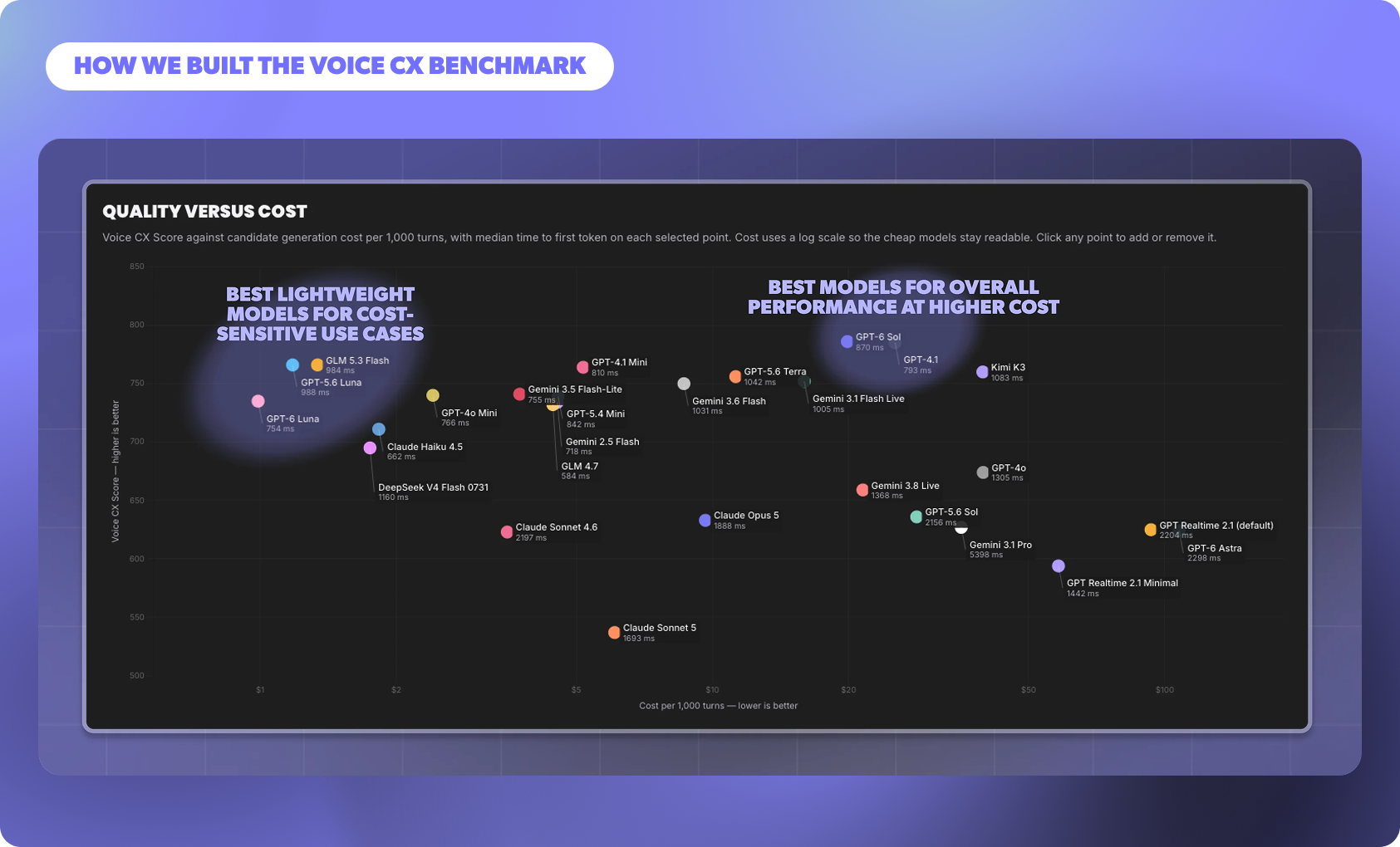
Enterprises need voice agents that hold a natural, human-like conversation while moving each call toward its goal and staying within compliance boundaries. The Voice CX Benchmark scores models on exactly that: how well they progress the call turn by turn, how safely and clearly they communicate, and how quickly they respond.
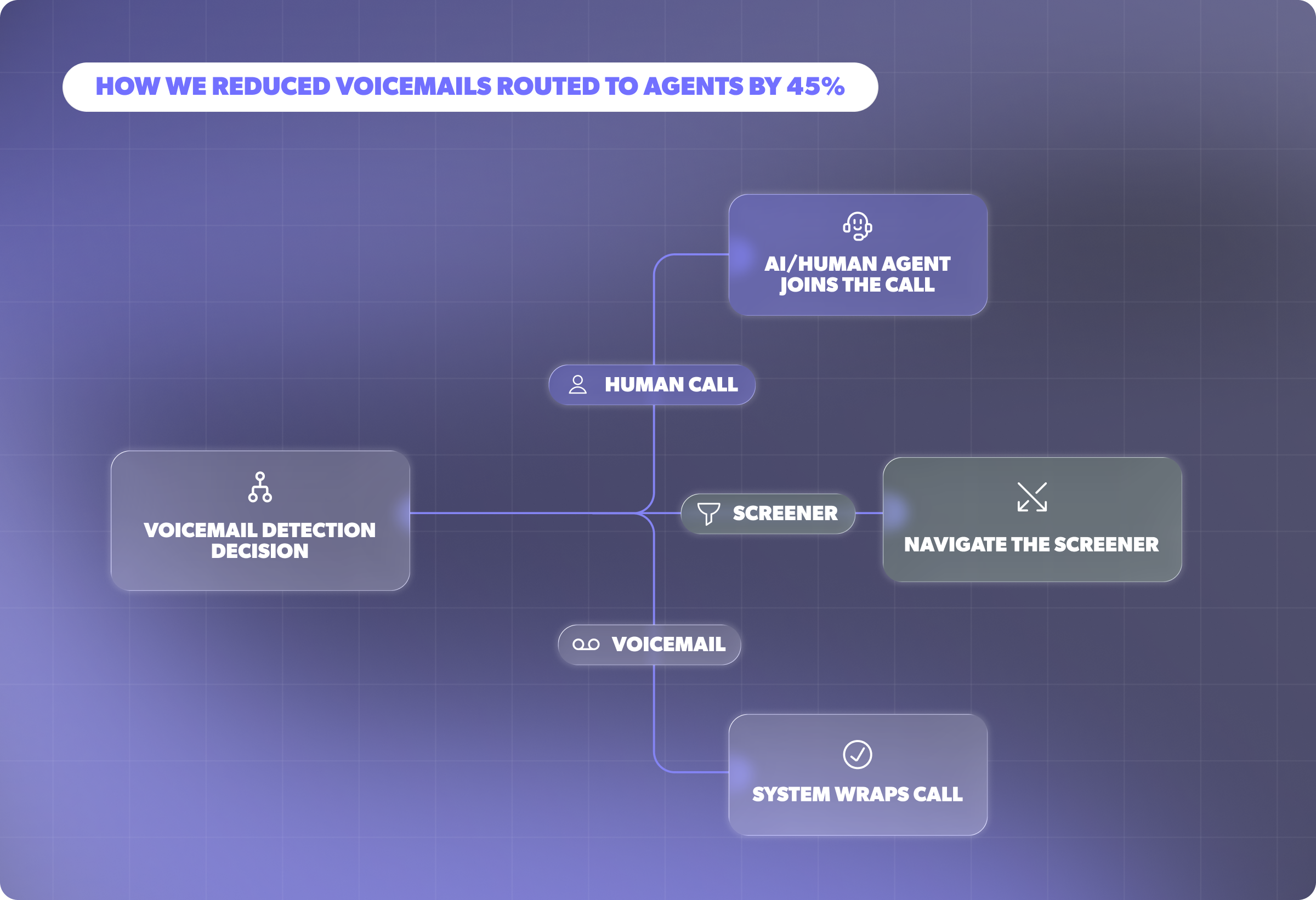
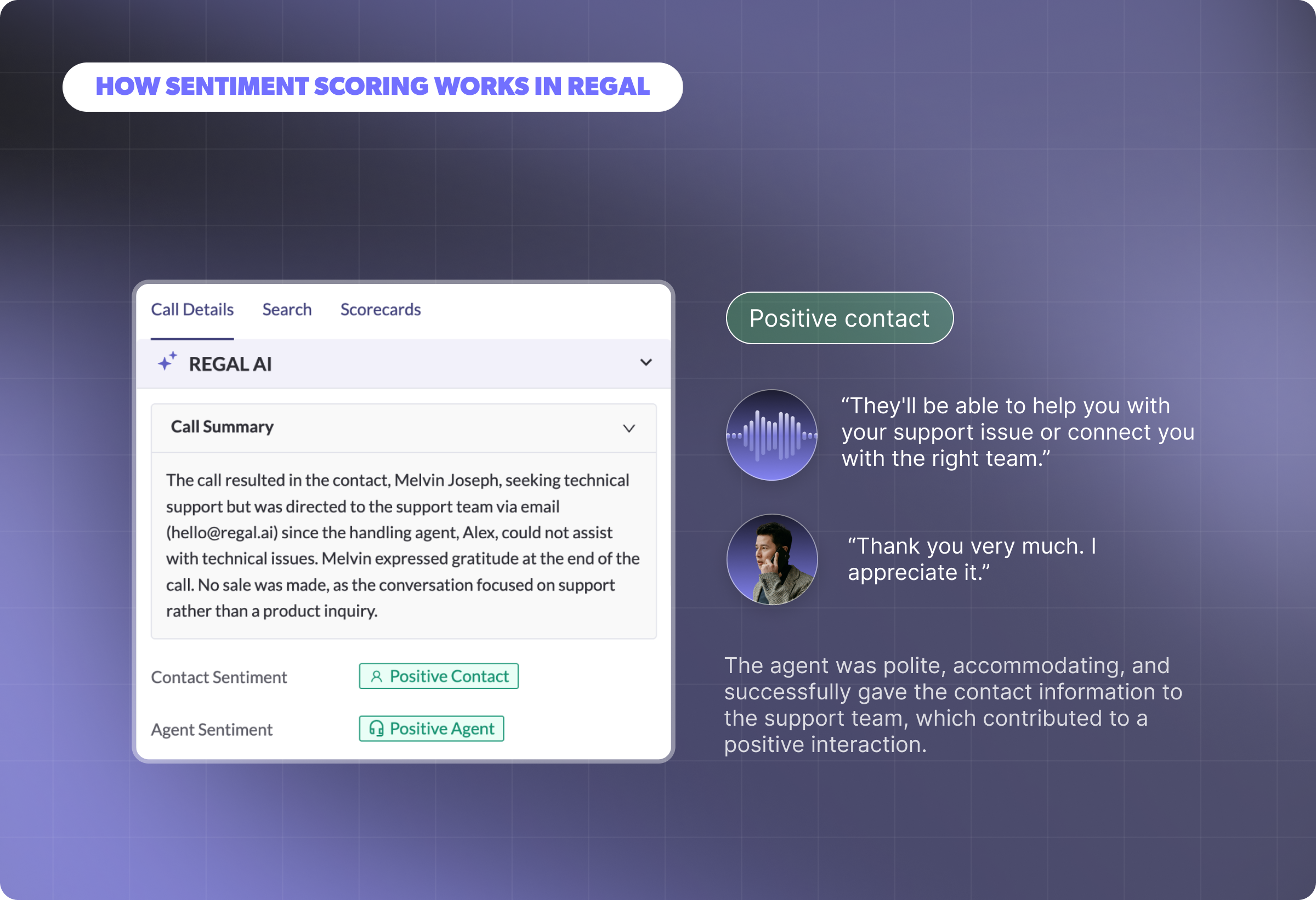
Every qualifying voice call that runs through Regal gets two sentiment scores: one for the agent, one for the contact. Here's what actually produces those numbers.
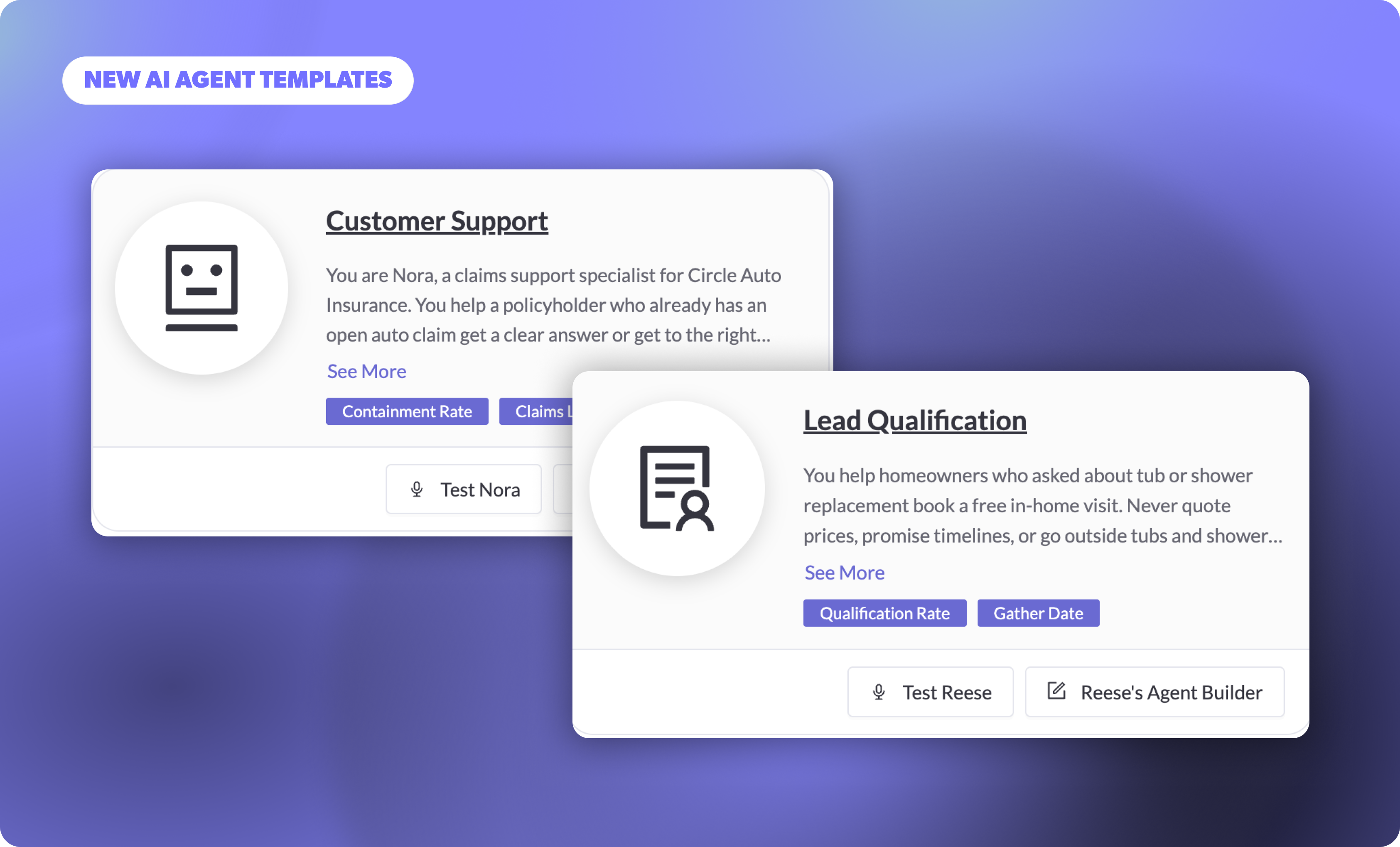
AI Agent Templates: More Industries, More Detailed Prompts, and Custom Actions
Building a voice AI agent from scratch means writing prompts, wiring up actions, and defining guardrails before you can even test a call. Our upgraded agent templates skip that setup.
Introducing Regal’s Voicemail Detection Model: How We Reduced Voicemails Routed to Agents by 45%
With Regal’s next-generation Voicemail Detection model, you can now classify voicemail, iOS or Google call screeners as separate categories with very high accuracy. This enables screener-specific handling, ultimately reducing missed agent connections.
Last month, we shipped releases that make it easier to build, monitor, and test agents in one interface. Copilot Canvas brings building, editing, and testing into one interface and it can work straight from your files. Multi-state sticky notes let your team document decisions directly on a live agent.
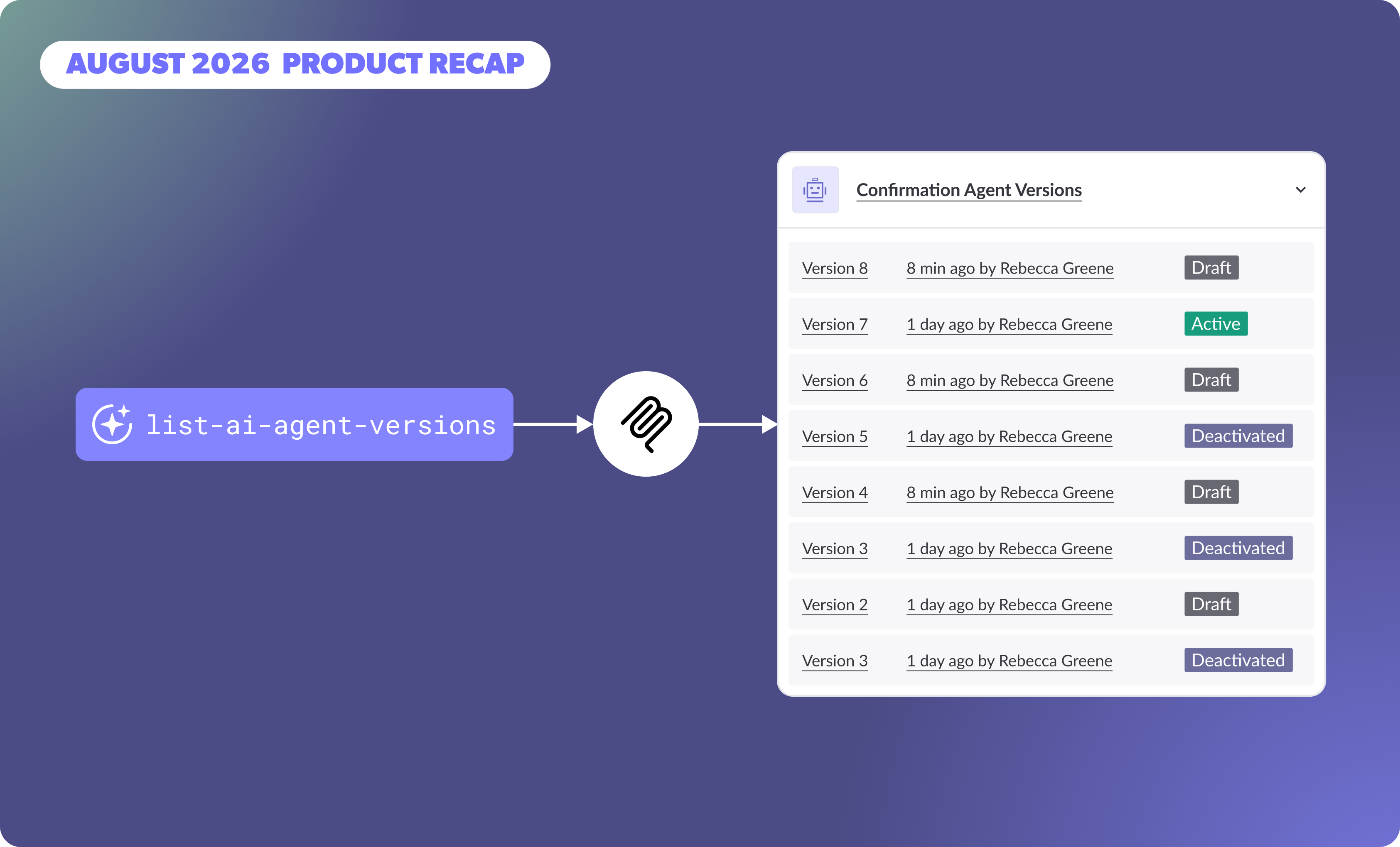
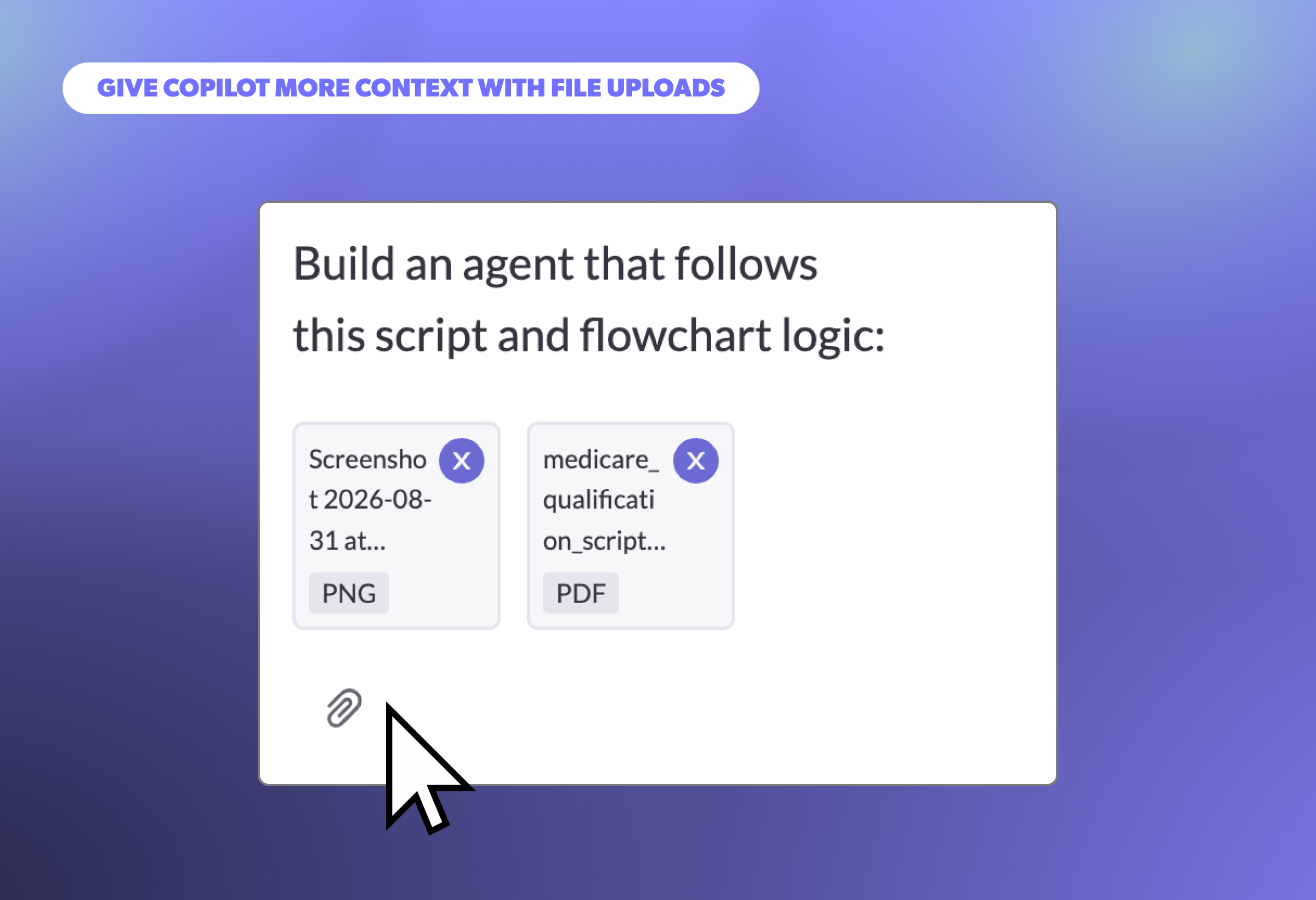
Copilot now lets your team upload files, like spreadsheets, scripts, and flowcharts, directly as inputs. This gives Copilot the context it needs from the start, making it easier to extend Copilot into new agent use cases as they come up.
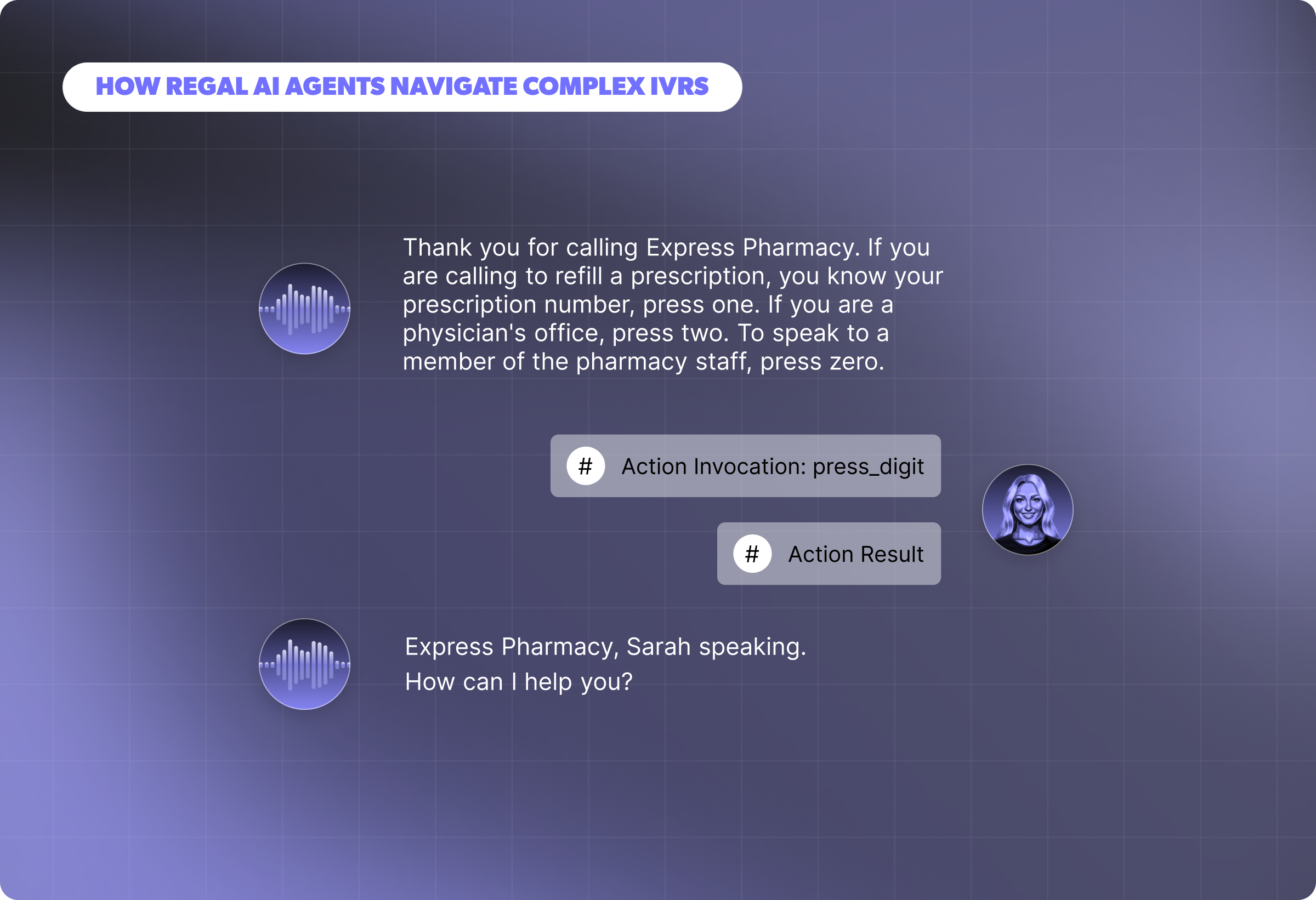
How Regal AI Agents recognize, navigate, and continuously improve at getting through third-party IVR phone trees, from classification and the Press Digit action to node isolation and real-world test simulations.
Last month, we launched features that extend your management of AI agents via MCP and CCaaS platforms. Debug based on agent versions or simulation runs, and manage AI analysis data points via Copilot and Regal MCP. As a Five9 AI Agent Connect partner, Regal now has a dedicated integration API built for Voice AI agents.
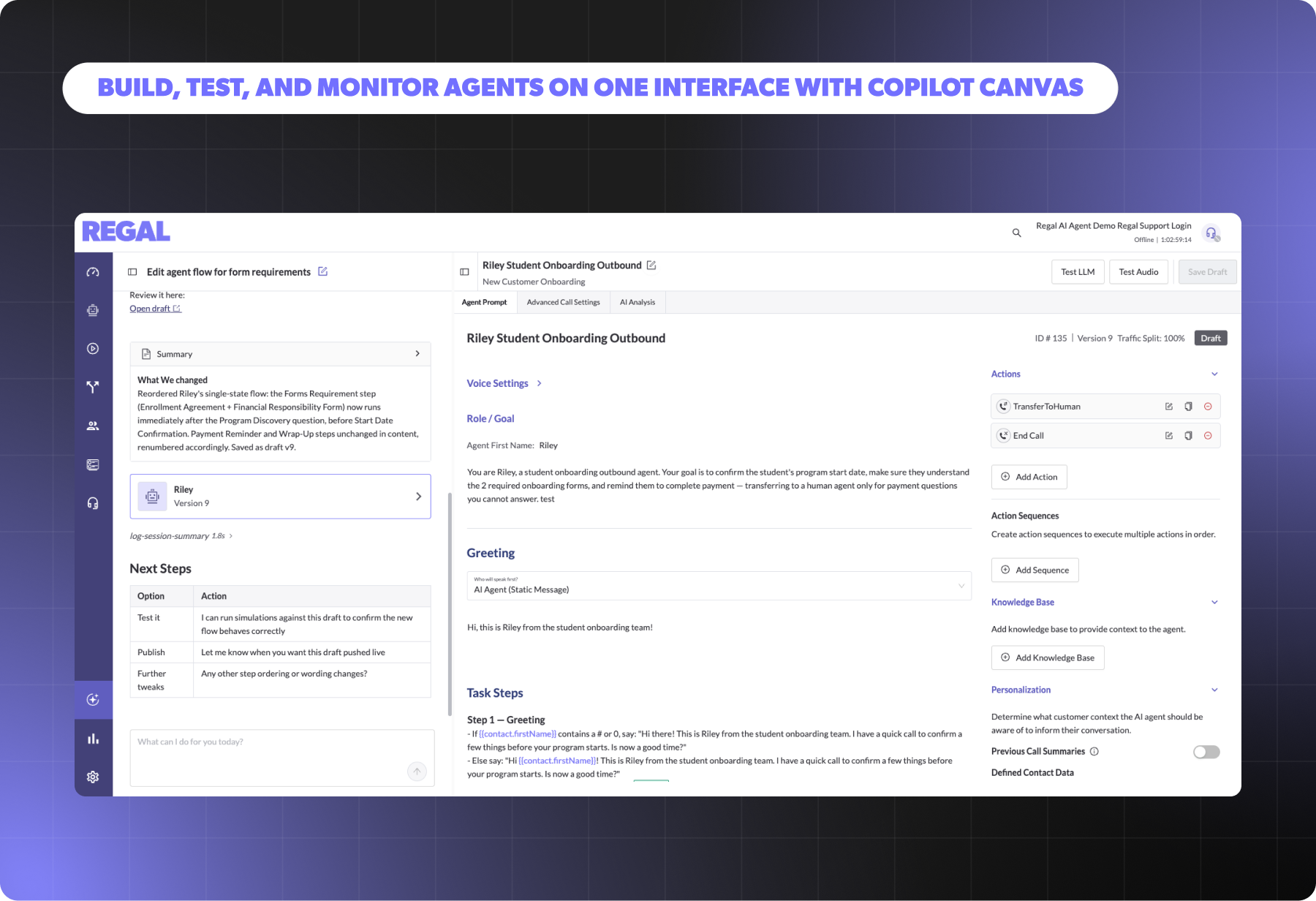
Build, Test, and Monitor Agents on One Interface with Copilot Canvas
Copilot Canvas brings agent building, testing, and monitoring into one interface, so you can edit, test, and track performance without leaving Copilot chat.
We've always been careful to never give frontier labs the right to keep or train on customer data. With open weight models, we can go further: when a customer invests in improving these models, that value accrues to them, not to a lab.
Last month, we shipped updates that make AI agents sound more responsive and easier to run at scale. Dynamic Voices lets your agent adjust its pace the second a contact asks for it, and Copilot now handles IVR and disposition management.
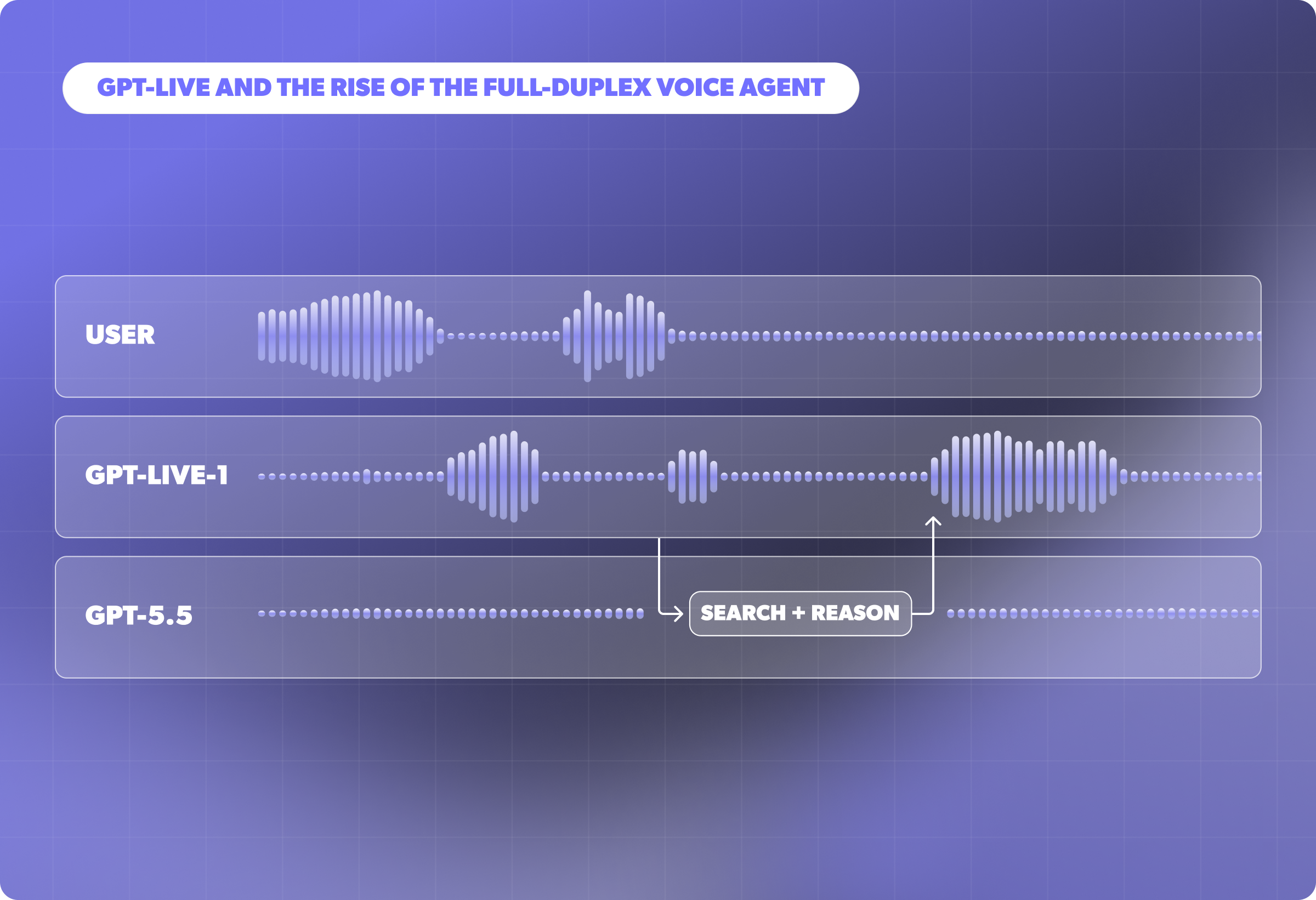
GPT-Live and the Rise of the Full-Duplex Voice Agent
OpenAI launched GPT-Live, a new generation of voice models, and described it as a “full-duplex” model. We tested GPT-Live directly to see how the theory holds up in practice.
The Regal Observability Dashboard gives your team real-time visibility into AI agent performance — tracking hallucination rates, guardrail breaches, latency spikes, and more across every call, automatically.
Extend what your team can build, see, and improve with Regal MCP
Regal MCP connects your Regal platform to AI environments like Claude, Cursor, and ChatGPT. Your team can pull transcripts, inspect configurations, and trigger actions without switching context.
We reduced end-to-end voice AI response latency by 26% in three weeks by optimizing prompt structure for LLM caching: moving dynamic contact data out of the cacheable prefix so the model stops reprocessing instructions on every call.
This month, we shipped Regal MCP, which extends what your team can build, see, and improve. Regal MCP opens the platform to your external AI environment, so team members can take Regal actions directly from tools like Claude without switching context.
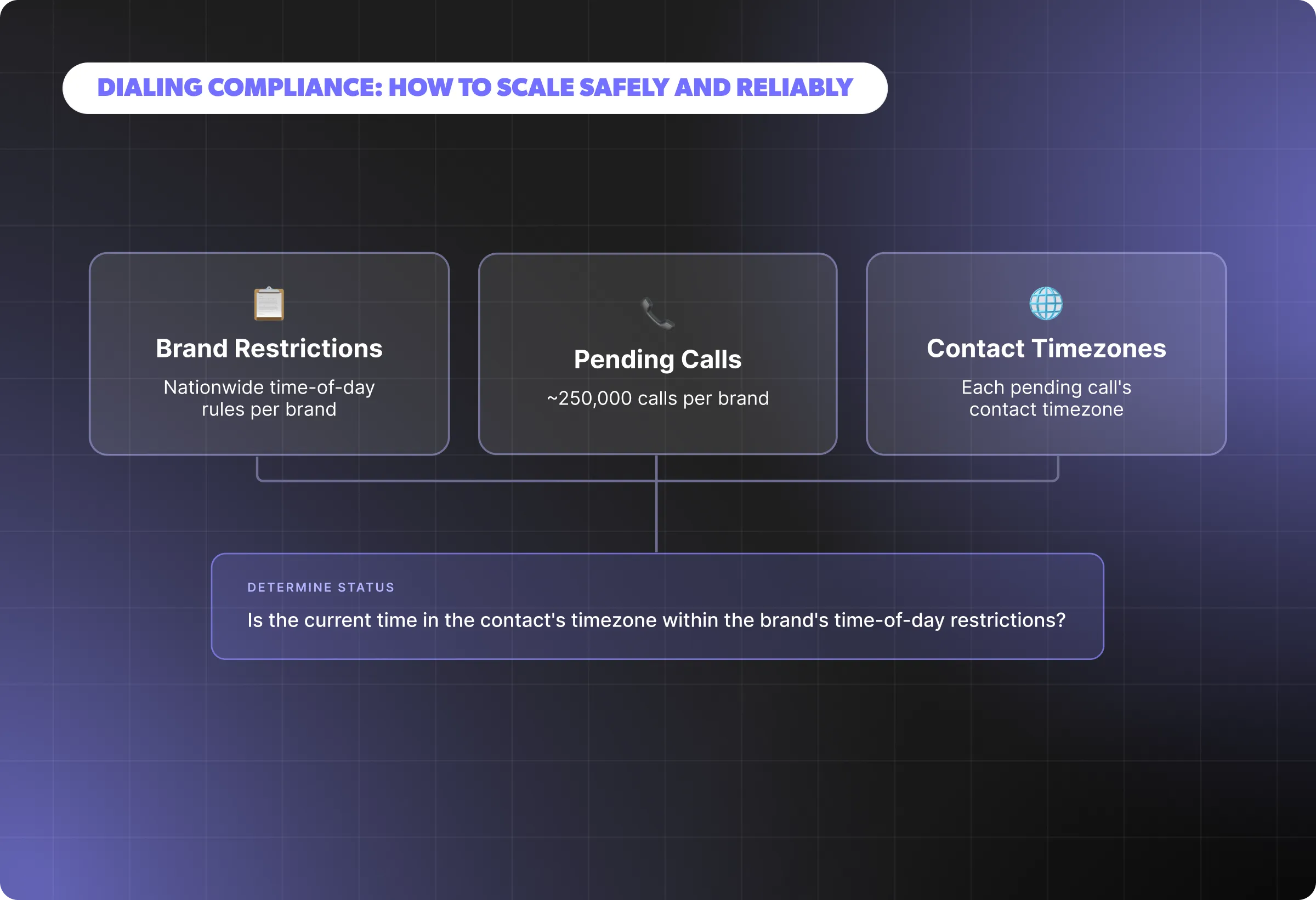
Dialing Compliance: How We Scaled Outbound Calling Reliably
Behind a fragmented and ever-changing regulatory landscape is a simple goal: protecting people from unwanted or poorly timed outreach and giving them control over how they’re contacted. In practice, that responsibility translates into a set of checks that must be validated.
This number is a milestone that represents a fundamental shift in customer experience and how businesses grow. Curious what this number really looks like? We put it into perspective.
Every new LLM comes with trade-offs between latency, cost, and quality — and Regal tests all of them against real voice AI agents. Here's what we found when we ran Gemini 3.5 Flash through our benchmark.
This month, we shipped enhancements that help you quickly make proactive fixes and customize AI agents to your brand. Copilot does more troubleshooting work on your behalf and with headless WebRTC, you can embed Regal voice agents inside your own product UI.
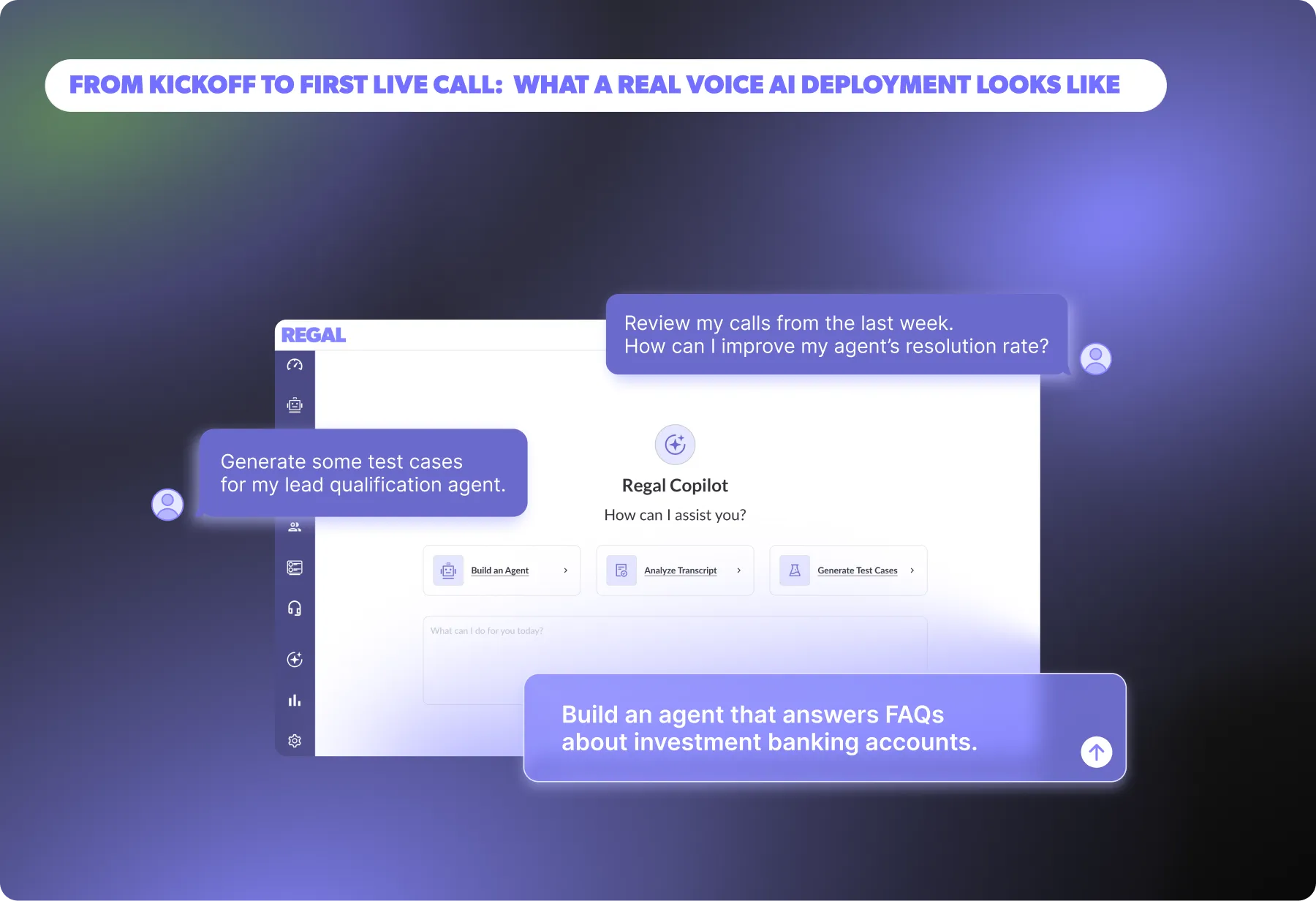
From Kickoff to First Live Call: What a Real Voice AI Deployment Looks Like
After powering over 400 million calls, we've found that the contact centers that win with voice AI aren't just the ones that deploy first. They're the ones that learn fastest.
No Need to "Press 1": How AI Phone Agents Go Beyond Automation
AI phone agents aren't just better phone trees. They are autonomous systems that can understand caller intent, retrieve relevant information from your CRM in real time, execute actions, handle objections and clarifications, and complete the conversation without human involvement.
Why Your AI Voice Agent Sounds Robotic And How to Measure for Improvement
Voice AI is architectural, not cosmetic. Warm words on a broken flow make things worse. But warm words on a well-structured, well-measured system compound over time.
The PII Question Every Regulated Industry Asks Before Deploying AI Agents
When prospects in healthcare and financial services hear "PII," they often imagine bulk data transfer: the idea that deploying an AI agent means copying a database somewhere. In most modern deployments, that's not what's happening.