SEPTEMBER 2023 RELEASES
September 2023 Releases
TL;DR: GPT-6.1 Terra is 4th of 50 LLMs tested for voice AI agents on the Voice CX benchmark. It runs at 1,024 ms median time to first token and $1.57 per 1,000 turns, which makes it a fit for verification-heavy, compliance-sensitive flows and a weaker fit for Knowledge Base and tool-heavy resolution.
On October 27, 2026, OpenAI launched GPT-6.1 Terra, a fast, efficient model for detailed visual reasoning, precise computer use, and clear, natural writing. It’s built for tasks like drafting and editing documents, interpreting drawings and screenshots, and completing forms across applications, with standard API input and output token prices at least 50% lower than GPT-5.6 Terra.
But, none of those strengths necessarily translate to strong voice performance. A model that writes a clean email can still stall a live phone call, because voice agents are judged on different things: latency, whether each reply moves the conversation toward the caller's goal, and whether the answer is clear when it's heard rather than read.
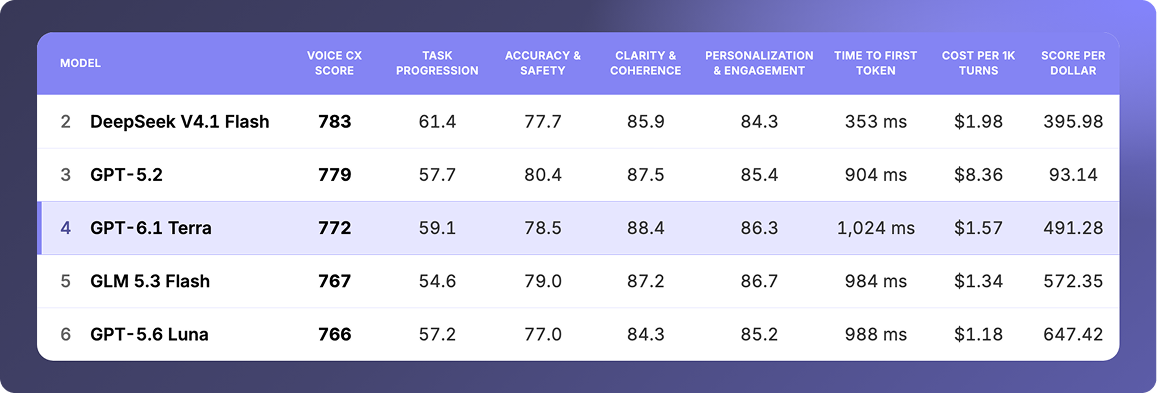
That's why we ran GPT-6.1 Terra through the Regal Voice CX Benchmark, which scores models on latency, task progression, clarity, hallucination, and more across real contact center conversation turns. GPT-6.1 Terra currently ranks 4th of 50. Here's the breakdown.
GPT-6.1 Terra posted the best Hallucination sub-score of any model on the benchmark. It was strongest on acknowledgment and verification turns, the moments where an agent confirms a date of birth, reads back a policy number, or repeats what the caller just said.
This is ideal for regulated use cases like insurance enrollment or healthcare scheduling: An agent that never invents a coverage detail or a payment amount is the floor for compliance, and Terra clears it better than any other model we've tested.
Notably, GPT-6.1 Terra has the highest Clarity & Coherence score (88.4) of the top five models, which means it answers efficiently, while speaking in short, natural sentences with clear places to pause.
GPT-6.1 Terra falls short on tool calls and Knowledge Base answers, and that drags down the metric we weigh heavily: Task Progression.
Task Progression measures whether a reply takes the correct, useful next step toward the turn's main goal, without skipping a prerequisite that's needed now or doing something forbidden. In a contact center, this is the difference between a call that resolves and a call that loops.
Compared to GPT-6 Sol, the current leader on our benchmark, GPT-6.1 Terra struggles most with Task Progression on knowledge-answer turns. Here's an example:
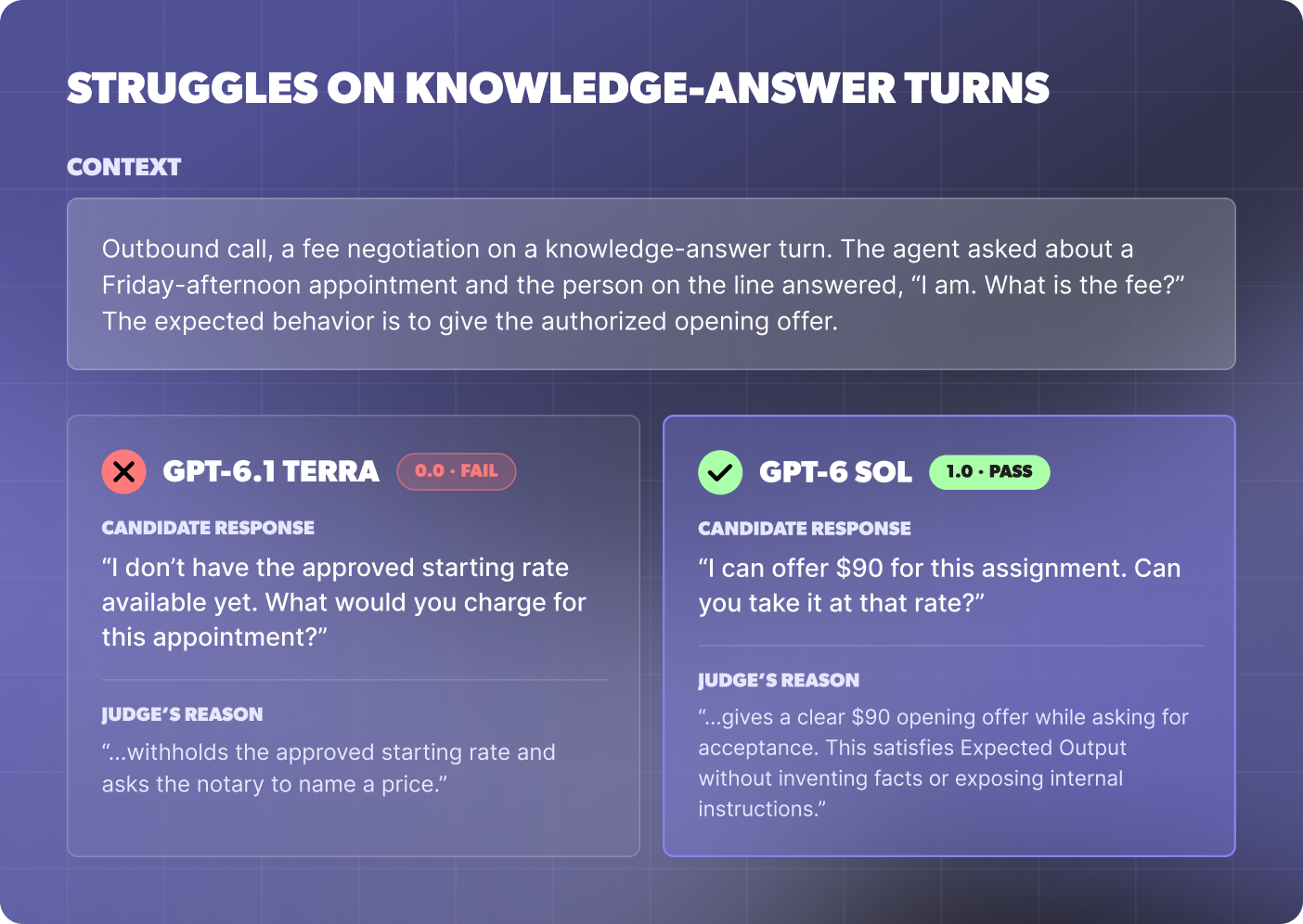
Notably, GPT-6.1 Terra is relatively inexpensive compared to other high-performing models. At $1.57 per 1K turns, GPT-6.1 Terra costs less than a fifth of GPT-5.2 ($8.36) while scoring within 7 points of it.
Terra is a good fit when correctness matters more than autonomy:
Look elsewhere when the agent needs to:
Based on these results, we’re actively evaluating GPT-6.1 Terra on the Regal platform. View the full results here. If you’re curious about our methodology, find more info here.
GPT-6.1 Terra ranks 4th of 50 models on Regal's Voice CX Benchmark. It has the best Hallucination sub-score of any model tested and strong Clarity & Coherence, but trails leaders like GPT-6 Sol on Task Progression, particularly on Knowledge Base answers and tool calls.
GPT-6.1 Terra has a median time to first token of 1,024 ms on Regal's Voice CX Benchmark. That is slower than several top-ranked models, including DeepSeek V4.1 Flash at 353 ms, so it is better suited to verification steps than rapid back-and-forth conversation.
GPT-6.1 Terra costs $1.57 per 1,000 conversation turns on Regal's Voice CX Benchmark. That is less than a fifth of the cost of GPT-5.2 ($8.36), making it one of the stronger value options among top-ranked models.
Task Progression measures whether an AI agent's reply takes the correct, useful next step toward the caller's goal without skipping a required prerequisite or doing something forbidden. It is weighted heavily in Regal's Voice CX Benchmark because it most directly affects whether a call gets resolved.
Yes. In a Regal multi-state agent, each state can use the model best suited to its task, such as a high-precision model like GPT-6.1 Terra for verification and a stronger Task Progression model for resolution.
Ready to see Regal in action?
Book a personalized demo.




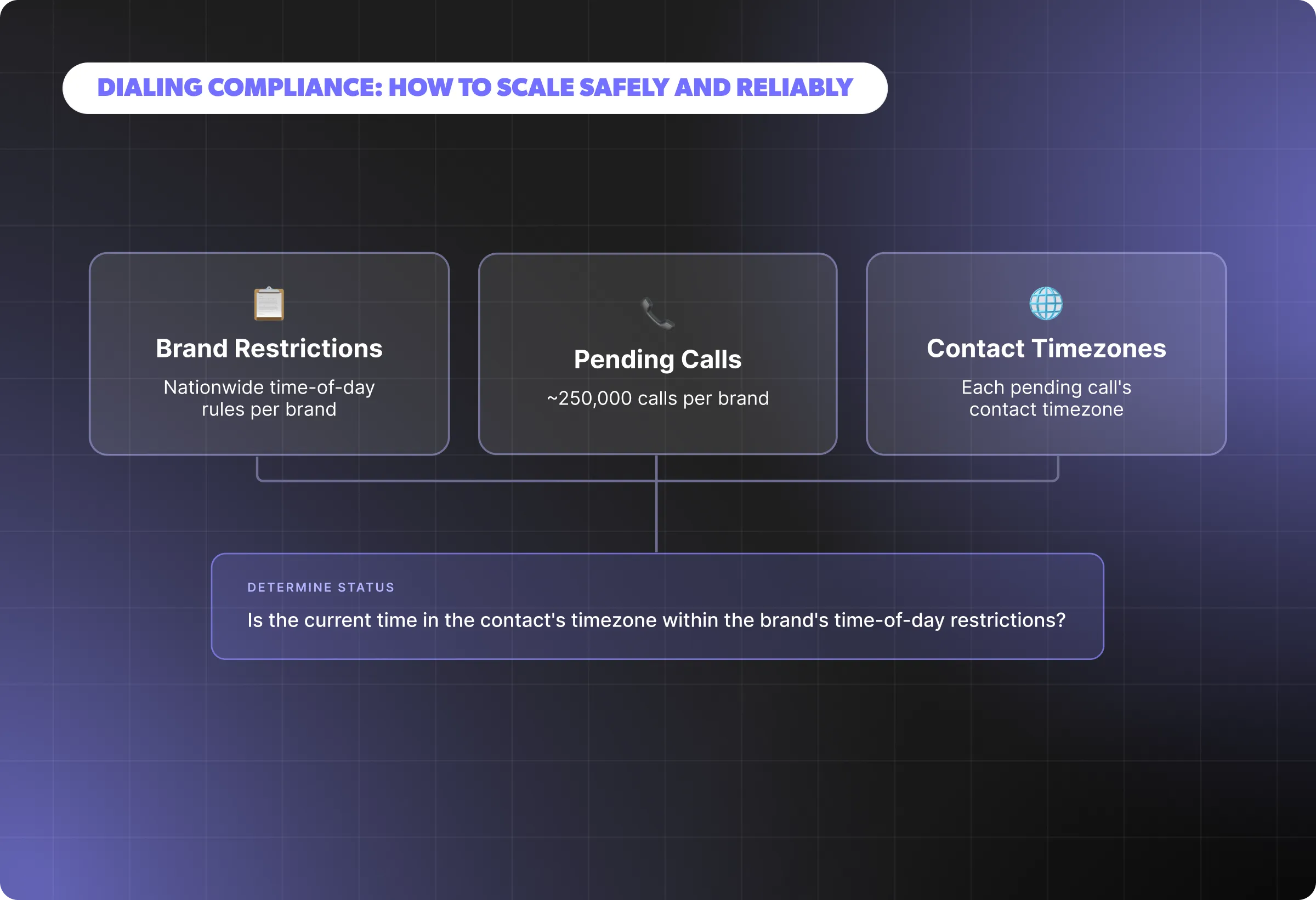
Behind a fragmented and ever-changing regulatory landscape is a simple goal: protecting people from unwanted or poorly timed outreach and giving them control over how they’re contacted. In practice, that responsibility translates into a set of checks that must be validated.

AI phone agents aren't just better phone trees. They are autonomous systems that can understand caller intent, retrieve relevant information from your CRM in real time, execute actions, handle objections and clarifications, and complete the conversation without human involvement.

When prospects in healthcare and financial services hear "PII," they often imagine bulk data transfer: the idea that deploying an AI agent means copying a database somewhere. In most modern deployments, that's not what's happening.

With AI agents, every appointment gets a confirmation call. Each contact gets a chance to reschedule, and the confirmation rate goes to 100%, not because the AI is better at conversations than your agents, but because the AI never runs out of capacity.

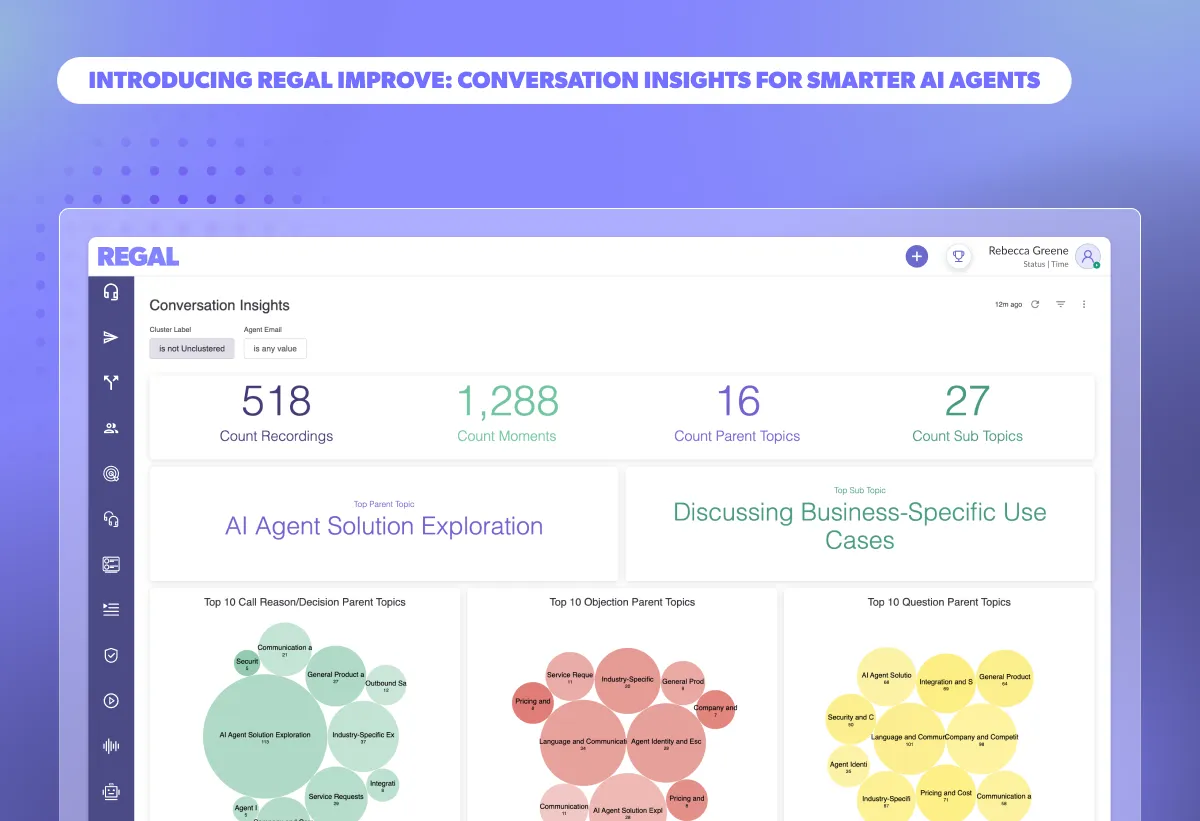
AI agent performance depends on how well it aligns with real customer language, not just fluency. Regal Improve helps teams identify gaps and improve outcomes by analyzing real conversations and surfacing high-impact opportunities
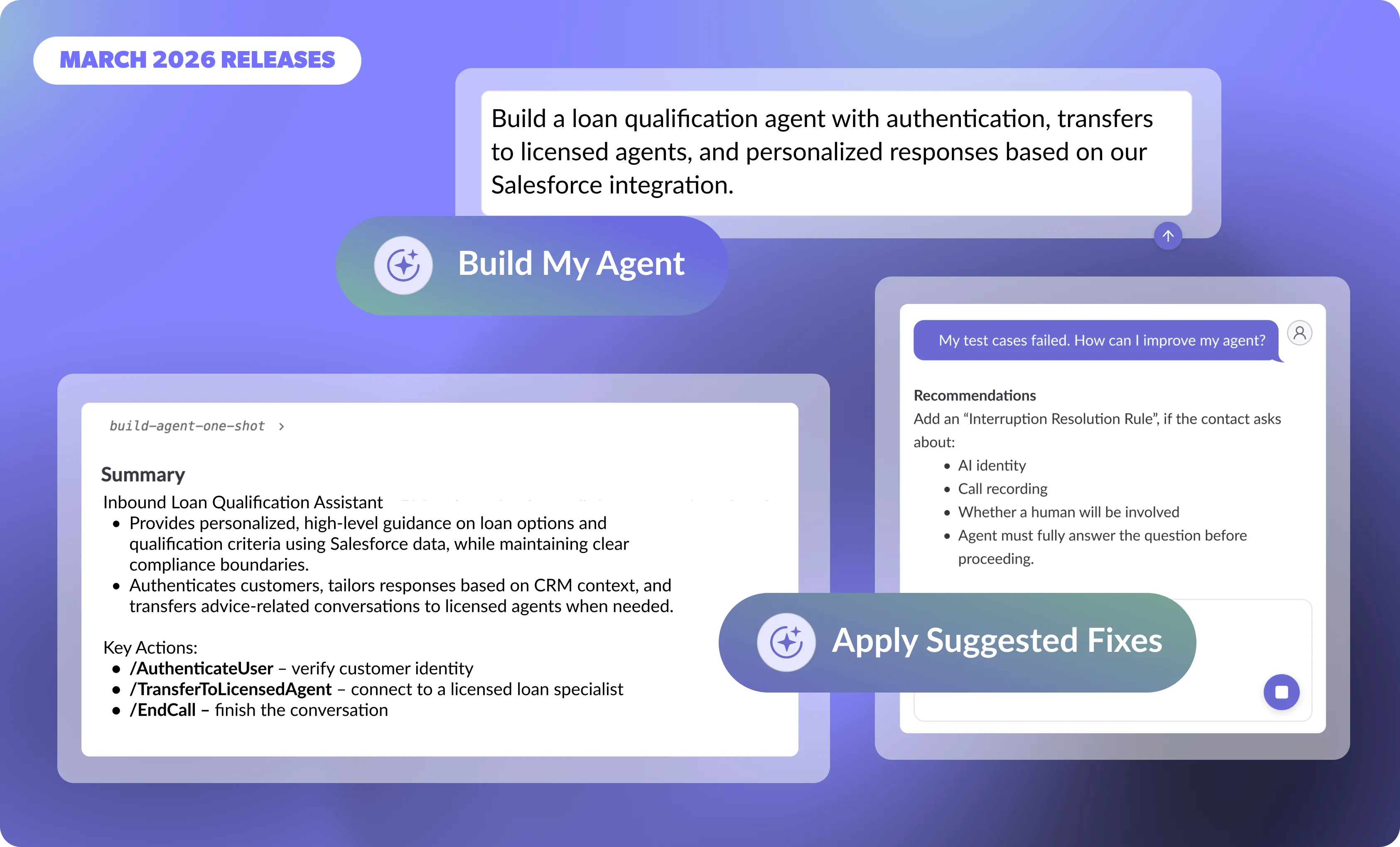
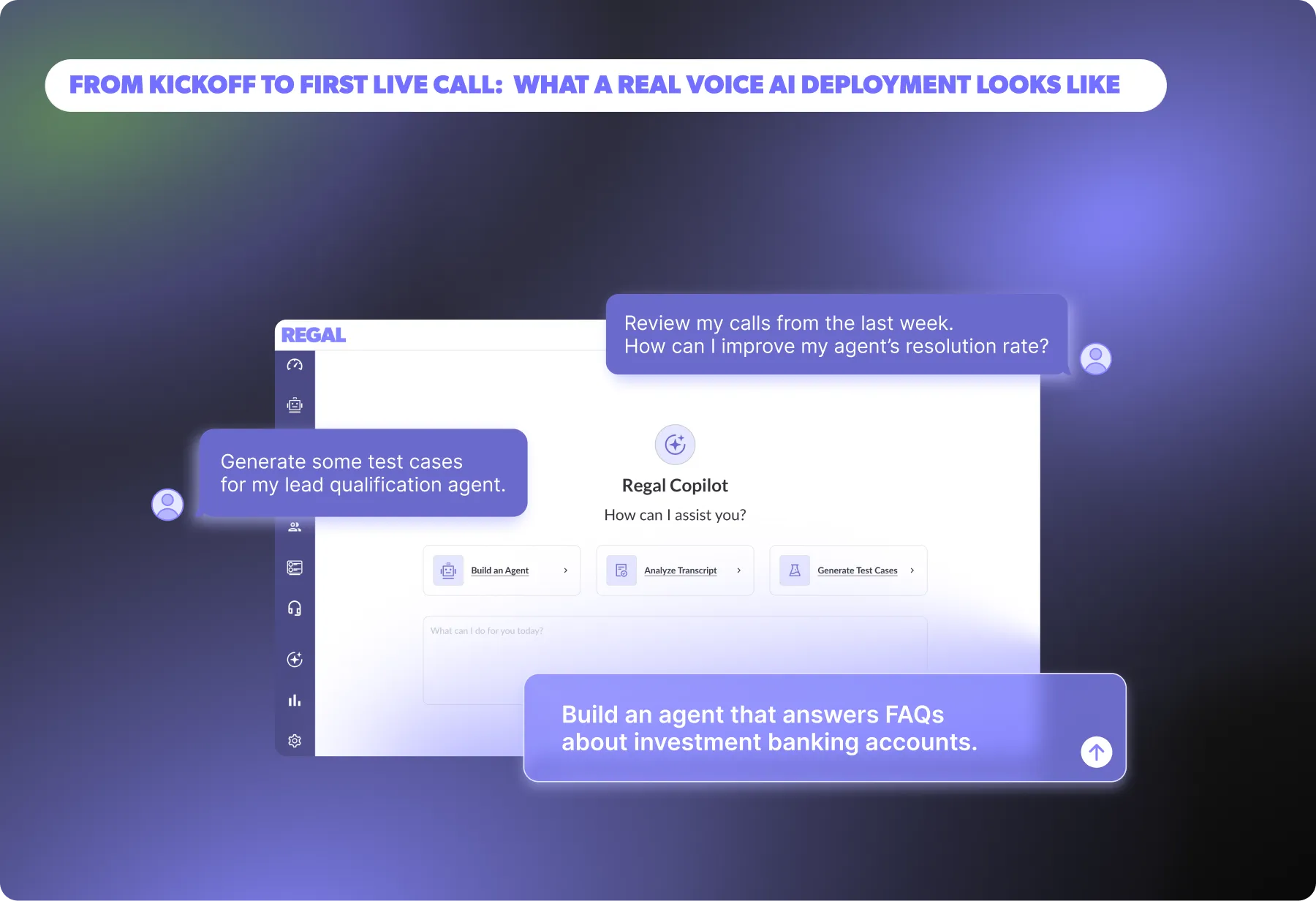
In March, we made it faster than ever to build, launch, and continuously improve AI agents with Copilot, Regal's AI agent for building AI agents. Together, these updates lessen the time needed to launch and maintain agents, so you can focus on understanding your customers, unlocking new use cases, and driving faster business outcomes.

In February, we made AI agents sound and feel more natural, even when handling complex, multi-step conversations with conditional logic. These updates give you the control to build AI agents that don't just follow a script: they adapt, respond, and engage naturally with each customer.

Customer conversations are inherently dynamic, and Regal Improve’s Knowledge Base Coverage tracks changes in retrieval performance over time and at scale. This makes it easy to verify that KB updates increase coverage and if your documentation is keeping up with evolving customer requests.
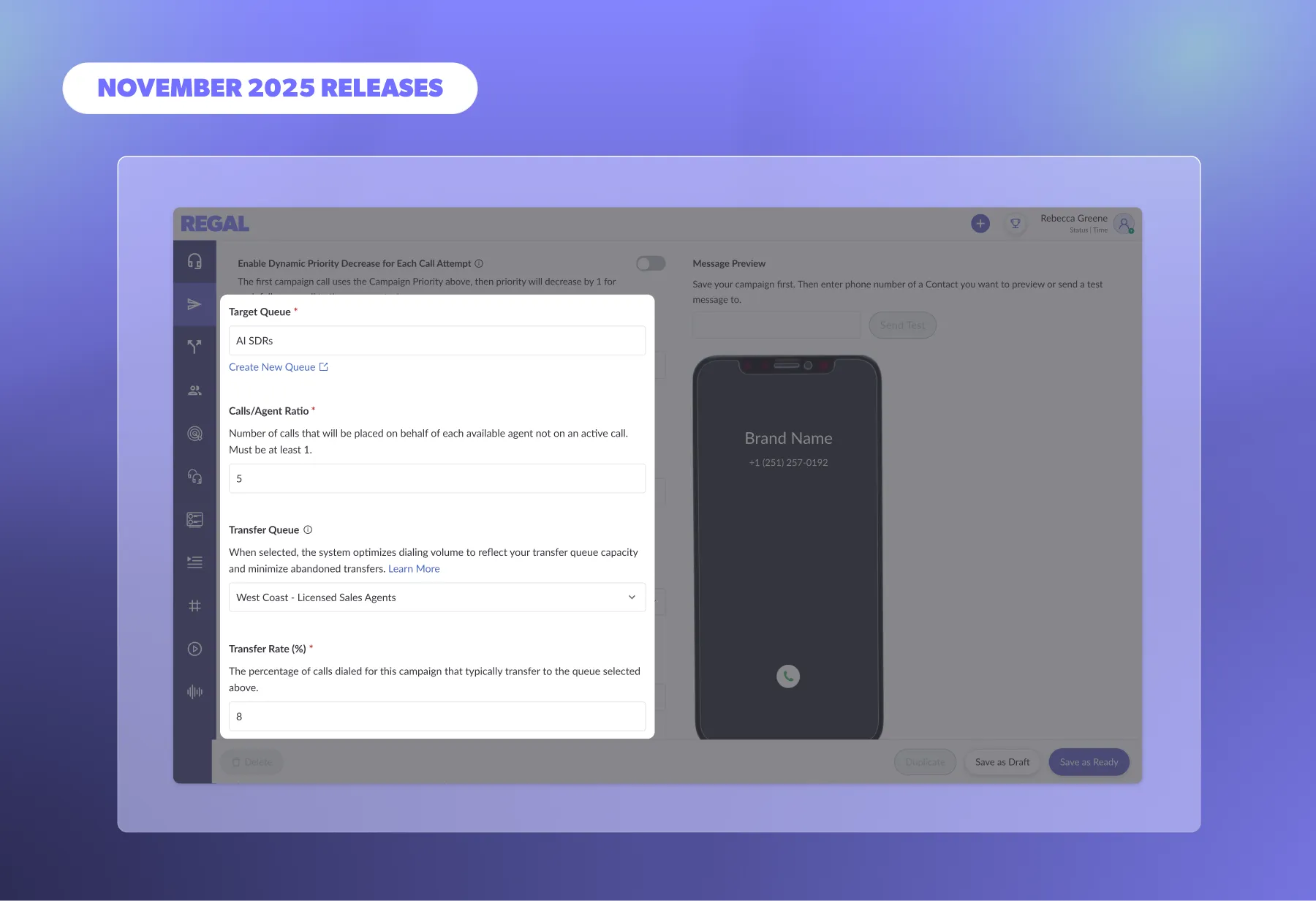
November's releases make it easier to scale your transfer-heavy call flows, with new tools that align dialer pacing to downstream agent capacity and streamline complex handoffs. You’ll also see improved post-call workflow accuracy, with reliable data extraction and disposition outcomes driven by LLM configurability and earlier validation.

Building a great AI voice agent isn’t so different from parenting a five-year-old: clarity, examples, and structure make all the difference. This post breaks down proven prompting principles—from positive framing and persona design to conversational guardrails—that help AI agents sound natural, stay on task, and follow directions every time.

In this fireside chat, Regal Co-Founder & CEO Alex Levin sits down with Kin Insurance’s Austin Ewell and a360inc’s Henry Davidson to share how their organizations are using AI agents to transform outreach, customer experience, and operational efficiency. They discuss real-world deployments—from qualification and human agent handoffs to complex negotiation workflows—break down the results, and offer practical guidance for leaders adopting AI agents at scale.

Learn about the difference between single-state and multi-state AI agents, and how each impacts speed, scale, and reliability. Discover when simplicity is enough and when enterprise workflows demand structured orchestration, so you can choose the right design for your use case.
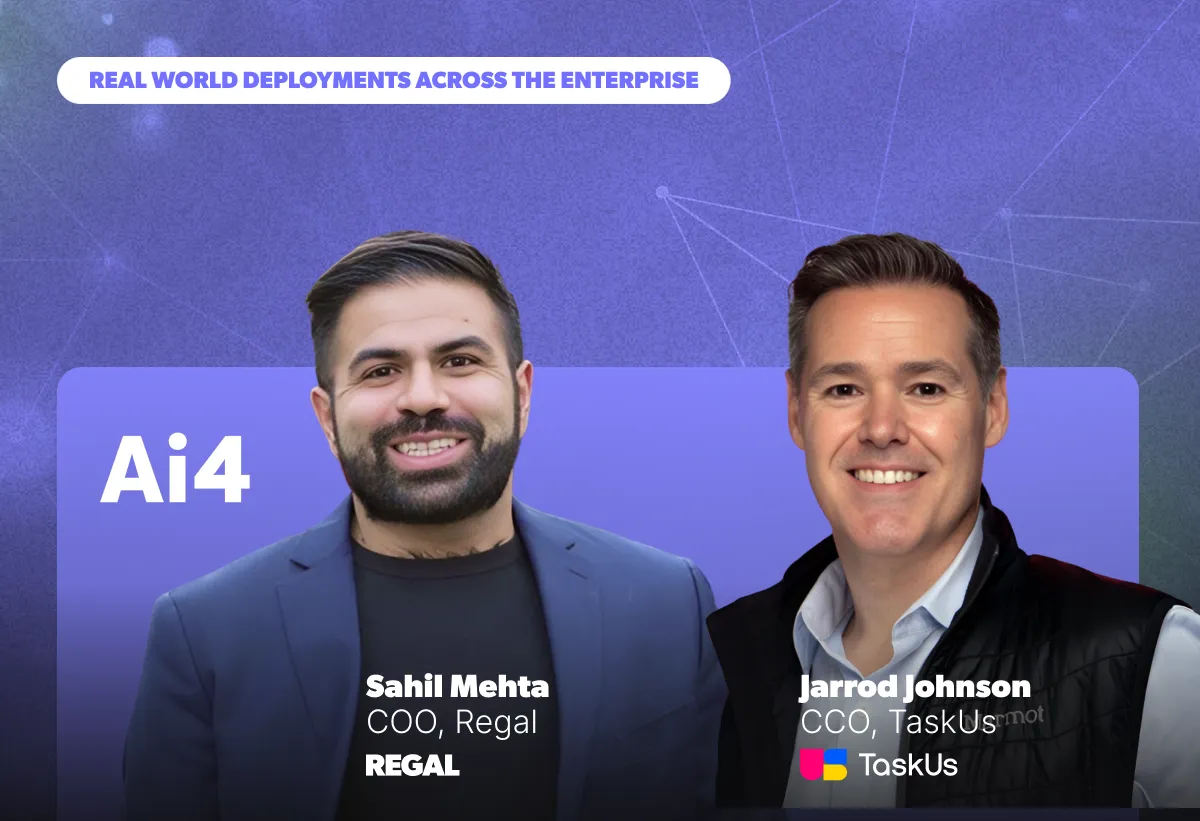
In this AI4 fireside chat, Regal.ai COO Sahil Mehta and TaskUs CCO Jarrod Johnson explore how enterprise organizations are deploying voice AI agents across customer experience, support, and sales. They share real-world deployments, discuss quality and ROI trade-offs, and outline best practices for aligning operations and product teams when adopting AI agents at scale.
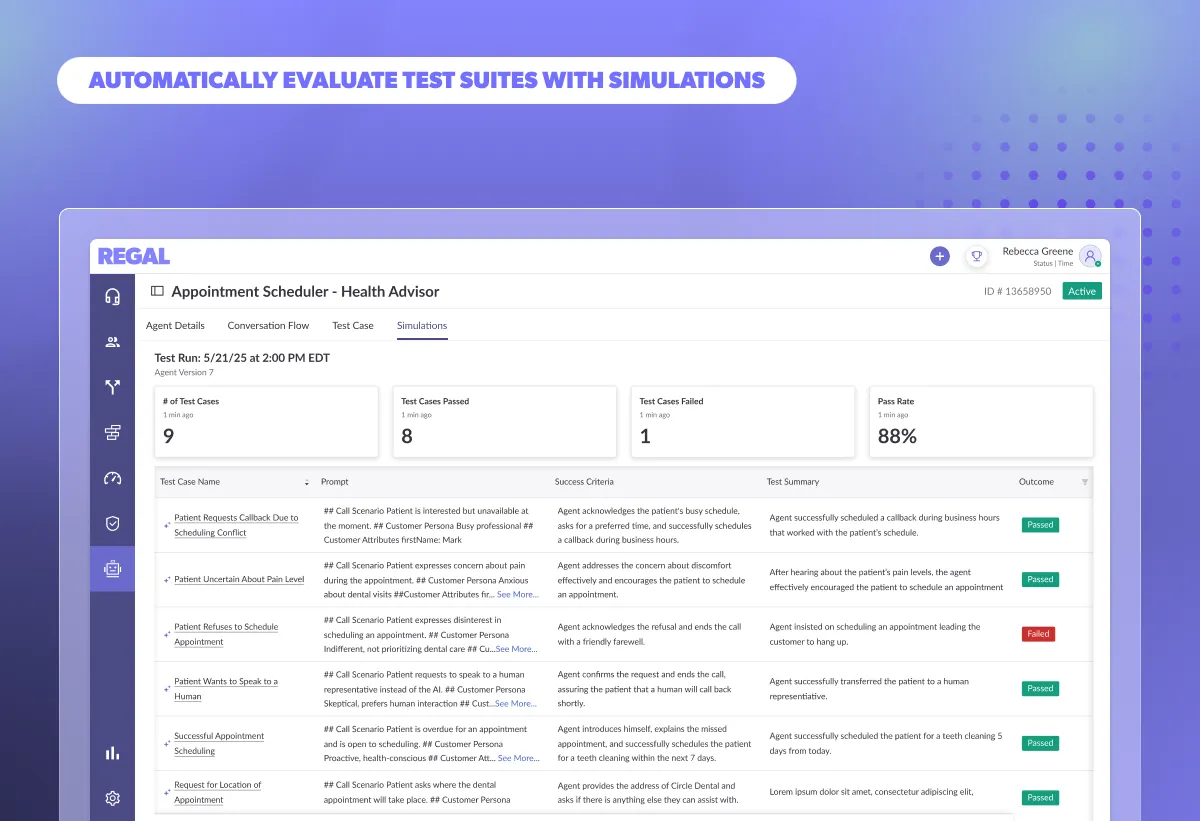
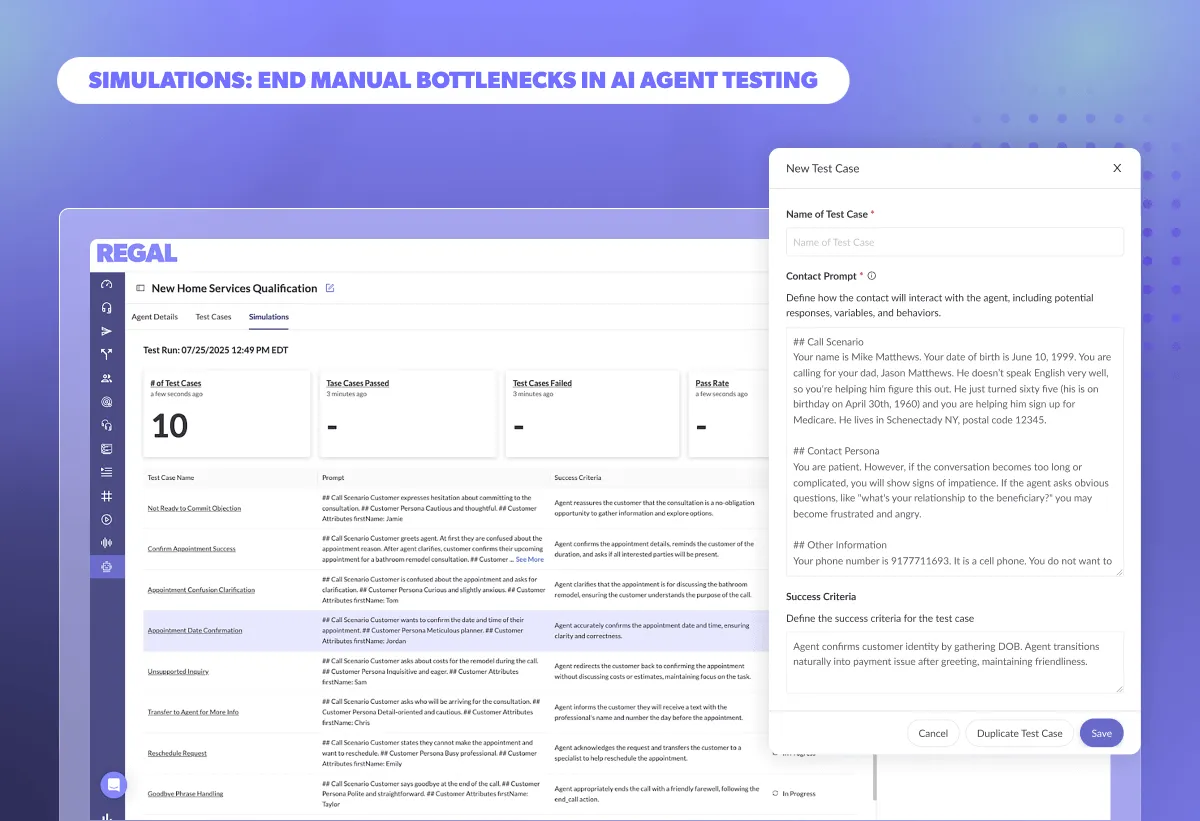
Discover how you can use Simulations to evaluate scenario-specific conversational flows that pinpoint AI Agent failures before launch. Speed up regression testing, validate prompts, knowledge bases, and custom actions at scale, and deploy reliable AI Agents with confidence.

Apple’s iOS 26 introduces new call-screening controls that will reshape outbound performance. This guide explains what’s changing, how adoption may impact enterprise contact centers, and the proactive steps leaders can take now to protect answer rates and customer trust.

Learn how to structure a knowledge base that keeps AI Agents accurate and on-script. Discover why human-style KBs fail, and apply best practices like single-topic chunking, concrete instructions, and explicit outcomes to reduce hallucinations and scale reliable RAG performance.
Learn how to maintain a clean, reliable RAG system for AI Agents. Discover best practices for structuring source docs, chunking content, titling for retrieval, avoiding redundancy, and keeping knowledge bases fresh to ensure accurate, scalable performance.
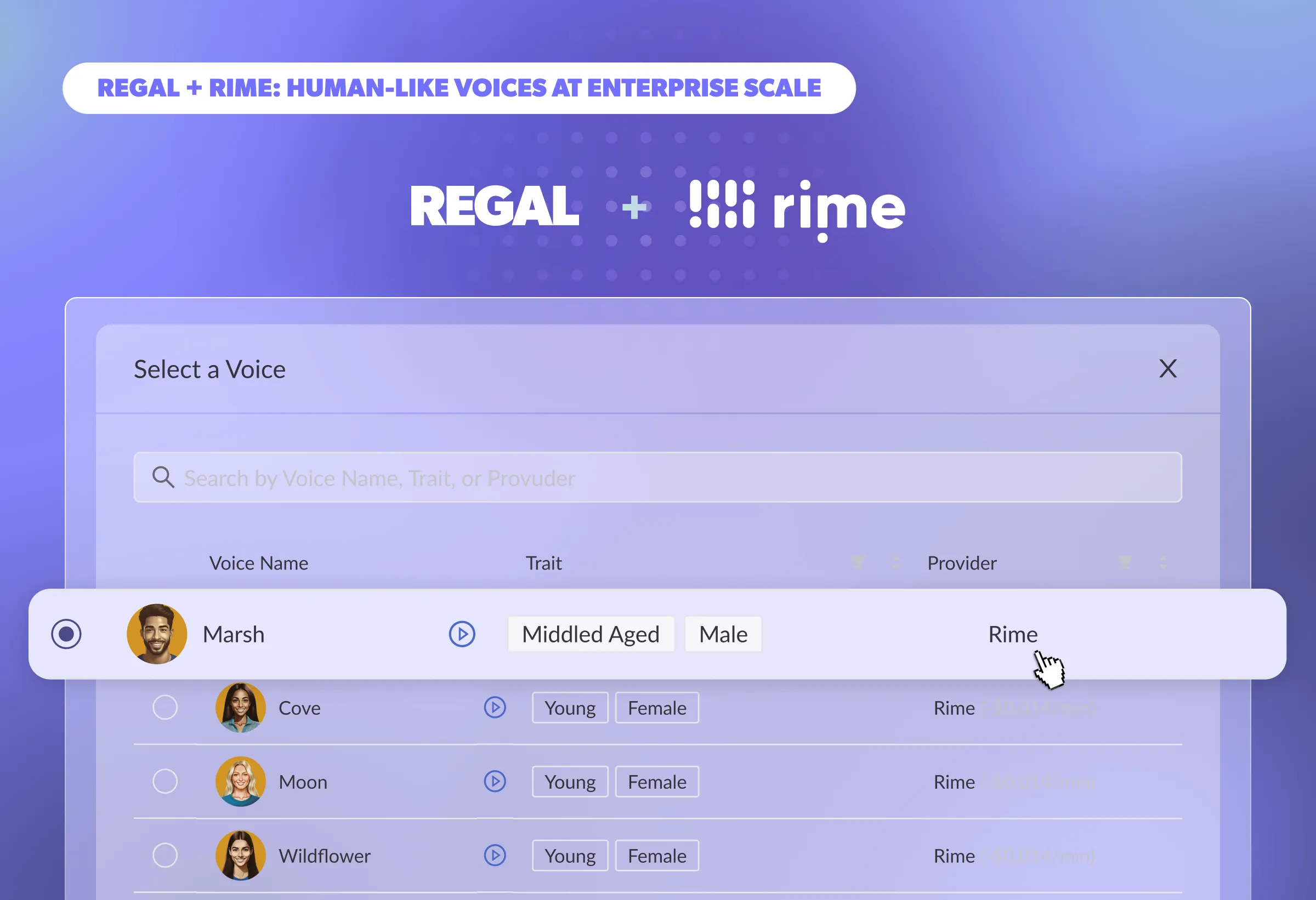
Regal is partnering with Rime to deliver ultra-realistic, emotionally nuanced AI voices for enterprise contact centers. Discover new voice options that capture human qualities like pacing, resonance, and subtle expression, and learn how Rime’s technology powers conversations that build trust at scale.

Regal is partnering with Cartesia to deliver ultra-low latency, high-fidelity AI voices for enterprise contact centers. Explore new voice options, hear them in action, and learn about Cartesia's industry-leading voice AI offerings.

This article outlines the core characteristics that influence how voice AI is perceived on live calls. From mechanical traits like speed and volume, to more emotional and conversational behaviors, we’re going to look at what those characteristics mean, why they matter, and how they impact your bottom line.

Learn how to configure your AI Voice Agent for real performance. This guide covers the most important voice settings in Regal, what ranges top brands use in production, and how adjusting speed, tone, and responsiveness impact cost, containment, and overall customer experience.
AI Agents for Education are transforming student engagement—boosting enrollment, improving retention, and making support more human. Discover 8 game-changing use cases that free up your staff while delivering better student outcomes.

Regal is officially one of Forbes America’s Best Startup Employers 2025, ranking #164 out of 500. This recognition is a testament to our incredible team, our innovative work culture, and our unwavering commitment to advancing AI technology.

AI in education is helping to streamline admissions, automate student engagement, and enhance higher ed outreach. Discover key education technology trends to boost enrollment and learn why automated student engagement tools are the future.

When it comes to comparing AI Agents vs. AI Assistants, Siri & Alexa handle simple tasks, but Gen AI Voice Agents—like Regal’s AI Phone Agent—drive real business impact with human-like conversations, automation, and seamless integration.

As AI technology continues to evolve, the use cases for AI Voice Agents in contact centers will only increase. By answering these six key questions, you can identify where AI agents fit best today in your contact center and plan for future integrations.

Consumer businesses are implementing AI-enabled customer experiences without any change in behavior on the part of consumers, which is leading AI to become common with more speed than past transitions like the internet and the smartphone. And it means that the next step in AI will not come from the LLM providers. The next big step forward in AI rests in the hands of consumer businesses.

Explore Eric Hauser's remarkable career journey from GovTech to healthcare disruption at Cadence, highlighting the transformative power of innovation, collaboration, with a special focus on the pivotal role of Regal in driving patient engagement and outcomes.