SEPTEMBER 2023 RELEASES
September 2023 Releases
In our webinar, Voice AI in 2026, Sahil Mehta, COO of Regal, sat down with Yael Goldstein, Director of Product & Product Marketing, to discuss new research on where Voice AI agents are headed, and why this transformation is far bigger than just cutting costs.
Read the full report to dig deeper into the 2026 trends.
When AI agents started gaining traction, many businesses focused on their potential to reduce costs and cut headcount.
Sahil notes that framing misses the bigger opportunity.
"The real opportunity is asking: If I had an agent that's perfectly personalized, available 24/7, able to answer any question and take action: what entirely new capabilities and experiences could I offer?"
The cost savings are real, but they're just the starting point. The more exciting question is what becomes possible when you stop spending human creativity on repetitive, robotic interactions.
Think of it like the early days of the App Store: brands initially just built alternative versions to websites, until they realized apps provided location data, payment rails, and authentication that unlocked entirely new business models. Voice AI is at a similar inflection point.
One surprising finding from our research is that customers share more with AI agents than humans. For example, during lead-follow calls with AI agents, customers elaborate more, correct themselves, and provide richer detail about their situation.
.webp)
Customers don't worry about wasting the agent’s time or being judged. This openness gives brands more access to customer data and signals. As Yael notes:
"Brands are using this richer context to personalize future conversations, improve coverage for recurring frustrations, and build trust."
Since voice conversations are richer than surveys, they carry context, nuance, and organic signals that rigid chatbots and form fills never capture. Now those conversations are analyzable and actionable: a goldmine for understanding what customers actually think and care about.
For contact center leaders trying to sequence their AI journey, Sahil laid out a practical framework:
Phase 1: Automate the repetitive, tedious calls that drain agent energy and drive turnover.
Phase 2: Move human agents into higher-leverage roles: agent design, quality control, and escalation ownership.
Phase 3: Experiment with net-new experiences that weren't possible before.
With AI agents, the goal isn't just efficiency. It's getting to a place where your team has both the AI agents and the capacity to build and improve them.
Deploying AI agents presents meaningful challenges for brands, particularly around integrating with existing tech stacks and managing organizational change. As Yael and Sahil highlight, success depends on accelerating iteration cycles to reduce time to value while recognizing that AI agents are not “set and forget” solutions.
They require ongoing monitoring, optimization, and refinement. Looking ahead, the vision is to build a system that continuously supports and enhances AI agents, enabling them to learn, adapt, and improve over time as new challenges emerge.
.webp)
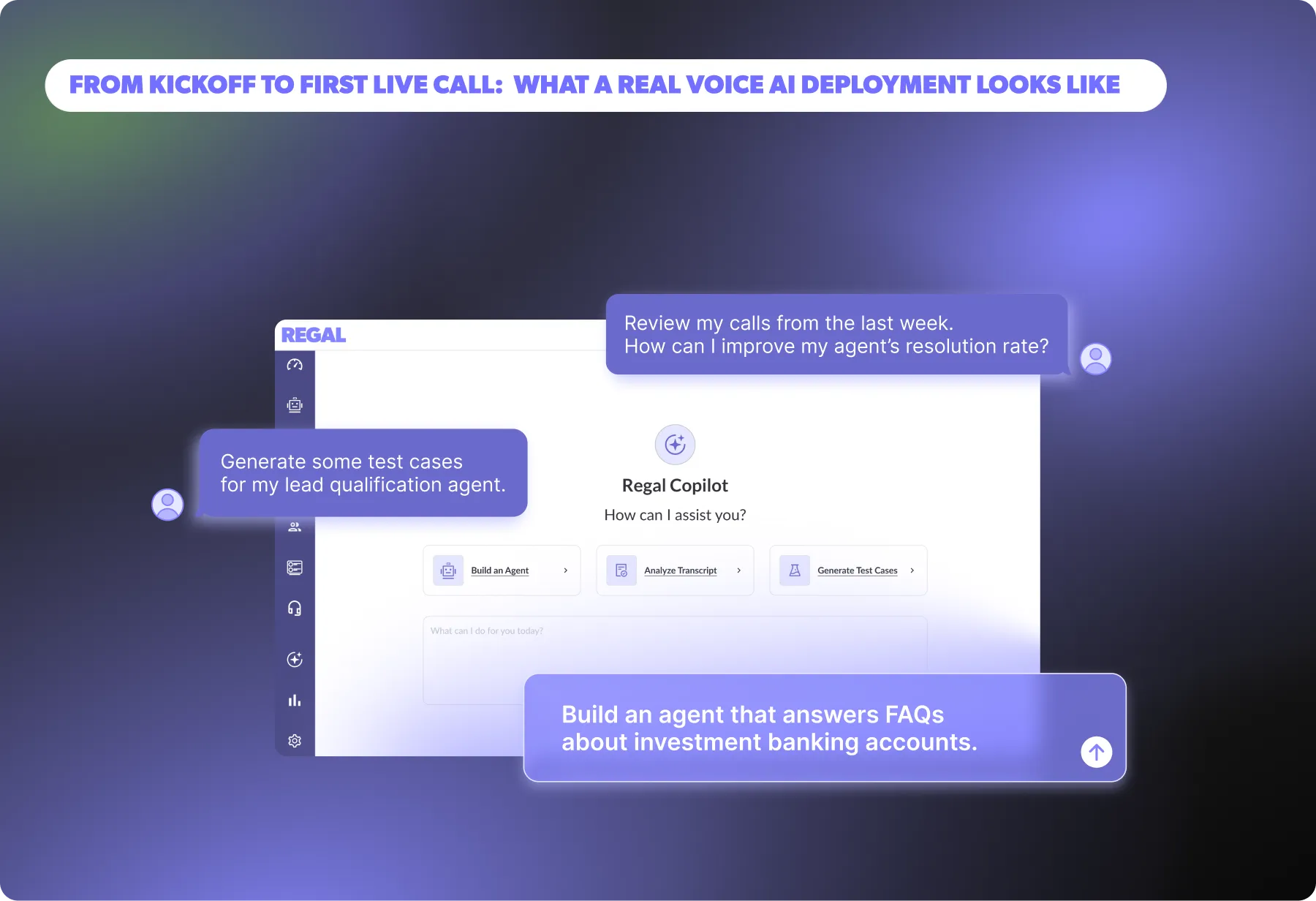
The initial build relies on existing production conversations. Once you provide conversation transcripts or recordings of human calls, Regal Copilot automatically:
Once deployed, it doesn't stop. Copilot:
This transforms agent improvement from a manual, weeks-long process into a continuous, feedback-driven cycle. Your team spends less time on tactical prompt tweaks and more time on creative breakthroughs, the work humans are best equipped to be doing.
The future isn't just about automating human-led interactions with more AI agents. It's about building the systems that let you deploy, monitor, and improve agents faster than your competitors. Speed isn't about rushing. It's about freeing your best people to focus on the problems that matter most.
The next step for agentic workflows is achieving a fundamentally faster way to get AI to work in your business. That’s why our Forward Deployed Engineers partner with you at every stage: ensuring your AI agents continuously learn, adapt, and improve as new challenges emerge.
Looking to take full advantage of what AI agents can do in 2026? Let’s build together.
Voice AI is evolving beyond simple automation to enable entirely new customer experiences. AI agents can be personalized, available 24/7, and capable of answering questions or taking action instantly. This allows businesses to rethink how they engage with customers instead of simply replacing human interactions. The biggest opportunity lies in creating new capabilities rather than just reducing costs.
Research shows that customers tend to open up more when speaking with AI. They often elaborate on their situations, correct themselves, and provide richer details because they don’t worry about wasting time or being judged. This results in more valuable conversational data for businesses. Companies can use these insights to personalize future interactions and better understand customer needs
Organizations typically adopt AI in three phases. First, they automate repetitive calls that drain human agents and cause burnout. Next, human agents shift into higher-value roles such as oversight, quality control, and handling complex escalations. Finally, companies begin experimenting with entirely new experiences that weren’t possible before AI agents.
AI agents are not “set-it-and-forget-it” systems—they need continuous optimization to perform well. Businesses must monitor conversations, identify gaps in knowledge, and update prompts or workflows as customer needs evolve. Tools like Regal Copilot help automate this improvement process by analyzing conversations and recommending updates. This creates a continuous feedback loop that allows agents to learn and improve over time.
Ready to see Regal in action?
Book a personalized demo.




.webp)
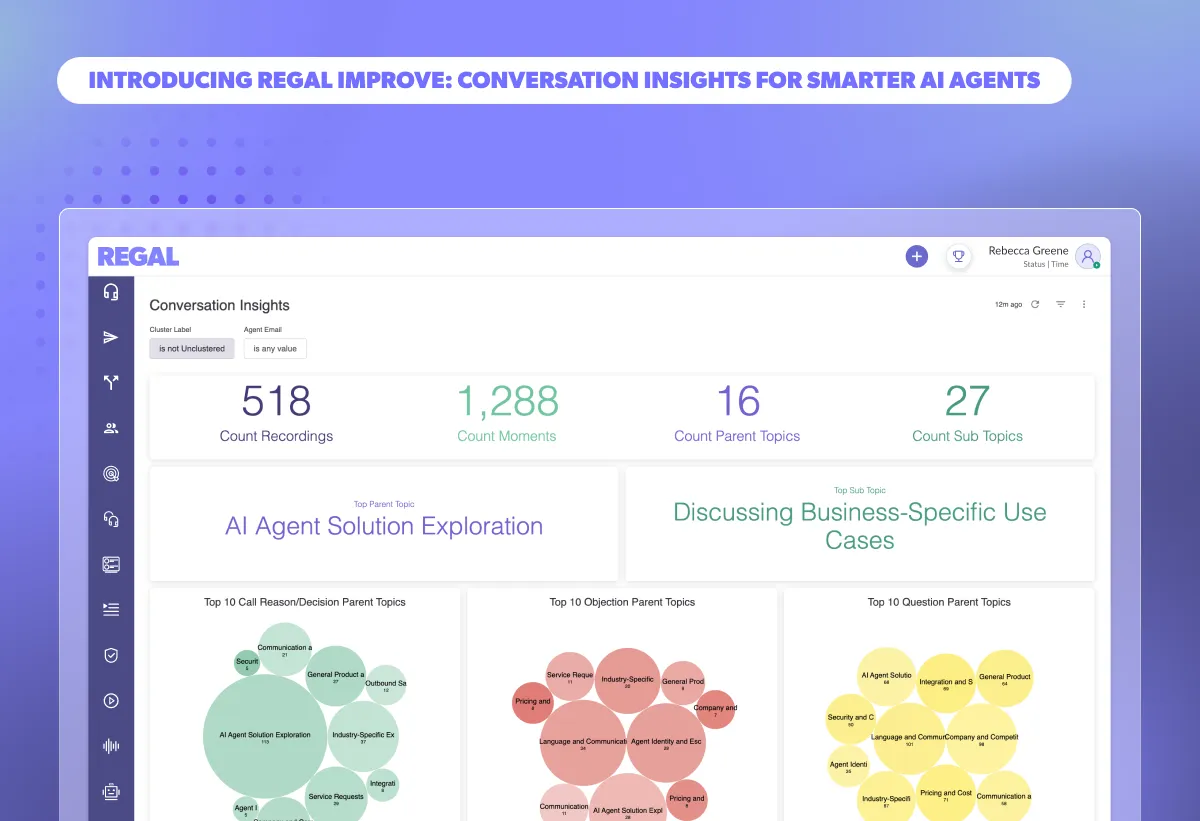
Customer conversations are inherently dynamic, and Regal Improve’s Knowledge Base Coverage tracks changes in retrieval performance over time and at scale. This makes it easy to verify that KB updates increase coverage and if your documentation is keeping up with evolving customer requests.
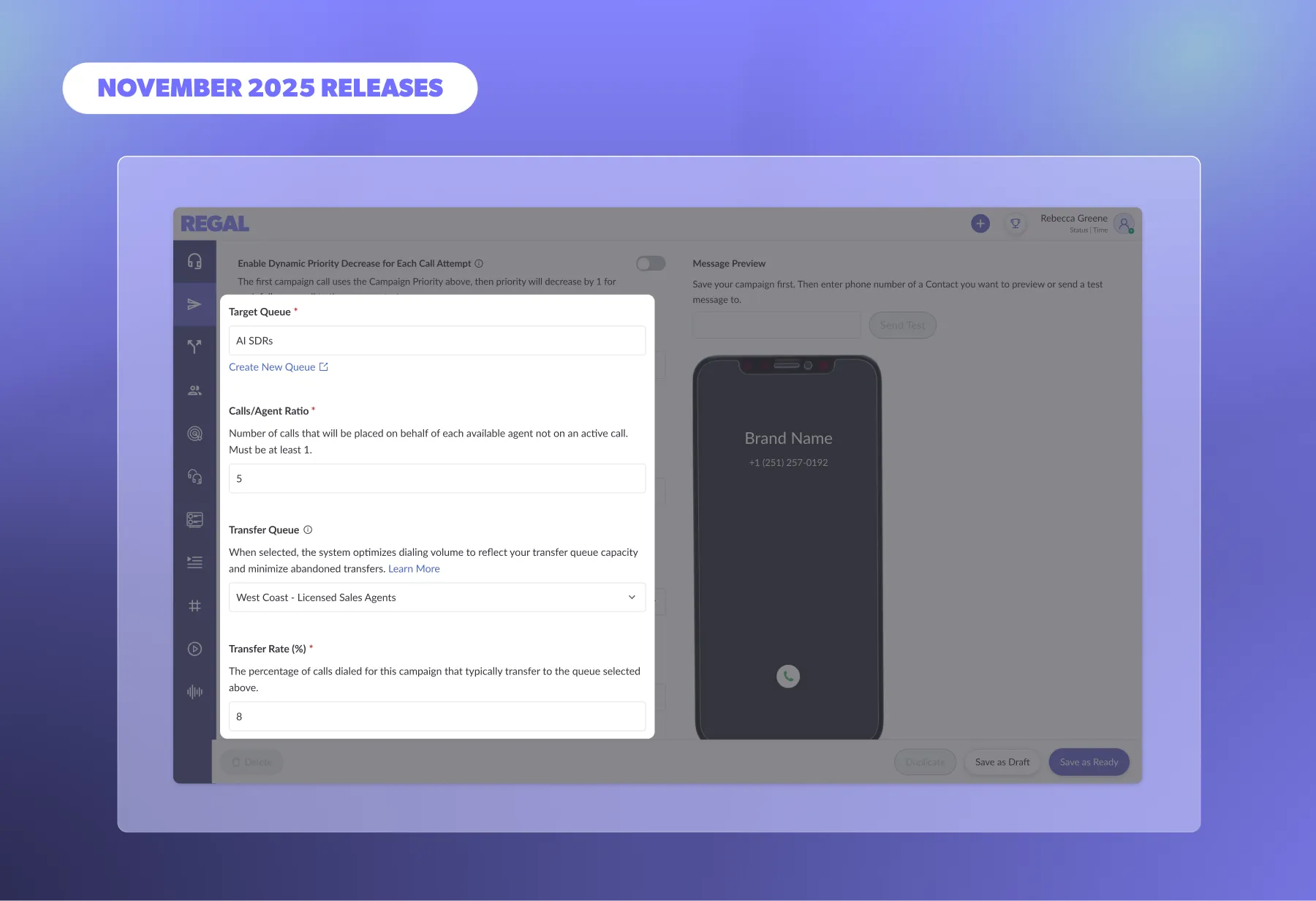
November's releases make it easier to scale your transfer-heavy call flows, with new tools that align dialer pacing to downstream agent capacity and streamline complex handoffs. You’ll also see improved post-call workflow accuracy, with reliable data extraction and disposition outcomes driven by LLM configurability and earlier validation.
.webp)
Building a great AI voice agent isn’t so different from parenting a five-year-old: clarity, examples, and structure make all the difference. This post breaks down proven prompting principles—from positive framing and persona design to conversational guardrails—that help AI agents sound natural, stay on task, and follow directions every time.
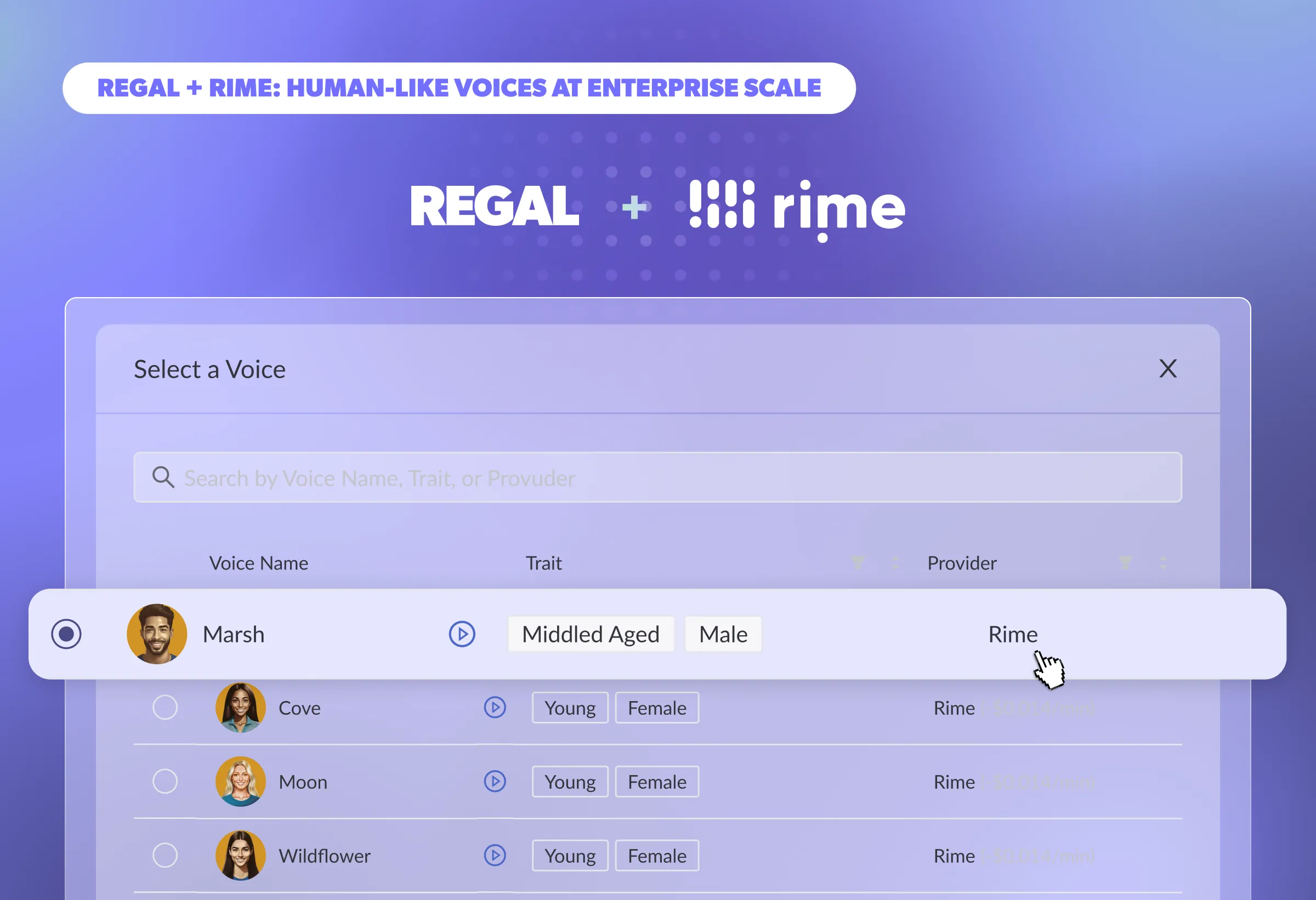
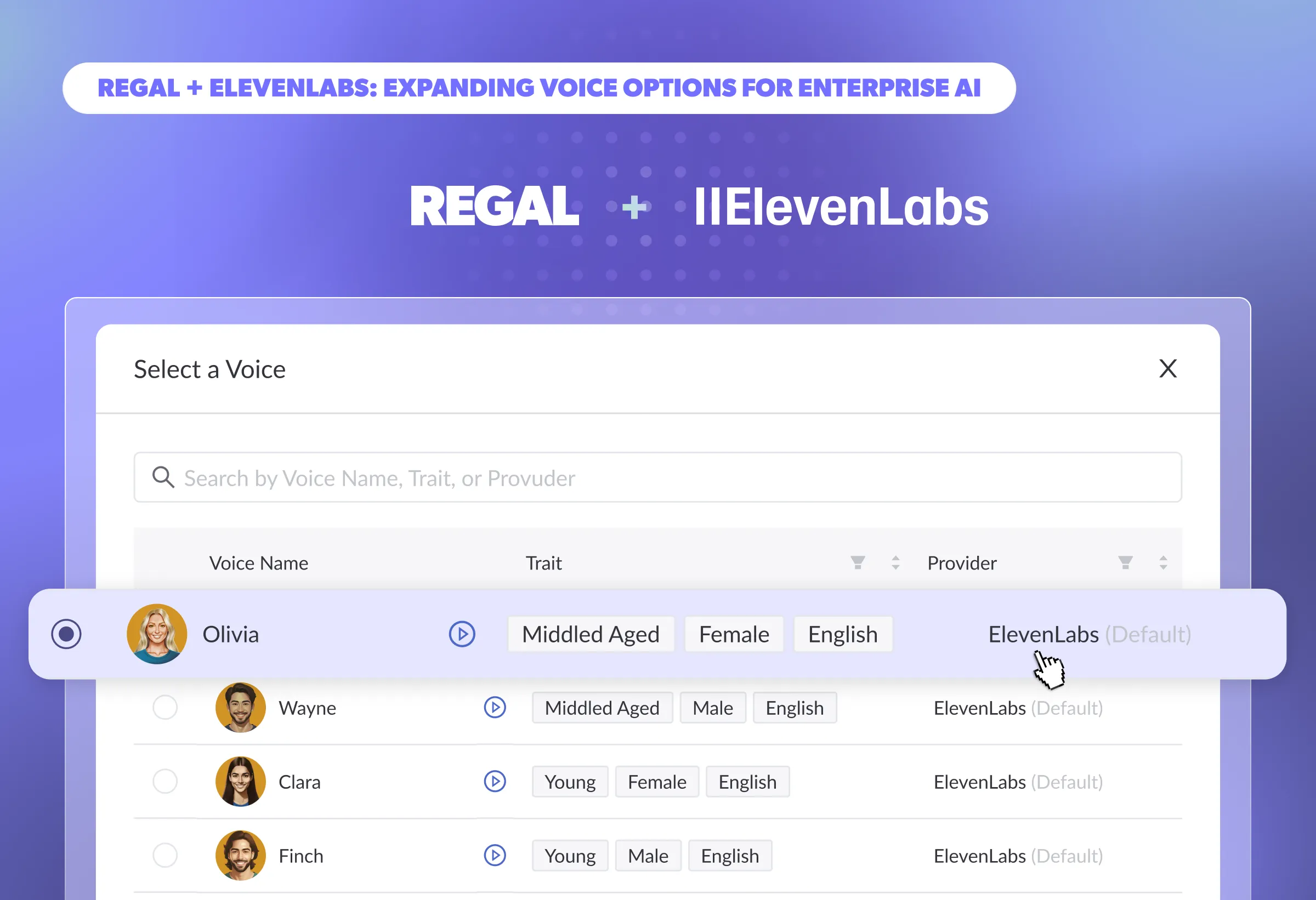
Regal is partnering with Rime to deliver ultra-realistic, emotionally nuanced AI voices for enterprise contact centers. Discover new voice options that capture human qualities like pacing, resonance, and subtle expression, and learn how Rime’s technology powers conversations that build trust at scale.
%20(1).webp)
Regal is partnering with Cartesia to deliver ultra-low latency, high-fidelity AI voices for enterprise contact centers. Explore new voice options, hear them in action, and learn about Cartesia's industry-leading voice AI offerings.

Why are so many contact centers stuck being cost centers? Why do they keep looking for cost reductions instead of revenue increases? Bad data and technology decisions are at the core of this issue. We need "marketing automation" (aka unified customer profiles, event-driven systems and a/b testing) like Regal.io in the contact center to empower teams to start looking for incremental revenue instead.

Consumer businesses are implementing AI-enabled customer experiences without any change in behavior on the part of consumers, which is leading AI to become common with more speed than past transitions like the internet and the smartphone. And it means that the next step in AI will not come from the LLM providers. The next big step forward in AI rests in the hands of consumer businesses.

Explore Eric Hauser's remarkable career journey from GovTech to healthcare disruption at Cadence, highlighting the transformative power of innovation, collaboration, with a special focus on the pivotal role of Regal in driving patient engagement and outcomes.

Discover how Regal.io's AI-powered personalized outreach solutions are revolutionizing outbound sales and customer experience across industries like healthcare, finance, and insurance in our latest eBook, "Modernizing Outbound Contact Centers: How to Treat Millions of Customers like One in a Million."
.jpeg)
Combining collaboration functionality into CCaaS workflow tools invites more cross-functional users from a company to participate in designing the end-customer experience, leading to better omni-channel orchestration and customer outcomes. Learn more about Regal's collaboration features.

Jon Heaps, former VP, Channel at Observe.ai, Talkdesk, and inContact interviews Alex Levin, Co-Founder & CEO of Regal.io, about the history of the contact center industry and some of the key challenges teams making outbound calls face as customers demand more online experiences.

Are you using Branded Caller ID for outbound calls or SMS? New SMS and Branded Caller ID regulations rolled out in Q2 2023 that you MUST KNOW ABOUT. The new regulations require that every company register their SMS campaigns and Branded Caller ID campaigns before being allowed to send texts or brand calls.

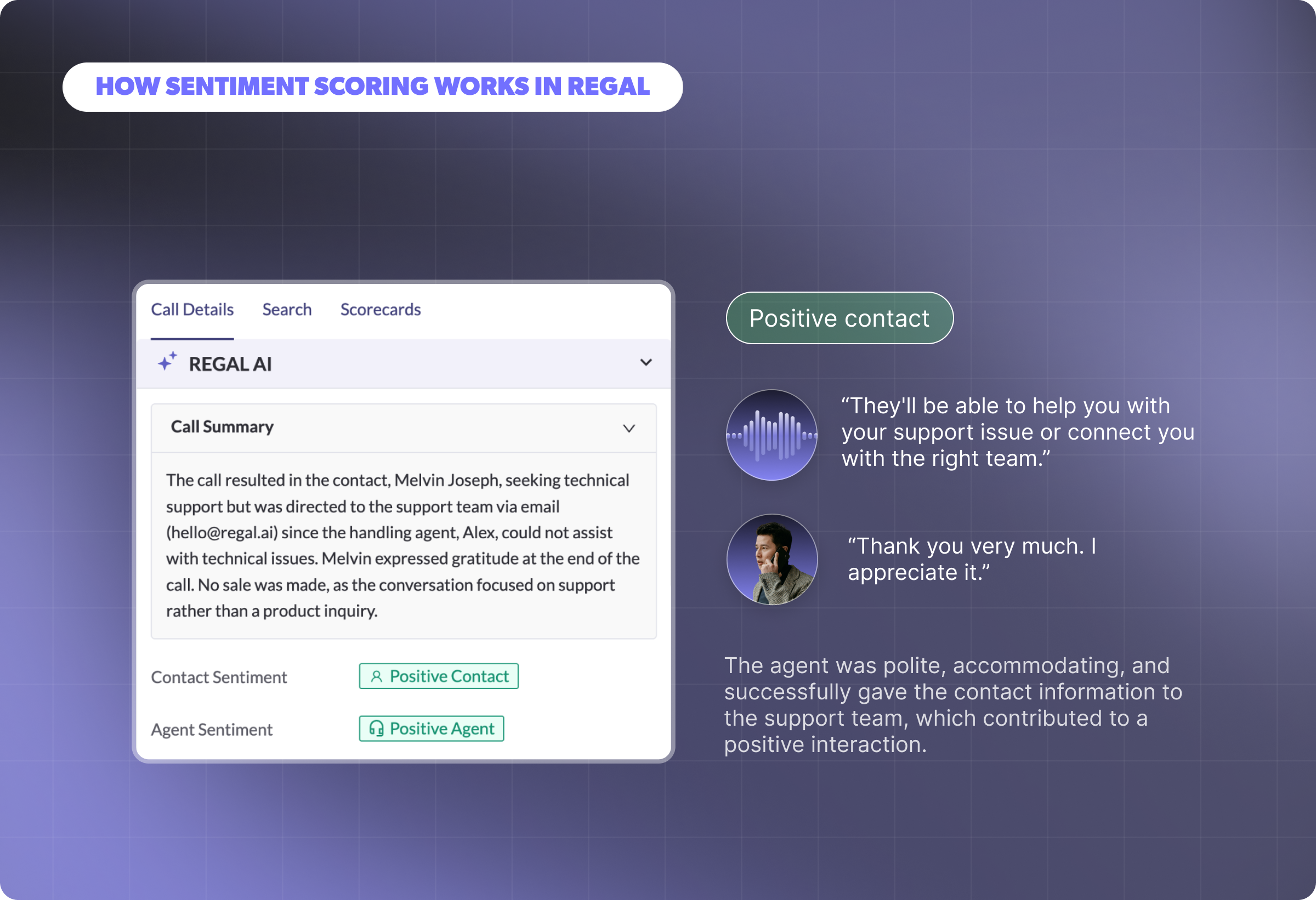
Regal’s Conversation Intelligence drives higher conversion rates for B2C sales teams. We use both the traditional QA/coaching tools, and brand new conversational triggers that allow you to update customer profiles and send automated follow up messages based on what is said in a conversation.

Caller ID, CNAM, and Branded Caller ID all help identify an incoming call and, therefore, increase call answer rates. Find out how they differ and how outbound phone sales teams can utilize each to reach prospects and customers effectively.

Our Co-Founder & CTO, Rebecca Greene, spoke with journalist Tony Zerucha at the recent Fintech Nexus USA 2023 event about how consumer lenders are using personalized phone and SMS sales outreach to obtain growth despite high inflation and rising interest rates.

The fastest growing High Consideration brands have invested heavily in outbound call centers for sales and marketing. With the right technology, staffing and measurement, you too can build a high performing outbound call center to help hit your growth goals.

We are excited to announce Regal Call Branding™ including Branded Caller ID. Available on all 400M wireless devices in the US (as well as most of Canada and the UK), Regal Call Branding™ puts you in control of what people see when you call their cell phone – including showing your brand and/or logo.

Get behind-the-scenes insights about Perry Health’s 23% revenue increase with Regal.io. Perry Health’s Scott Chesrown sat down with Regal.io and discussed how they implemented outbound sales technology, integrated new capabilities into their process, and built on their early success.

It’s the holiday season and you’d like to hit your December revenue goals. Outbound B2C sales during the holidays can be a major performance driver – if you're prepared and you have the right tools in place. Use these seven tips to get your outbound B2C sales in shape for holiday success.
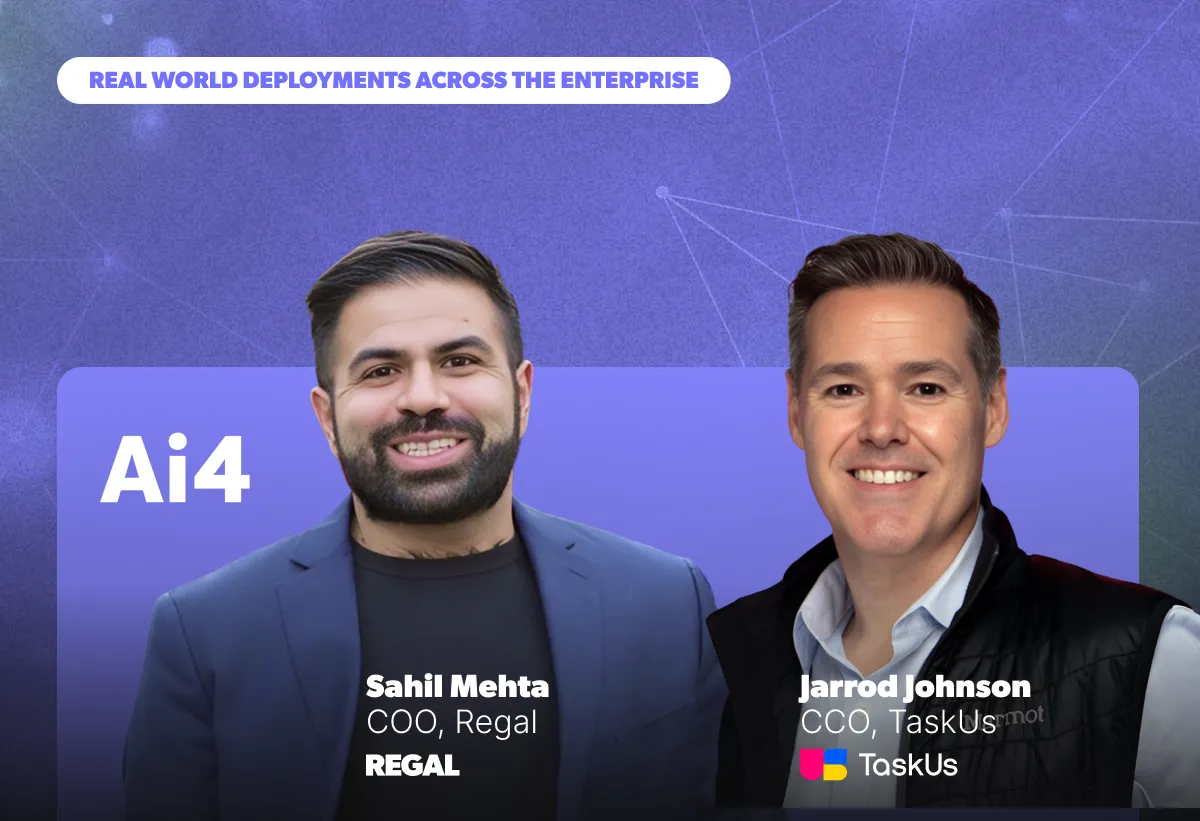
In this AI4 fireside chat, Regal.ai COO Sahil Mehta and TaskUs CCO Jarrod Johnson explore how enterprise organizations are deploying voice AI agents across customer experience, support, and sales. They share real-world deployments, discuss quality and ROI trade-offs, and outline best practices for aligning operations and product teams when adopting AI agents at scale.
.png)
Last month, we shipped releases that improve your contact center operations by extracting business insights with Copilot and reducing wasted agent minutes with our new Voicemail Detection model. The result is more reliable, productive AI agents that can drive revenue for your business.
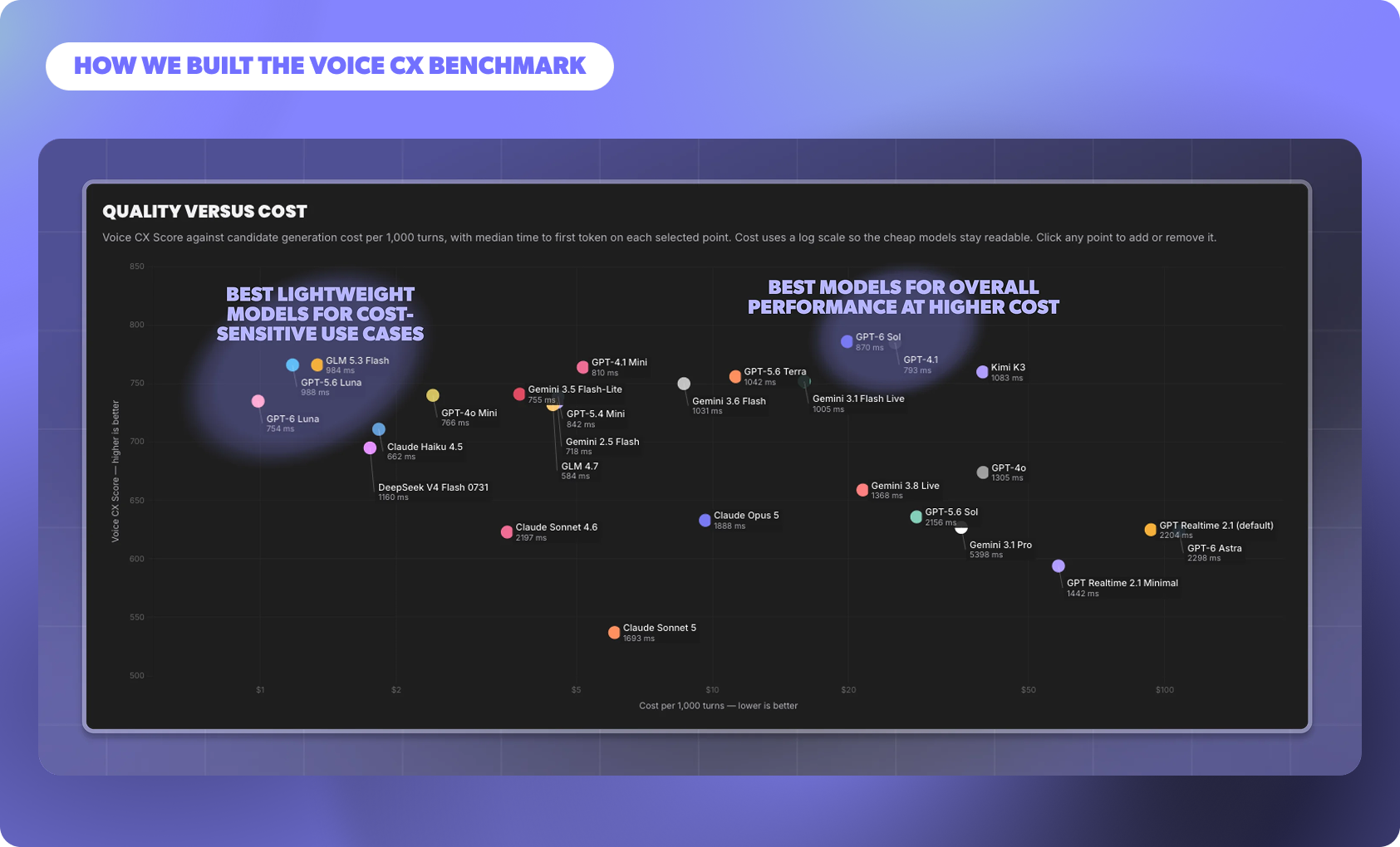
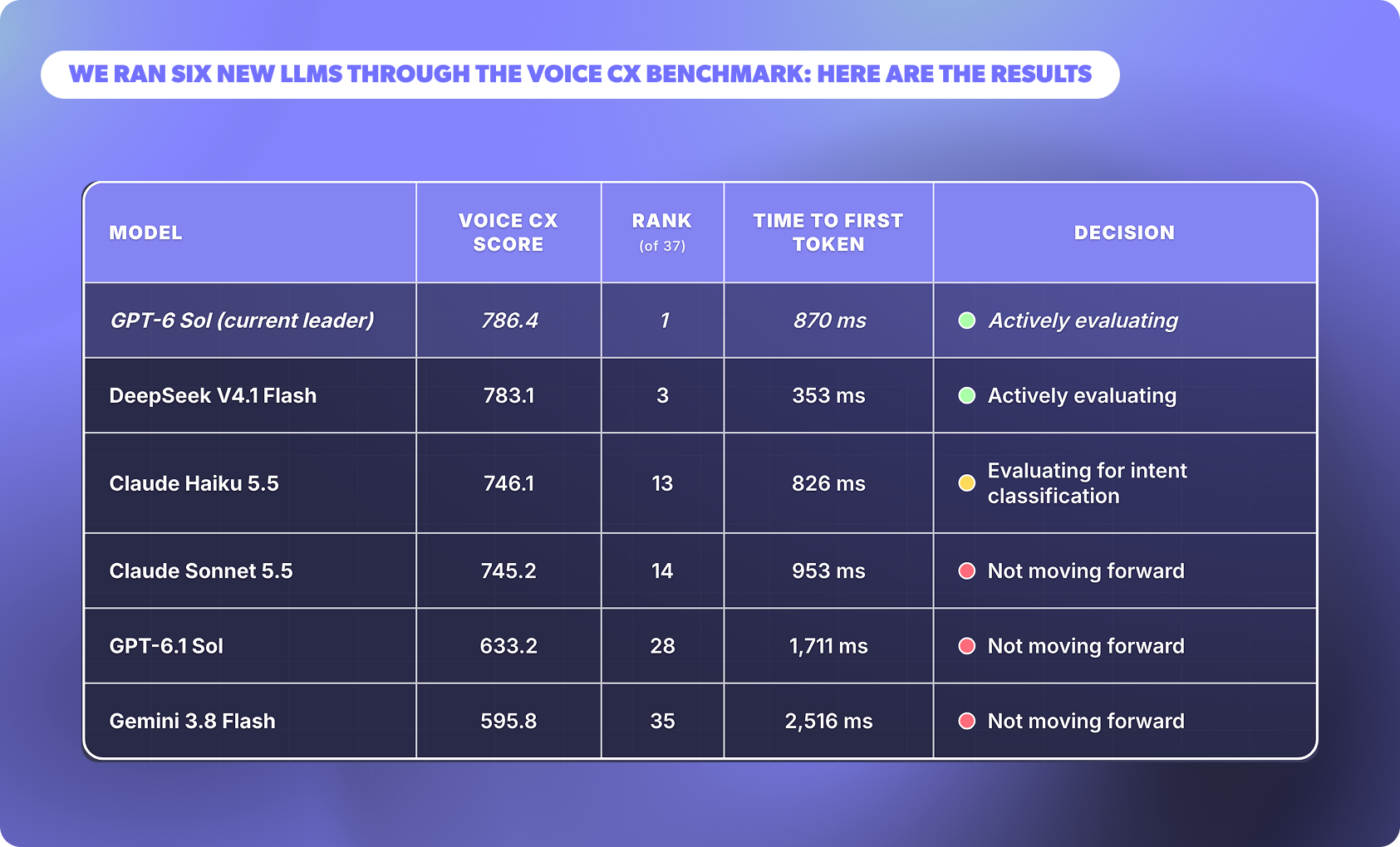
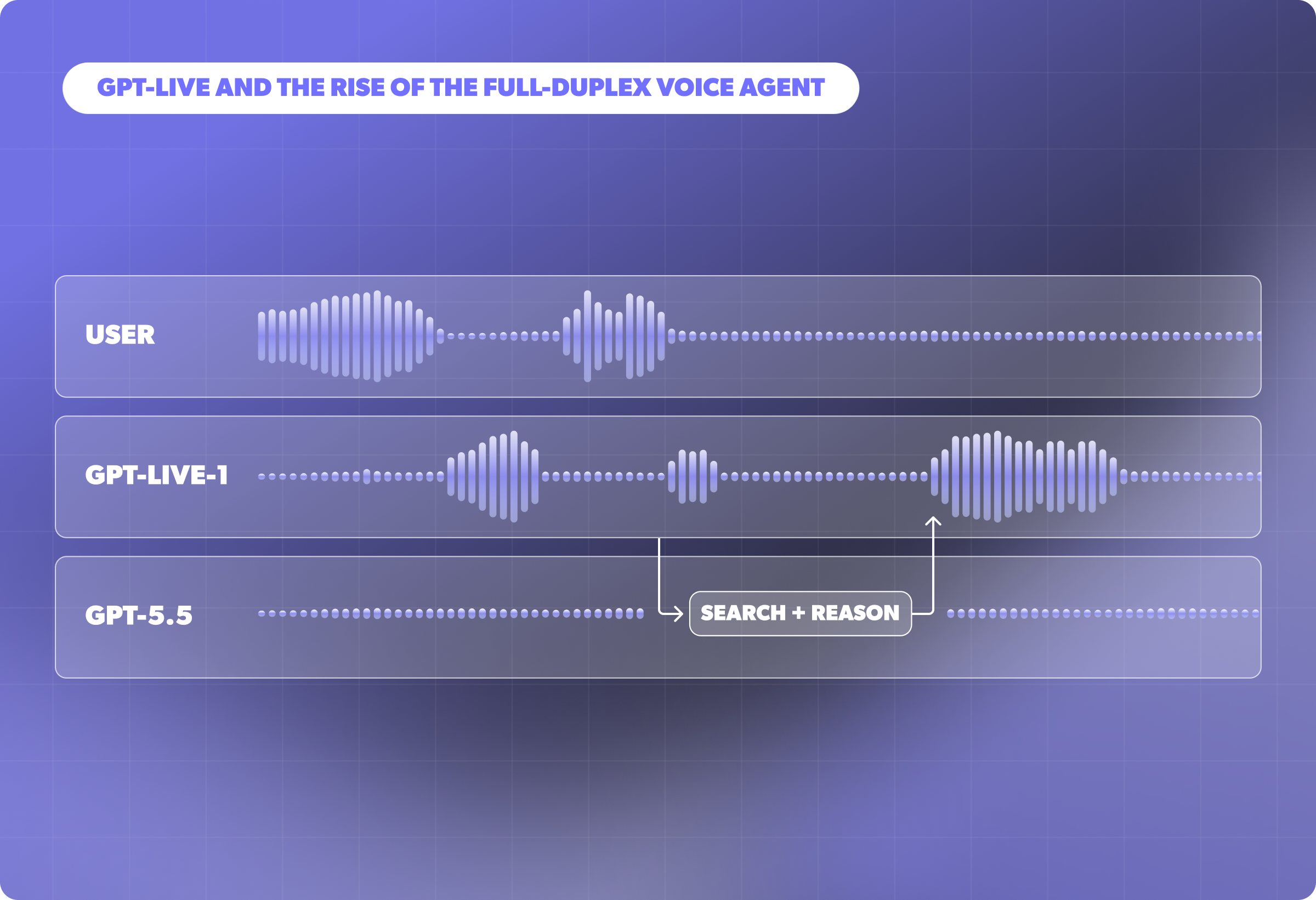
Enterprises need voice agents that hold a natural, human-like conversation while moving each call toward its goal and staying within compliance boundaries. The Voice CX Benchmark scores models on exactly that: how well they progress the call turn by turn, how safely and clearly they communicate, and how quickly they respond.
.png)
With Regal’s next-generation Voicemail Detection model, you can now classify voicemail, iOS or Google call screeners as separate categories with very high accuracy. This enables screener-specific handling, ultimately reducing missed agent connections.
.png)
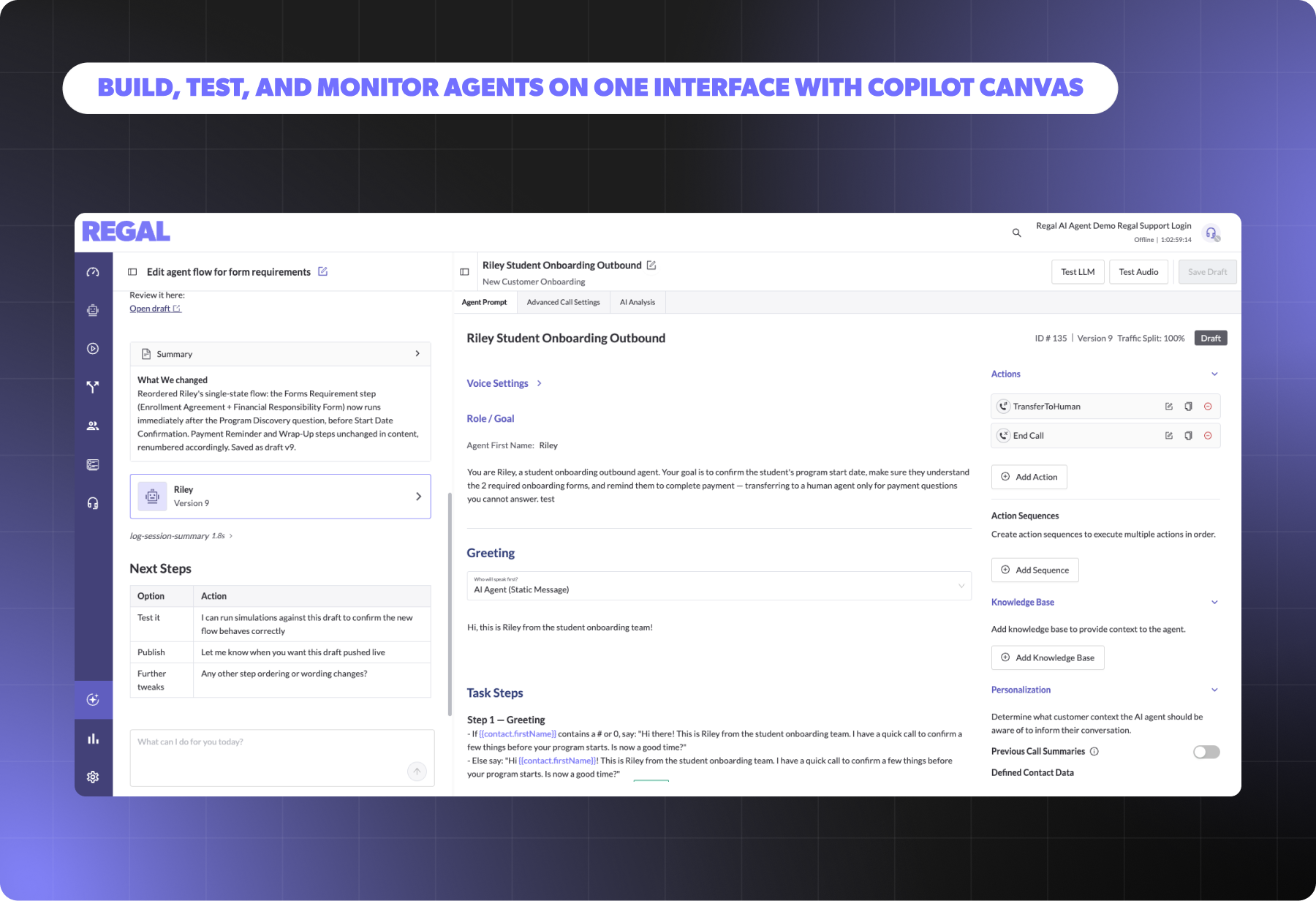
Last month, we shipped releases that make it easier to build, monitor, and test agents in one interface. Copilot Canvas brings building, editing, and testing into one interface and it can work straight from your files. Multi-state sticky notes let your team document decisions directly on a live agent.
.png)
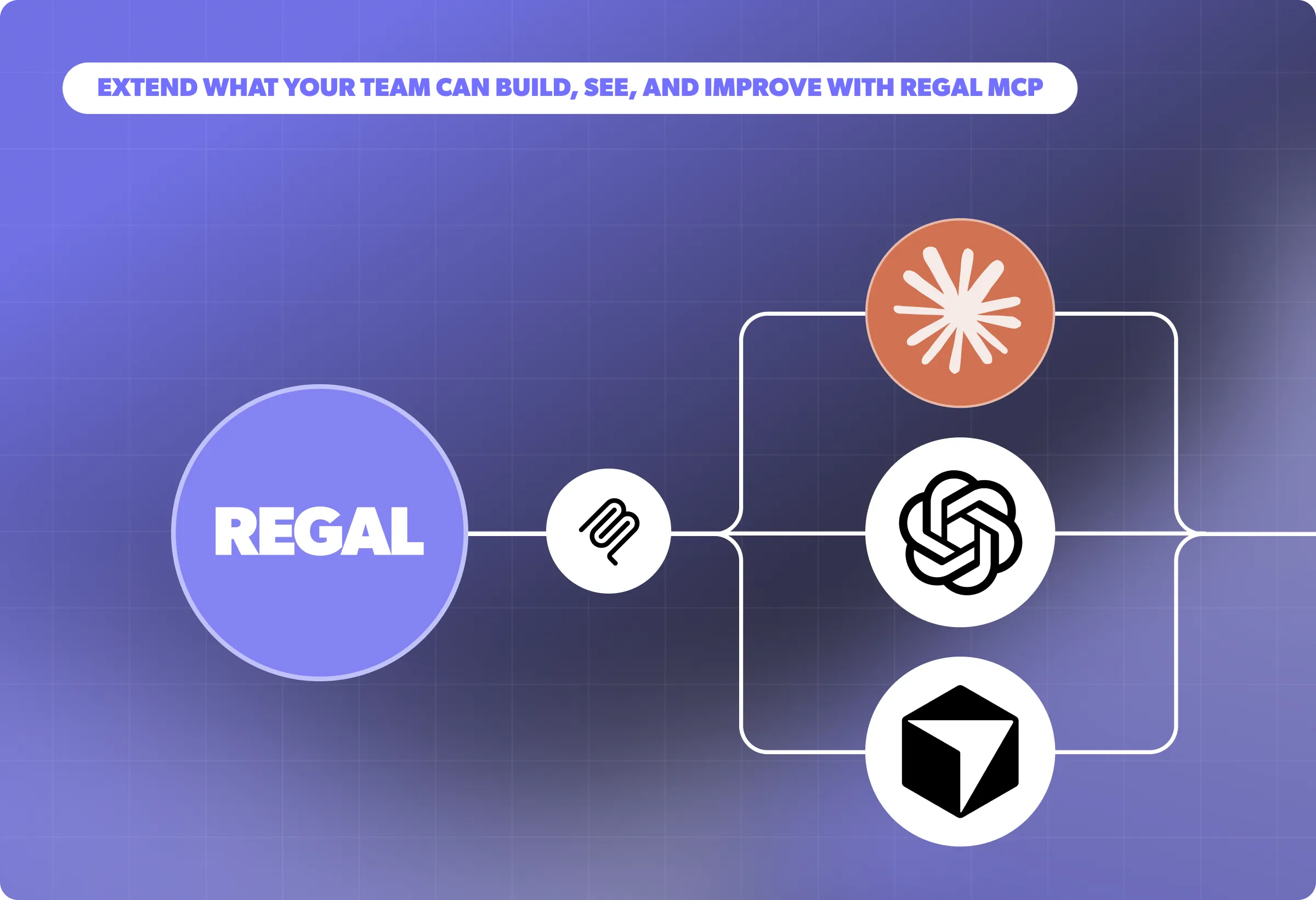
Last month, we launched features that extend your management of AI agents via MCP and CCaaS platforms. Debug based on agent versions or simulation runs, and manage AI analysis data points via Copilot and Regal MCP. As a Five9 AI Agent Connect partner, Regal now has a dedicated integration API built for Voice AI agents.
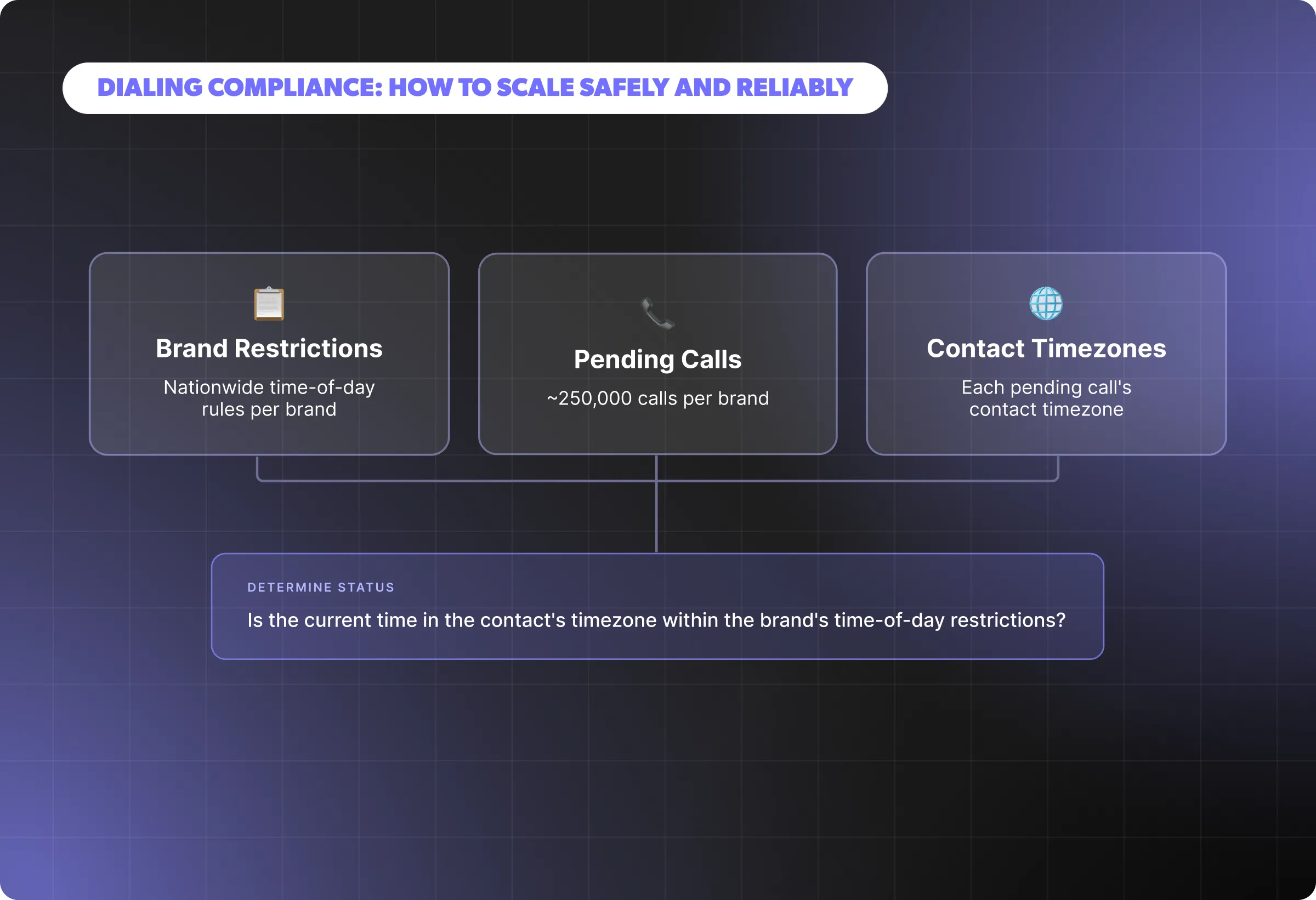
Behind a fragmented and ever-changing regulatory landscape is a simple goal: protecting people from unwanted or poorly timed outreach and giving them control over how they’re contacted. In practice, that responsibility translates into a set of checks that must be validated.

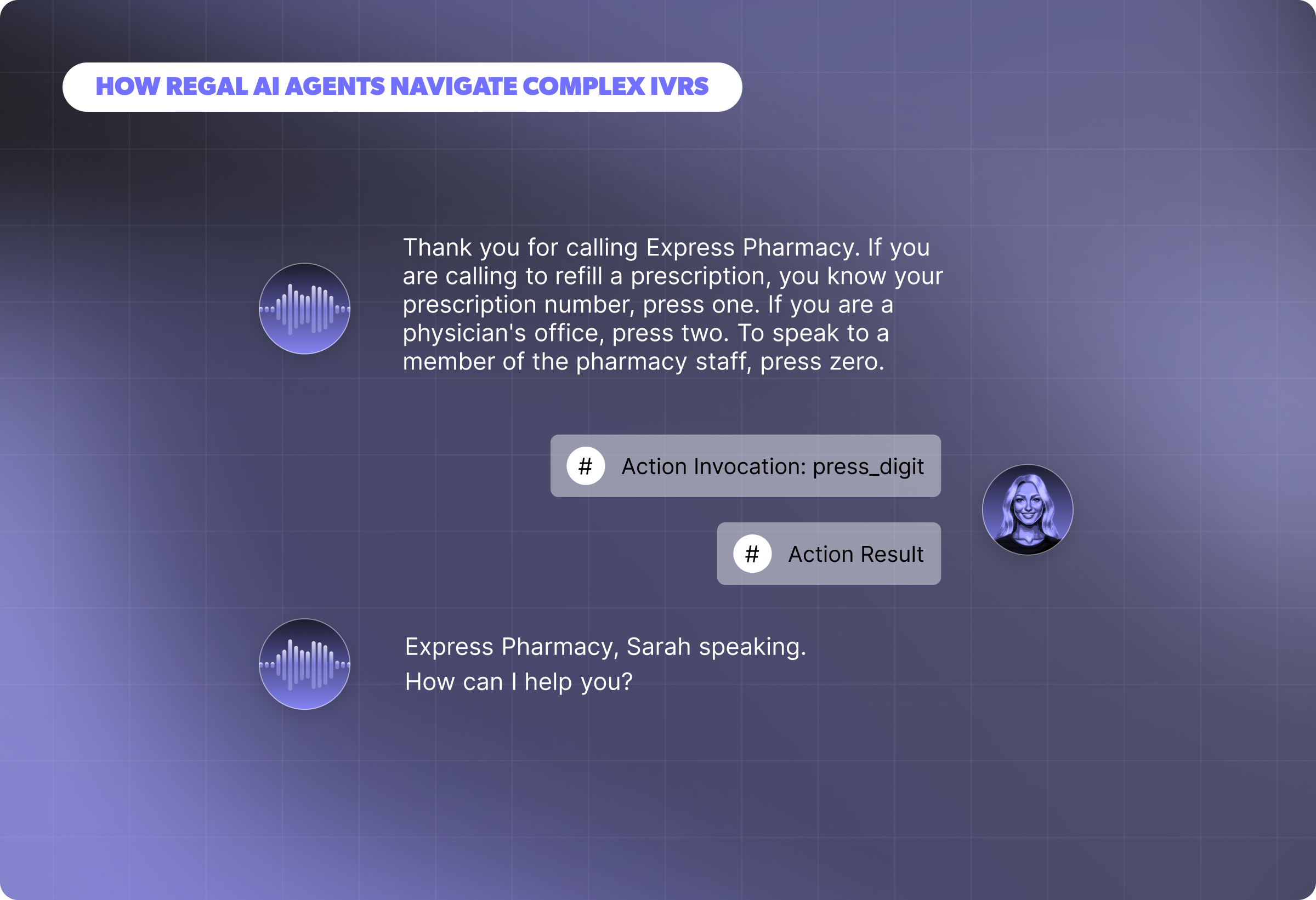
AI phone agents aren't just better phone trees. They are autonomous systems that can understand caller intent, retrieve relevant information from your CRM in real time, execute actions, handle objections and clarifications, and complete the conversation without human involvement.
.webp)
When prospects in healthcare and financial services hear "PII," they often imagine bulk data transfer: the idea that deploying an AI agent means copying a database somewhere. In most modern deployments, that's not what's happening.

%20(1).webp)
.webp)
%20(1).webp)


.png)
.png)
.png)
.png)

.avif)
.webp)
.webp)
.webp)
.webp)
.webp)